
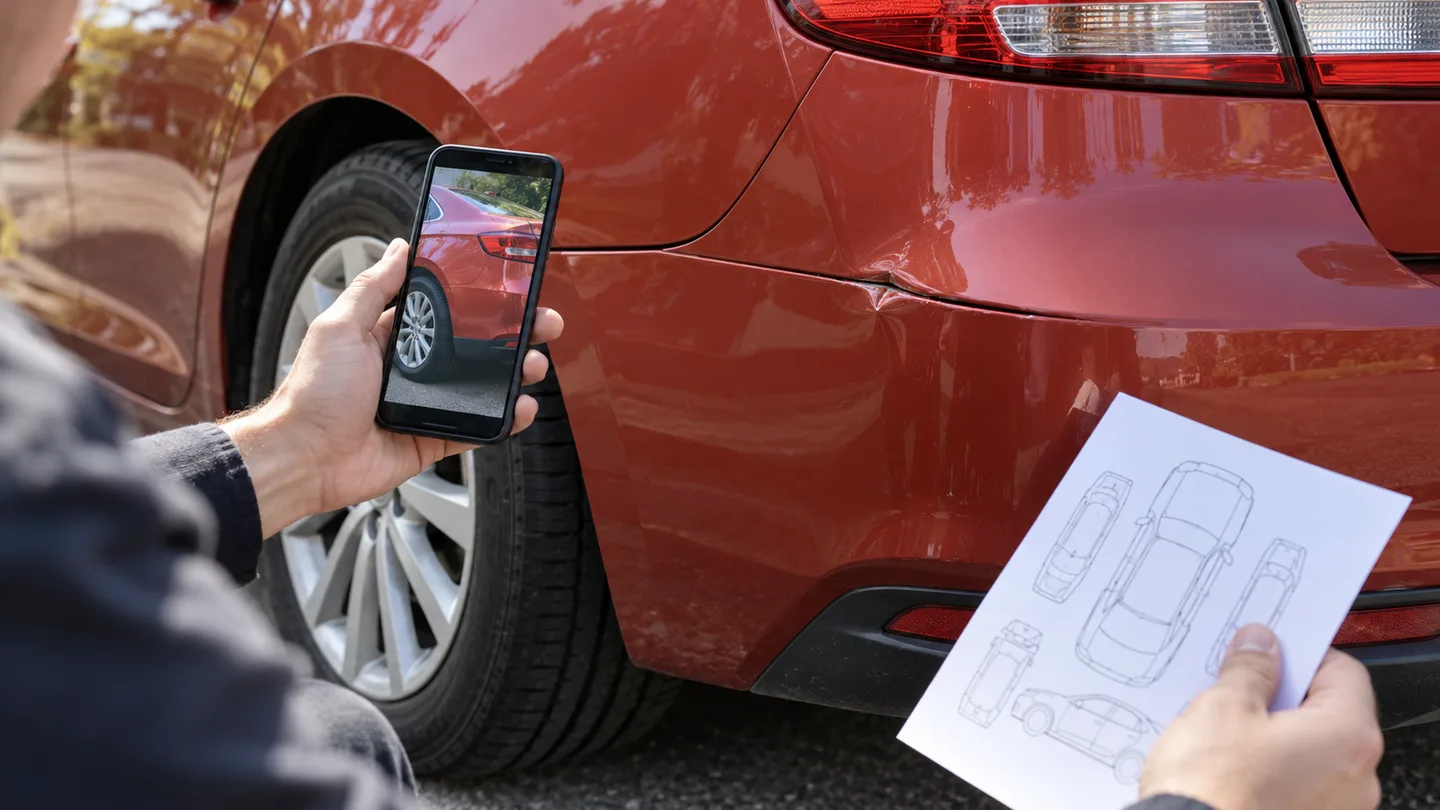
The car has reached the destination, the driver is ready for the next stop, and someone places a phone or bill of lading in your hand. This is the moment to slow down. A delivery signature records what the parties observed at the handoff. If a new dent, cracked glass, missing accessory, or operating problem is visible, put it in the delivery record before signing and obtain your copy. A reassuring verbal promise that someone will “fix the paperwork later” is not a substitute for a dated, shared report.
The inspection is a comparison, not a search for a perfect car. Bring the pickup condition report and pickup photographs. Compare the same panels and equipment under usable light. Distinguish a mark already documented at origin from a change that appeared during transport. If you are receiving a relative's car, ask them to send the pickup record before the truck arrives. A receiver who has never seen the vehicle can still do a sound inspection when the baseline is available.
Auto-transport contracts differ, so read the carrier's actual delivery terms. For example, Montway's published terms ask the customer or agent to inspect the vehicle in the carrier's presence, note new damage as an exception on the bill of lading, sign, and request a final copy. Its terms warn that a clean signature can be treated as acceptance even when lighting or weather was poor. That is the company's contract language, not a universal rule governing every shipment. It explains why inspection conditions and written exceptions deserve attention before the driver departs.
Set up a safe place to inspect
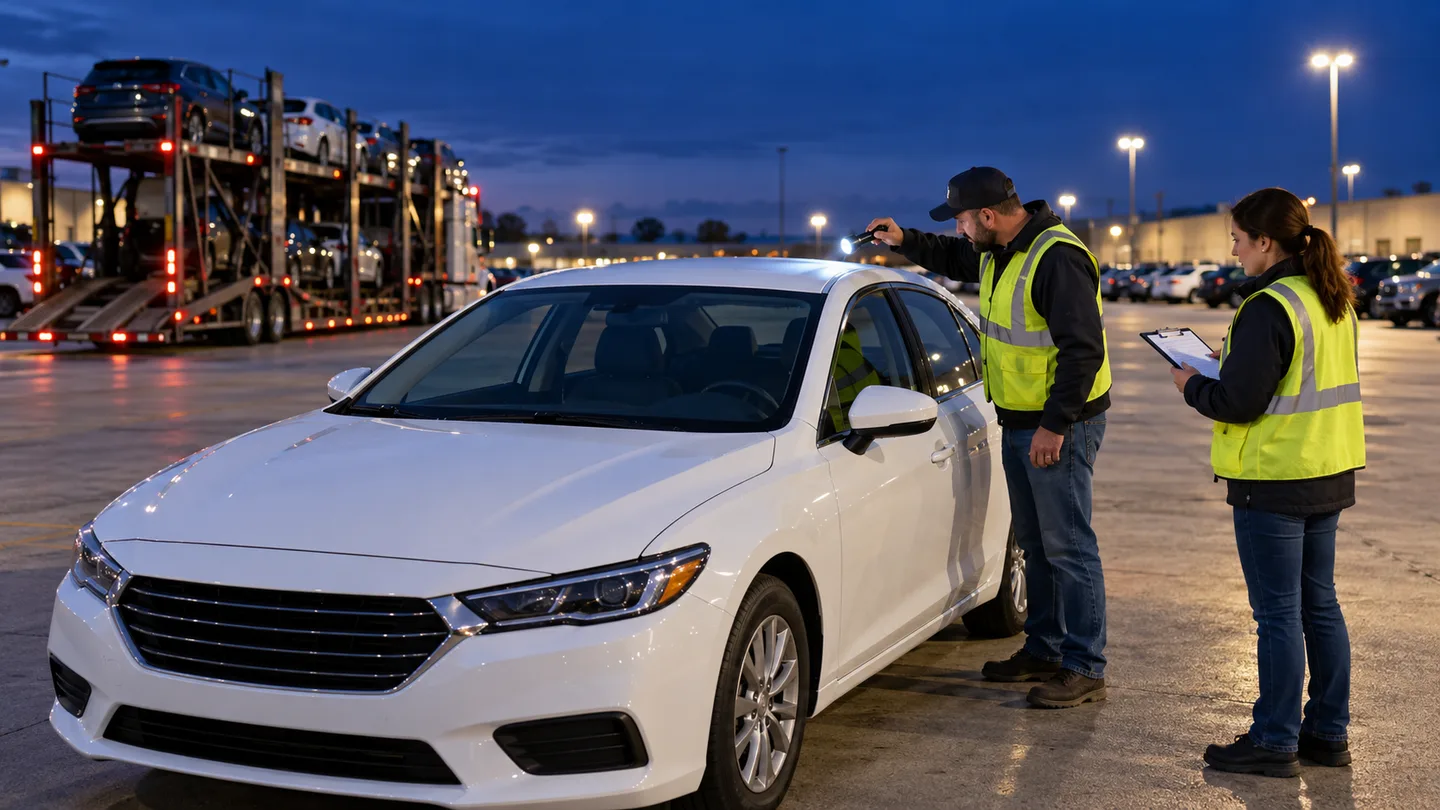
Confirm the delivery location and likely arrival window while the carrier is still on the road. A large auto carrier may not fit through a narrow neighborhood street, apartment gate, low bridge, or tight cul-de-sac. If the driver proposes a nearby lot, choose a legal, well-lit place with room to unload and walk around the car. Do not stand in traffic or beneath a loading deck to inspect. Do not ask the driver to unload in a place where the car cannot be safely moved. Record the actual delivery location if it differs from the booking address.
Daylight makes small dents, paint chips, and glass damage easier to see. If the arrival is after dark, ask whether delivery can be arranged at a lighted location or rescheduled within the contract's terms. A flashlight is useful but can produce glare. If darkness, snow, rain, or dirt still limits inspection, write that limitation on the delivery record before signing. Do not assume a note saying “subject to inspection” preserves every later claim; ask the carrier what its terms say and document what you actually could and could not see.
Have two people present when practical: one can compare the pickup report while the other takes photos. This is helpful, not required. Whoever signs should have authority to receive the vehicle and enough time to inspect it. Tell a friend or building concierge receiving the car for you that the task includes a complete comparison, not just accepting keys. Send them the origin photos, condition diagram, booking information, and the carrier's claim contact in advance.
Verify that the car and paperwork match
Before focusing on cosmetic condition, check the vehicle identity. Compare the plate, make, model, color, and VIN or other identifying information on the delivery form with the car and pickup report. Confirm the carrier and driver are the ones dispatched for the shipment. A broker may have arranged the transport, while a separate motor carrier performed it; keep both names in your file. The Federal Motor Carrier Safety Administration distinguishes these roles and provides a registration search for interstate auto carriers and brokers.
Check the mileage, fuel level, and key count against the pickup record where those items were documented. Odometer changes may reflect necessary loading, unloading, or repositioning, but a large or unexplained difference should be recorded and discussed. Confirm that keys, fobs, charging cables, removable accessories, and any expressly accepted items are returned. Do not assume loose personal belongings were covered by auto cargo insurance; read the booking terms. Note a missing accepted accessory on the delivery form, even if you expect to locate it later.
Read the document title and all checkboxes before using an electronic signature pad. Some apps show only the signature screen unless you open the inspection details. Ask the driver to display or send the full pickup and delivery reports. Verify the comments and diagram refer to this car, this handoff, and the correct date. An unchecked “damage” box or preselected “good condition” field can conflict with your handwritten note. Correct the inconsistency while both parties are there.
Walk the same route around the vehicle
Start with a wide photograph showing the entire vehicle and delivery setting. Then walk clockwise, photographing each corner and side in overlapping frames. Include the roof, hood, trunk, front and rear bumpers, windshield, side glass, lamps, mirrors, wheels, and lower panels you can safely see. Take a close photograph of any changed area and a wider image that identifies where it is on the car. Keep original files, which preserve useful capture metadata. A close-up of an anonymous scratch is much weaker without the wider view.
Compare each panel to the origin report rather than relying on memory. A chip already marked at pickup is not automatically transit damage. Conversely, a broad “prior damage” mark on an origin diagram does not necessarily describe a new dent in the same panel. Look at location, size, shape, and the pickup photos. If the evidence is uncertain, record the observation without claiming certainty about cause. For example: “Right rear door has a new-appearing two-inch crease below handle; not visible in pickup photos.” The claim team can later evaluate it.
Focus on places that may be hidden when the car is parked. Open doors only when safe and with the driver's permission if unloading is still underway. View door edges, rocker panels, spoiler, bumper undersides, and wheel faces from a normal standing or crouching position. Do not crawl under the carrier or car. A low vehicle may contact loading ramps; look for fresh scraping on the front lip or lower sill. A roof rack or antenna may have been removed or damaged. Compare accessories with the origin images and written record.
A clean car is easier to inspect. Road dust and rain can hide small marks. You can ask the driver to wipe a limited area with a clean cloth if the contract and circumstances allow, but do not wash the vehicle while the driver waits unless that was arranged. Photograph the dirt or water and describe the visibility limitation. If the car is so dirty that the paint cannot be evaluated, put that fact on the delivery form. Do not sign a statement that you fully inspected the finish when you could not.
Check operation without turning the handoff into a road test
After the vehicle is safely unloaded, confirm that it starts or powers on, rolls, shifts, steers, and brakes sufficiently to leave the unloading location. Watch for a new warning light, broken mirror, cracked windshield, flat tire, fluid leak, or loose trim. For an electric vehicle, check the key or phone access, charge state, and whether transport mode has been disengaged if the carrier used it. Compare with recorded pickup condition: an inoperable vehicle does not become a new claim merely because it still will not start.
Do not perform a high-speed test drive or hold up a carrier for a full mechanical inspection. A short safe move may reveal a serious problem. If the car cannot leave the site, tell the driver before signing and write the observable symptom: “Vehicle does not engage drive after unloading,” for example. Ask the carrier how it will handle a car that cannot be safely moved. Arrange a tow if needed rather than operating a potentially unsafe vehicle. Keep the towing invoice and any contemporaneous diagnosis for later review.
Mechanical problems can have causes unrelated to transport. A weak battery, old tire, or existing fault may show itself after days in transit. Record what happened without assigning blame in the delivery document. If the symptom matters, have a qualified shop document it promptly and preserve the replaced part when feasible. The pickup record, vehicle history, and diagnosis will help distinguish an existing condition from possible transport-related damage.
Write exceptions before signing
If you find a difference, ask the driver to enter it in the delivery diagram and comments. Use location and observable detail: “New vertical crease, about three inches, left front door near lower hinge,” or “Right mirror housing cracked; mirror folded at pickup.” Avoid the generic word “damage” with no location. If the app offers only a few predefined symbols, use the free-text field or request an attached written note. Photograph the annotated screen or paper before signing, then keep the final signed version as well.
The driver may disagree that a mark is new. You do not need to settle causation at the curb. State the condition you observe, compare the pickup record, and ask that the disagreement be noted. Do not sign a clean delivery report because the driver verbally promises to call a dispatcher. If the driver refuses any notation, photograph the form showing its condition and the car, contact the carrier and broker immediately while at the handoff, and document the refusal in a message with the delivery time. Follow the contract's process for a disputed handoff. Stay calm and avoid blocking the vehicle or taking unsafe action.
Electronic workflows require one extra check. Before tapping “sign,” scroll or expand the full form, verify that your exception appears, and ask how to obtain a copy. Some apps send a link rather than a PDF. Open it while the driver is present if possible. Ensure the link shows the same comments and photographs that you reviewed. Save a PDF or screenshot for your records; a disappearing app screen is a poor evidence archive. If a form is corrected after you sign, ask for a newly dated copy showing the change and both parties' acknowledgment.
A signature can also acknowledge delivery, payment, or release language. Read what you are accepting. If a balance is due to the driver, obtain a receipt that identifies the payment method and amount. Keep any payment discussion separate from the condition assessment: one disputed scratch does not justify creating an undocumented payment arrangement at the curb. Follow the booking terms for both payment and claims.
What if a terminal handles the last handoff?
A terminal may store the car after linehaul and release it during set hours. The person who drove the long leg may not be there for final pickup. Ask which party signs the terminal receipt and what inspection was performed when the car entered storage. Bring the pickup report and take your own photos at the terminal before driving away. The terminal-to-terminal transport guide explains why storage time, access hours, and multiple custody changes need advance planning.
When several carriers or terminals handle the car, keep the chain of documents: origin report, transfer notes, terminal intake record if available, and final release form. A single clean final signature does not explain an earlier transfer. If a new mark appears, note it at the final handoff and ask for the preceding reports. Do not assume every transfer report is automatically sent to the customer. The booking broker can help identify who had custody at each point.
If the car and household goods are arriving on different days, designate the right receiver for each. A person waiting for a moving truck may not be available for a car carrier's short delivery window. The separate arrival scheduling guide helps coordinate the two shipments without forcing the receiver to rush either inspection. Give each receiver its own documents and phone contacts.
Preserve a useful claim file
If you believe there is new damage, report it through the carrier's stated claim channel promptly after documenting it on delivery. Notify the broker as the contract directs, but identify the actual carrier that handled the vehicle. Send the signed pickup and delivery reports, original date-stamped photographs, booking confirmation, and a clear description of the difference. Keep a record of when you reported it and to whom. Ask for the insurer or claims adjuster's process before authorizing a repair, except work needed to make the car safe.
Obtain a written estimate from a qualified repair shop if requested. Keep it factual: panel, labor, parts, and photographs. Do not alter photographs or discard damaged parts before the claims process gives instructions. A carrier may ask to inspect the vehicle. A body shop may also find concealed damage after disassembly; document when and how it was discovered and follow the carrier's notice rules. The strength of a later claim depends on the contract, evidence, and applicable law, so avoid promises that every marked exception will be paid.
There are complaint routes if a broker or transporter uses deceptive practices or operates without proper authority. FMCSA says consumers can file complaints about auto transporters and brokers through its complaint center. That channel is useful for regulatory concerns; it is not a substitute for the carrier's damage claim process or an automatic reimbursement mechanism. Preserve the identities and registration numbers of both broker and carrier before beginning a complaint.
A practical receiving sequence
Prepare the day before by downloading the pickup report, checking the vehicle's known marks, and confirming the delivery location and light. At arrival, verify the vehicle identity and the driver's paperwork. Wait until the car is safely unloaded. Take wide and overlapping photos, walk every accessible panel, compare to pickup evidence, count returned items, and check basic operation. Add specific exceptions and inspection limitations to the delivery form. Review the completed form, sign only what you have read, and secure your copy. If a claim may be needed, notify the carrier promptly and preserve the original files.
Keep the receiving phone charged and enough storage free for original photographs. If the carrier uses a QR code or app link, test that you can open it before the driver leaves. Ask for a paper copy or emailed PDF if cellular service at the delivery location is unreliable. The person who signs should keep the final document in a shared folder, so the owner can see the exact exceptions without relying on a verbal account.
That sequence takes longer than a quick signature, but it protects both sides. A driver should not be blamed for a scratch that was already there; a customer should not lose the chance to document a new one because the truck was running late. A careful comparison at the actual handoff creates a shared record that a later phone call cannot recreate.
Sources and scope
The inspection workflow is informed by Montway's published terms, its sample bill of lading, and FMCSA's auto-transporter advisory. FMCSA's complaint guidance explains the regulatory complaint channel. These are source materials, not a representation that every carrier uses Montway's contract or that a complaint resolves a damage claim. Read your own booking and carrier terms before the car arrives.
Check the current rule, contract and source page for your route and service. This guide helps you prepare clear questions and records.