
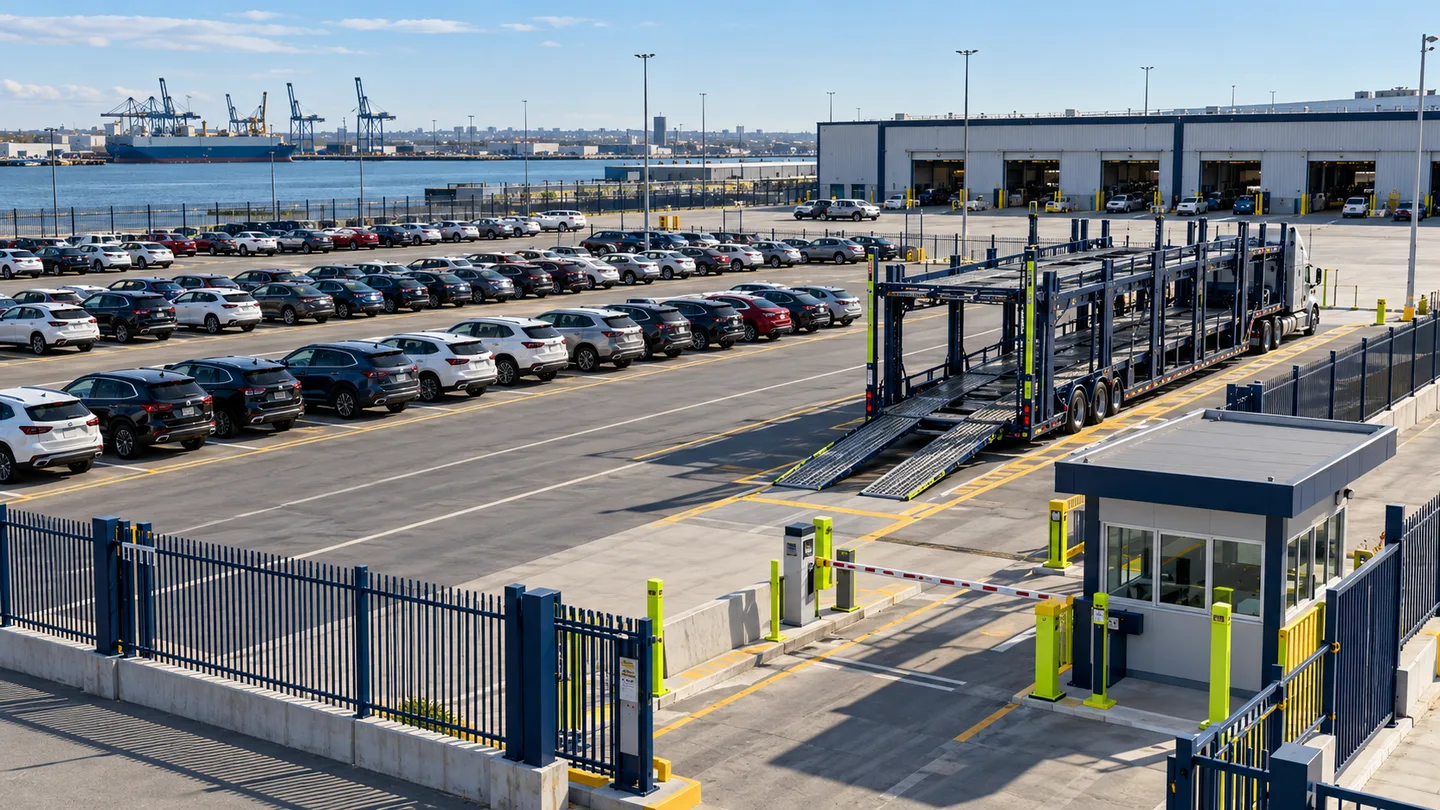
A terminal-to-terminal auto transport quote may look simple: drive your car to a storage lot near your current city, then pick it up from another lot near the destination. The route between those lots, however, can involve more than one handoff. The car may wait for a carrier at origin, travel on a truck, arrive at a second storage facility, and wait again for you. Each stage affects timing, responsibility, inspection, and the amount you ultimately pay.
Terminal service can work well when you can get to both facilities, your dates are flexible, and the total price is clear. It can be inconvenient when one “nearby” terminal is an hour away, closes before you finish work, or charges for days that the car waits after arrival. The point is to compare the entire door-to-door trip you must arrange for yourself, not just the carrier's linehaul quote. Montway describes terminal-to-terminal service as customer drop-off at an agreed origin terminal and customer pickup from a destination terminal after transport and storage. Availability and exact terms vary by provider.
This guide gives you a way to evaluate a specific terminal offer. Ask for the facility addresses, opening hours, custody chain, storage allowances, insurance terms, and release procedure in writing before committing. If the provider cannot identify the terminal or explain who will sign the condition report, treat the quoted service as incomplete rather than assuming those details will be worked out later.
Map the actual route, not just the city names

An origin terminal advertised as “Los Angeles” could be on the edge of a broad metro area; a destination terminal described as “Dallas” might be far from your new home. Obtain street addresses and check the drive at the times you would actually travel. Factor in traffic, tolls, fuel, and a ride home after drop-off. At destination, decide how you will reach the terminal without your car and whether someone can accompany you. A lower shipping price can disappear after two rental-car days or long rideshare trips.
Ask whether the quoted terminal is the facility that physically receives and releases your vehicle, or a general service area pending dispatch. A broker may not know the exact yard until it assigns a carrier. If so, ask when the address becomes final, how far it may be from your ZIP code, and whether you can decline an unacceptable location without a fee. Get the answer in the booking agreement. Do not schedule a one-way flight based on an unconfirmed terminal address.
Verify access. Some yards admit customers only by appointment, some have restricted weekday hours, and some require a government ID matching the booking. A terminal may not accept an inoperable car without special equipment. A low-clearance vehicle, oversized truck, or motorcycle may need different handling. Tell the provider the vehicle's actual condition and dimensions before it quotes the route. A surprise at the gate can cause an extra tow, delay, or revised price.
Understand every custody handoff
The first handoff occurs when a terminal employee accepts the car. The carrier may load it days later. At destination, another employee may receive it and later release it to you. Determine who has custody and who bears responsibility at each interval. Ask the broker or carrier to name the terminal operators and the transporting carrier, not merely say that the car is “in their network.” The Federal Motor Carrier Safety Administration distinguishes an auto transport broker, which arranges carriage, from the motor carrier that transports the vehicle. Interstate brokers and carriers must be registered; you can check their authority using FMCSA's resources.
At origin, insist on a vehicle identity and condition record when you surrender keys. The terminal intake receipt should state the VIN or plate, date and time, odometer, key count, visible condition, and items the facility accepted. Photograph the car in the terminal's receiving area before leaving. If a carrier later signs a separate pickup bill of lading, request that report too. A condition change between intake and loading is impossible to analyze if the first document simply says “vehicle received” without condition detail.
Ask whether the car is moved within the yard, driven to a separate loading point, or transported by a local truck before the interstate leg. Necessary yard mileage can occur, but it should be explainable. A terminal transfer is not automatically a problem. It is a reason to preserve each timestamp and report. At destination, the terminal should record when it received the car and the condition it observed. Keep that report with your final pickup receipt. If the provider says those documents are internal only, ask how you would establish the car's condition at each transfer if damage is discovered.
Compare the full cost with door-to-door service
A terminal quote sometimes reduces carrier routing complexity because a large trailer can access a freight yard more easily than a residential street. That does not mean terminal service is always cheaper. Sherpa describes it as a potentially lower-cost choice for customers who can travel to both facilities, while also noting that door-to-door service is more convenient and that Sherpa itself uses door-to-door delivery. Treat any claimed savings as specific to a written comparison, not as a permanent market rule.
Request an itemized quote showing transport price, broker fee, terminal handling, included storage days at each end, daily storage rate, after-hours release charge, cancellation terms, payment timing, and any fee if the assigned terminal changes. Ask whether the storage clock starts when the car reaches the destination city, when the terminal checks it in, or when you receive notice that it is ready. Those can be different dates. If a carrier arrives Friday night and the yard opens Monday, the distinction matters.
Build your own total: carrier charge plus drop-off trip, ride home, destination ride to the yard, possible rental car, tolls, and likely storage. Compare that with a door-to-door offer that delivers as close as a large truck can legally and safely reach. Door-to-door does not always mean the truck can enter a narrow street; the carrier may arrange a nearby open lot. But the receiving trip is often shorter. The right choice depends on actual addresses, your time, and the contract—not a headline price per mile.
Do not pay an unexpected person at the yard without confirming the amount and payee against the booking terms. Keep receipts for deposits, balances, storage, and release fees. If an employee says a surprise fee is required to release the vehicle, ask for an itemized written invoice and call the broker or carrier from the facility. Avoid a confrontation; record the facts and resolve the payment channel through the contract.
Read the storage and cancellation terms as a separate service
The transport price and terminal service may be charged by different companies. Ask which entity collects each charge and which contract governs a storage loss, theft allegation, gate delay, or damage that occurs while the car sits in the yard. A carrier cargo policy may address the linehaul but not every day before pickup or after delivery. Do not assume the broker, carrier, and terminal share one insurance policy. Request the applicable certificates or written coverage explanation, then keep the document that identifies the responsible business for each interval.
Find out what happens if your plans change before the car is loaded. Is the vehicle still accessible at origin, and can you retrieve it during business hours? Does the broker charge a cancellation fee after dispatch? Will the terminal charge storage and handling even if the linehaul never begins? These are separate questions. If a carrier is delayed, ask whether origin storage continues to accrue at your expense. If the provider changes the terminal after booking, ask whether you can accept the new location or cancel under the original price terms. A useful answer identifies both the decision deadline and the amount at stake.
At destination, ask whether a grace period begins when the terminal records arrival or when it notifies you. Ask how notice will be sent and what happens if the email goes to spam or the phone number changes. Provide an alternate contact, but keep control of who may authorize release. If a terminal is closed for a holiday, ask whether closed days count toward paid storage. If you are flying in, confirm hours for the actual arrival date, not the hours shown on a generic website. A twenty-four-hour car arrival window does not imply twenty-four-hour customer access.
Finally, check whether the vehicle could be moved to another terminal or offsite storage if uncollected. Ask how long it may remain, what notice you would receive, and whether towing or administrative charges could follow. These terms sound remote when you expect to pick up the car promptly. They matter most when a delayed flight, family emergency, or mismatched moving-truck arrival keeps you from the yard. An agreed pickup agent and a small schedule buffer can prevent an avoidable fee dispute.
Plan around uncertain timing
A terminal gives the carrier flexibility to collect and drop several vehicles, but it does not eliminate transit uncertainty. The car may wait at origin for a suitable route. It may reach the destination before you do, or after you need it for work. Ask for an estimated pickup window, expected linehaul time, and the process for notifying you of arrival. Distinguish “delivered to destination terminal” from “ready for customer release.” A yard may need to process the incoming vehicle before it can schedule pickup.
Create a small timing buffer. If you need the car immediately after a cross-country flight, terminal service may be a poor match unless the provider has a confirmed route and release appointment. Conversely, if you are moving house and want the car to wait safely while you travel, a limited included storage period could be useful. The separate car and household-goods arrival guide explains how to build a backup for the days when the car and moving truck do not arrive together.
Choose an authorized person to receive the car if you cannot make the destination pickup. Ask the terminal what form of authorization and identification it requires and whether that person can inspect and annotate the release report. Do not assume a friend can simply show your booking email. Give the receiver the origin photos and condition record. A proxy who accepts the keys without comparing condition may undermine the very documentation you need if there is a dispute.
If the car arrives early, ask about free storage and the paid daily rate before it is dispatched. If it arrives late, decide how you will commute or handle school, work, or medical appointments without it. Keep a backup transportation plan separate from the vehicle shipment price. A terminal may be an efficient logistics point, but it should not become the only plan for your first week in a new city.
Prepare the car for a period of storage
Ask whether the yard is indoor or outdoor, gated, monitored, and staffed. Do not assume “secure terminal” means climate-controlled, fully enclosed, or insured against every cause of loss. Request the storage terms and coverage boundaries. A classic car with a delicate finish may require an enclosed or specialized service rather than an outdoor holding area. A vehicle with a weak battery may not start after several days of waiting; tell the provider and make sure the destination receiver knows.
Remove valuables, toll tags, garage remotes, loose electronics, and private documents. The carrier needs a working key, but you should record exactly what is surrendered. Check the provider's rules on fuel level, battery charge, alarms, and aftermarket accessories. Do not disconnect a battery or disable a feature without confirming that the vehicle can still be safely moved. For an electric car, ask whether charging is available; a terminal is not automatically a charging facility. Leave enough charge to permit loading, yard movement, and safe departure.
Do not use the vehicle as an improvised moving box. Items inside the car can affect weight, visibility, access, and liability, and terminal staff may refuse a loaded vehicle. The belongings-in-a-shipped-car guide explains why a carrier's written personal-item policy matters more than a casual assurance from a salesperson. If the provider allows a limited amount, document the exact allowance and do not leave anything essential or valuable in the trunk.
Before drop-off, wash the car enough to see existing damage and take broad and close photographs. Note preexisting chips and scratches on the intake form. If rain, dirt, or poor light prevents a complete examination, write that limitation on the document. Keep the original image files. A later carrier loading inspection should be compared with the terminal intake report, not treated as a replacement for it.
Inspect at destination before release
When the terminal says the car is ready, confirm the release appointment, ID requirement, balance due, and where the vehicle will be parked for inspection. Bring the origin intake report, any carrier pickup report, and photographs. Walk around the car in good light before signing a clean release or delivery receipt. Check each panel, glass, lamps, tires, roof, underbody edges you can safely view, key count, accessories, mileage, and basic operation. Note any new or disputed condition on the terminal document and photograph it in context.
The person releasing the car may not have transported it. They may say they cannot decide who caused a mark. You do not need an on-the-spot liability ruling. You need a dated record that the mark was present at release and was not on the origin record. Ask for copies of the terminal's arrival condition report and the carrier's delivery bill of lading. Notify the carrier and broker through their claim channels promptly if the records indicate possible transit damage. Follow the contract's deadlines.
If the facility will not allow an inspection until you sign for the car, ask what the signature means and whether a condition exception can be added after you view it. Request a manager or call the contracting company before signing a document that states the car is undamaged when you have not seen it. Stay within the site's safety and access rules. Make a contemporaneous written note of any process limitation, including the employee's name, time, and the vehicle's location.
Use a decision test before booking
Terminal-to-terminal service is plausible when both facility addresses are acceptable, access hours fit your travel, storage terms are fair, and the parties can show a complete custody and condition trail. It may be a poor fit when the terminal is remote, the car must be available on a specific day, the vehicle needs specialized handling, or the offer cannot define fees and handoffs. Ask the provider to put the operative details in the booking agreement before you surrender the vehicle.
A practical comparison has three columns: your terminal offer, a door-to-door offer, and your own travel and storage costs. Add a fourth note for operational risk: who can receive the car, how you will inspect it, and what happens if either shipment is late. The least expensive linehaul quote is not necessarily the least expensive or least stressful move. A clear contract and a workable pickup plan are more valuable than a vague promise that the car will be “waiting nearby.”
Sources and scope
This guide uses Montway's explanation of terminal-to-terminal service, Sherpa's description of the terminal option, AmeriFreight's auto-transport glossary, and FMCSA's consumer advisory on auto transporters. Provider-specific policies and prices can change. Confirm every facility, fee, custody term, and insurance provision in your own written agreement.
Check the current rule, contract and source page for your route and service. This guide helps you prepare clear questions and records.