
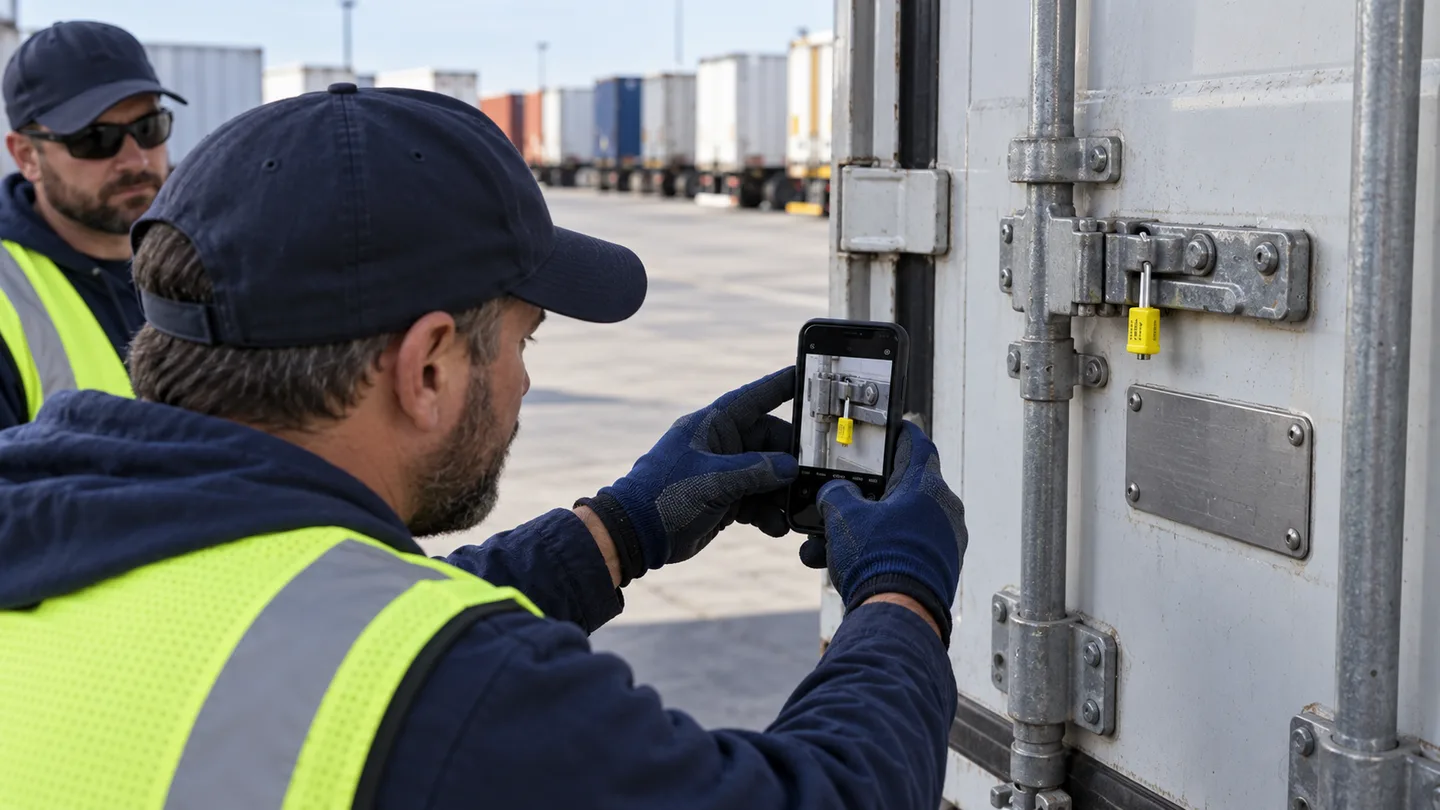
A household shipment may have several numbers attached to it: reservation number, container number, trailer number, bill-of-lading number, customer lock, and perhaps a seal number. They do different jobs. A reservation identifies a booking. A physical equipment ID helps locate the unit carrying the goods. A seal or lock can show whether an opening has been controlled since it was applied, but it does not prove what was loaded, that the contents were packed safely, or that no damage occurred. A useful transport record ties the numbers to dates, locations, and handoffs.
Before pickup, ask the provider what identifier it will use to track the physical shipment and where that identifier appears on the unit. Photograph it clearly. Compare it with the receipt before the driver leaves. Keep the number with the inventory and condition photographs, not only in a text thread. If two units are used, create a separate record for each and assign items to the correct unit. A container that is visually identical to its neighbor can otherwise be confused in paperwork even if neither is misplaced.
The exact documents depend on the service. FMCSA's pickup guidance for regulated interstate household-goods moves describes a bill of lading containing shipment and vehicle identification information, while a self-service container provider may use a different receipt and tracking system. Do not assume the rule for a full-service mover automatically applies to every portable-container contract. Ask the company which document controls, what information it records at each transfer, and how a discrepancy is resolved.
Separate booking, equipment, and seal identifiers
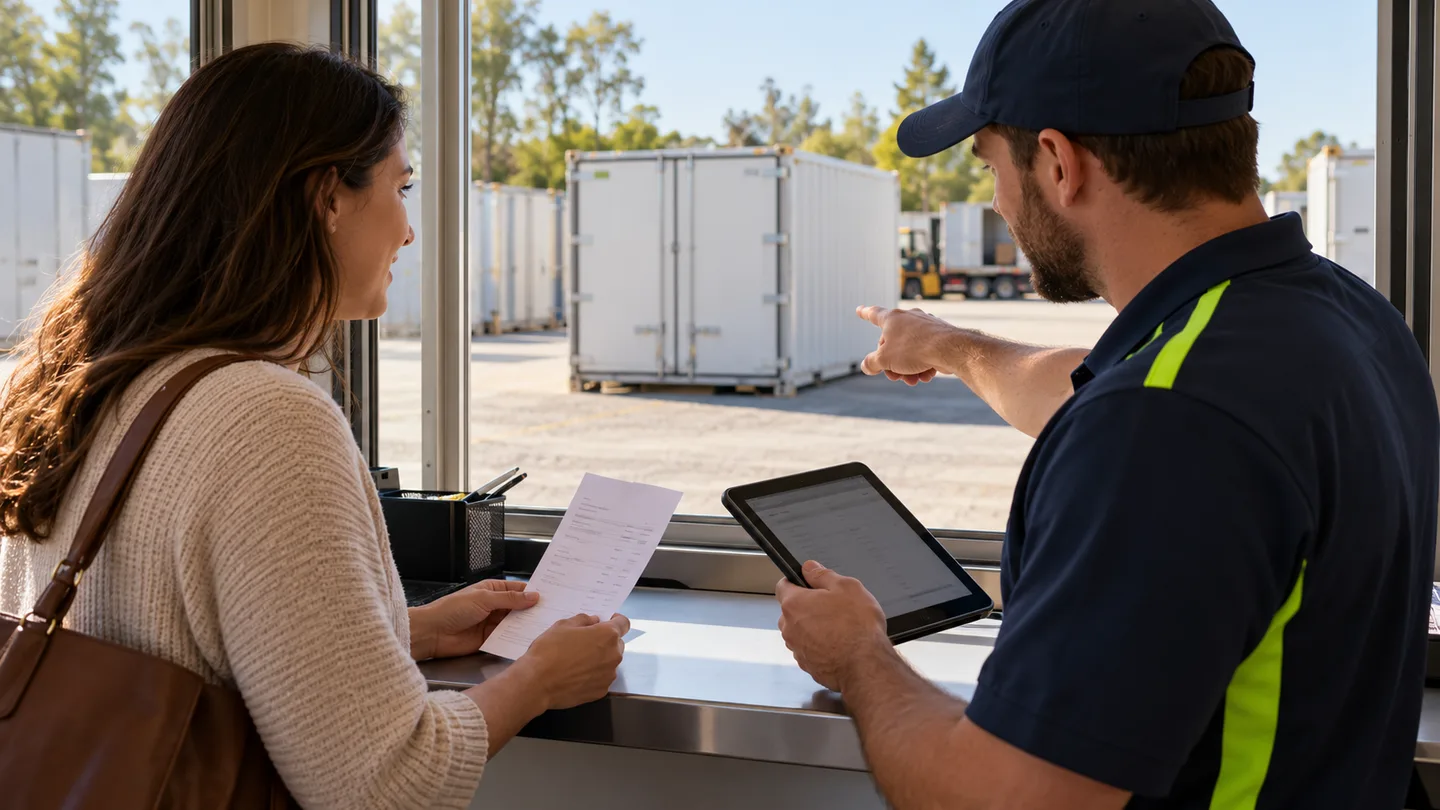
Write a small identification table. Include the booking or order number, the physical container or trailer number, the customer's lock description, any carrier seal number, and the documents that display each. Add the pickup and destination addresses and the named receiver. If a trailer's vehicle ID is different from the container ID, record both. Do not rely on a photo of a truck cab to identify the box that contains the goods; trailers and tractors may be separated in normal operations.
Check the physical number on the unit from more than one angle. Paint, dirt, a replacement door, or poor light can make a character ambiguous. Photograph the whole unit for context and then the number close enough to read. If the provider supplies a barcode or QR code, use its app as instructed but keep a human-readable number too. A screenshot of a successful scan can be useful if the label later becomes damaged. Avoid posting these identifiers publicly while the shipment is in transit.
Some providers may substitute equipment after booking. That is not automatically a problem, but it should be documented. Ask for the new unit number in the dispatch confirmation, photograph it on delivery, and correct the inventory cover sheet. If goods are transferred from one unit to another in transit, ask who authorized the transfer, when it occurred, whether the original seal was opened, and what new number or seal applies. A status page that still shows the reservation number may not expose the physical change, so request a specific written explanation.
Know what a lock or seal can and cannot show
A customer-owned padlock can prevent casual opening by someone without the key. A numbered tamper-evident seal can provide visible evidence that a particular closure has been opened or replaced. Neither establishes the condition of the items inside, nor can either eliminate every security risk. A seal may be applied after loading without an item-level count. A lock can remain intact while an item shifts and breaks. The condition and loading records are therefore separate from the closure record.
Ask the provider which closure it expects on your equipment and who supplies it. U-Pack's equipment security guidance distinguishes a customer lock on a trailer bulkhead during transit from an exterior lock used only while loading; its driver secures the exterior trailer doors for transport. ReloCube containers have another lock location. Those are U-Pack-specific procedures. A different carrier may require a numbered seal, a particular shackle size, or no customer exterior lock at pickup. Follow the actual provider's current instructions rather than bringing a lock that prevents the driver from doing its job.
If a numbered seal is used, record the number before application, photograph the installed seal and nearby unit ID in the same sequence, and note who applied it. A close-up of a seal with no container context can be mixed up with another unit. If a seal is replaced for a legitimate inspection or equipment transfer, ask for the reason, old number, new number, date, and person responsible. Do not conclude that every changed seal means theft, but do not silently accept an unexplained change either.
Make the origin record at the right moment
Photograph the loading area and the closed load immediately before the doors shut, then capture the lock or seal after application. Record the time in the household's handoff log. Do not step into a driver's working area or delay a safe operation to improve a photograph. The goal is a clear sequence: goods visible, door closed, closure applied, equipment accepted. Keep the carrier's pickup receipt beside that sequence. If the carrier does not issue a seal number, write “not provided” rather than inventing one.
Verify that the paperwork has the correct address, unit ID, and scheduled destination. A driver may use a handheld system that shows a different booking code than the invoice. Ask the provider which code should match the equipment. If a number is wrong, request correction before the vehicle leaves or obtain a dated written acknowledgment. A transposed digit can complicate tracking later even when the shipment is otherwise safe. Keep the driver's name or employee reference only if the provider offers it as part of its standard receipt.
For a full-service interstate mover, review the bill of lading and inventory before signing. FMCSA's pickup page says the bill of lading is the contract and that the driver must provide a copy before or at loading. It also describes vehicle identification and attachments. For a customer-loaded service, ask for its equivalent transport acknowledgment and read what signing confirms. A signature should not imply that a person personally inspected a sealed load if that did not happen.
Follow the shipment through intermediate handling
A portable container may travel from the home to a local yard, then on a line-haul leg, then to a destination yard before final delivery. A trailer may be coupled to different tractors. Each event can create a new timestamp, location, or carrier reference. Ask which of those events the provider shares with customers and whether the physical unit stays closed. Do not assume every scan represents a human opening the container; it may simply mark arrival or departure at a facility.
Keep a handoff ledger with the time, reported location, source of the information, unit ID, and any exception. If the company reports a delay, attach the revised appointment message. If it reports a transfer, ask whether it was a transfer of the entire sealed unit or a handling of goods. Those are materially different events. The terminal handoff guide covers appointments and receipts at origin or destination terminals; the ID ledger lets the household reconcile what the terminal actually accepted or released.
Do not overread live tracking. A map pin may reflect the carrier's system update rather than an exact container location. A “delivered” status may mean arrival at a yard, not placement at the destination address. Read the status definitions and keep the promised delivery window in the contract. If tracking and a human support agent disagree, ask for the physical unit ID and latest verified handoff in writing. This is more actionable than refreshing a screen repeatedly.
Check destination closure before unloading
Before unlocking or cutting a seal, photograph the whole unit, its ID, the closure, and any visible damage or moisture. Compare with origin photos and pickup documents. If the closure looks different, the number differs, or the door is open, contact the provider and record the issue before moving goods. Keep the receiving crew out of the door swing if the load appears to have shifted against it. A damaged or loose seal is a fact to document, not proof by itself of what happened to contents.
Ask the driver or terminal attendant to witness an exception if one is present, and get it on the delivery receipt where possible. If an official inspection caused a seal change, request the inspection or replacement record. If the provider says a different unit was delivered, reconcile the item inventory and shipment documents before accepting that explanation. Do not remove or discard a changed seal until the provider tells you how to preserve it for a potential claim or review.
Once the closure is opened, inspect goods as they emerge. Check item numbers and visible condition. A matched seal does not replace this inspection. Use origin photographs and the item inventory to compare condition at delivery. Note any missing or damaged item promptly under the provider's procedure. If the unit and its contents appear correct, record that too; the ledger is meant to be fair, not only to capture problems.
Keep key control simple
Decide who holds the customer lock key or combination at origin and destination. If the receiving person changes, transfer it through a secure channel the carrier accepts. Keep a backup only where the household can access it safely. Do not tape the key to the container, publish a combination in an unsecured group chat, or photograph the key's cut pattern for convenience. If the key is lost, contact the provider before arrival so its approved access procedure can be arranged without damaging equipment.
For a shared trailer bulkhead, know who removes the divider and where the customer lock goes afterward. U-Pack's bulkhead instructions say the customer installs and later removes the divider, and its security guidance distinguishes the bulkhead lock from the carrier's exterior lock. The arrangement is specific to that service. Ask your provider what the receiving crew must do and whether tools or help are needed. A receiver who has the right key but no knowledge of the divider can still lose valuable unloading time.
Treat seal numbers as private operational data, not passwords. A seal number can help prove continuity but may appear on documents seen by several people. It should be recorded accurately and shared with the provider and receiver as needed. The padlock key or combination deserves stronger protection because it can actually open the shipment. Keep the two concepts separate in the handoff plan.
Match the record to the transport method
A dedicated truck, a consolidated household-goods shipment, a customer-loaded trailer, and a portable container do not produce identical custody records. With a dedicated truck, the vehicle ID and driver may remain visible throughout the trip, though equipment can still change for an operational reason. With a consolidated shipment, goods may be handled alongside other shipments and identified by inventory numbers and transport documents rather than a single sealed box. A portable container can remain a recognizable unit even while different trucks carry it. A shared trailer may keep one locked household section behind a bulkhead while the exterior doors are controlled by the carrier. Ask the provider which physical boundary is actually yours.
The dedicated-versus-consolidated transport comparison helps choose a service by handling and schedule. For the identification record, the key question is narrower: what does the number identify at this stage? A booking number identifies the transaction. A trailer number may identify equipment that carries more than one customer's goods. A numbered item tag may identify one piece inside a consolidated load. A seal number refers to a closure at a point in time. Write the answer beside each number, rather than making one field labeled “tracking number” carry all meanings.
Ask how the company records an expected equipment change. If the entire sealed container is lifted onto another chassis, the container ID may stay the same while the truck number changes. If loose goods are transferred between vehicles, the inventory and transfer receipt matter more than an old vehicle photo. If a driver says “same shipment,” request the new physical reference and confirmation of what happened to the previous closure. Ordinary operations can be documented without treating every change as an emergency.
This distinction matters at delivery. A receiver expecting a particular tractor number may worry unnecessarily when a different truck arrives with the correct sealed container. Conversely, a matching booking number on a delivery message does not excuse a container ID that differs from the unit photographed at origin. Focus on the identifier attached to the goods and the record of any authorized change. That approach reduces false alarms while preserving attention for genuine discrepancies.
Resolve mismatches without guessing
A mismatch can be small, such as one digit on a receipt, or serious, such as a different container at delivery. Start by gathering the physical photos and documents in date order. Identify precisely what differs: booking number, container ID, trailer ID, seal, lock, address, or status. Contact the provider's documented support channel with those facts. Ask for the latest verified physical-unit scan or handoff and a written explanation. Avoid implying theft or negligence before the facts are known; a clerical error is possible.
If the provider offers a correction, retain both the original and corrected records. The change itself may matter later. If the door or seal appears tampered with, avoid disturbing the scene beyond what is needed for safety and follow the provider's instructions for reporting. If goods are missing or damaged, document them separately and review the claim process and deadlines. A transport identifier problem and a contents claim are related but distinct; one does not automatically establish the other.
Build the identification table and ledger before moving day, then update them at each real handoff. A reliable chain is not created by one expensive lock or a tracking app. It comes from matching physical equipment, closure condition, documents, and time at origin and destination. That modest discipline makes ordinary logistics easier and gives the household a clearer record if something unusual occurs.
Keep the working record available in two forms. A shared digital folder makes photos, receipts, and updated appointments easy to exchange; a short printed sheet with booking and physical equipment numbers helps when a phone has no service at a terminal. Verify that the receiver can open the folder before the shipment leaves. Restrict access to people involved in the move, and do not include the lock combination on the printed sheet. After final delivery, preserve the originals until the goods have been unpacked and any provider claim or billing question is settled. If you later correct a typed number, note when and why it changed instead of silently overwriting the earlier entry. A transparent correction is more credible than a perfect-looking record that hides an ordinary mistake.
For a move with multiple units, put each unit's folder inside the overall shipment folder and name it by the physical ID. Keep a separate list of which major items and carton ranges went into each one. At destination, a unit may arrive before another or be placed at a different door. The receiver can then unload and reconcile the first delivery without declaring the whole shipment complete. Confirm with the provider whether separate units have separate pickup receipts, tracking events, and claim references. This simple separation prevents a missing box from being searched for in the wrong container.
Check the current rule, contract and source page for your route and service. This guide helps you prepare clear questions and records.