
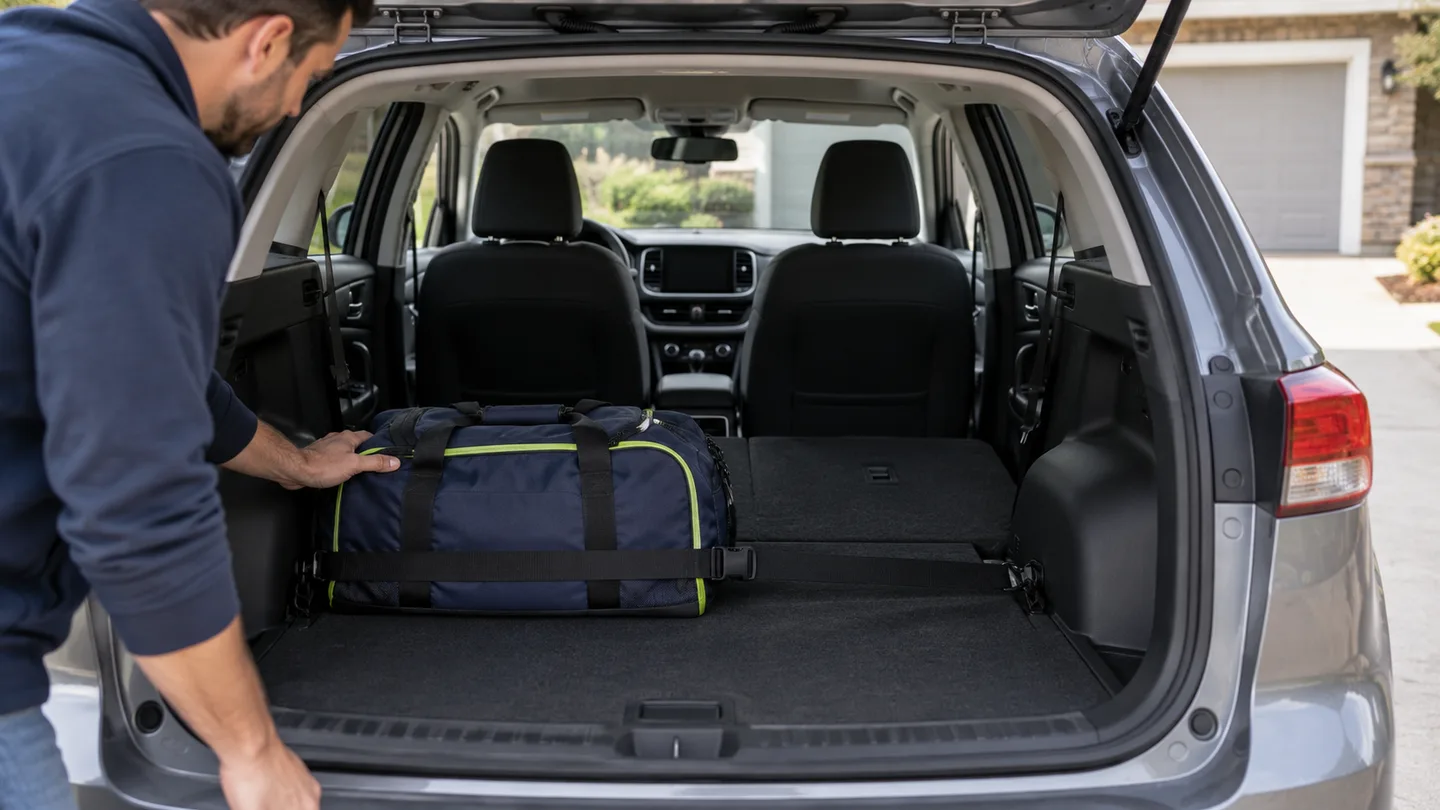
A shipped car can look like spare moving space. The trunk is empty, the household truck is full, and a few boxes seem harmless. Auto transport companies often see it differently. Their service is priced and insured around moving a vehicle, not carrying an undocumented second shipment of clothing, electronics, papers, or tools. Some providers allow a small amount of personal property in a specific part of the car; others restrict it further. The allowance can change with the route, assigned carrier, port, or vehicle type.
Read the policy in the booking agreement and confirm it with the carrier that will physically load the car. Montway's published terms, for example, allow one suitcase or bag up to 100 pounds in the trunk or storage area, require disclosure at pickup, and reserve the carrier's right to reject unsafe or unlawful contents. Sherpa's published terms describe an aggregate 100-pound allowance in the trunk or secured below the window line, with larger amounts subject to advance disclosure and possible additional fees. These are examples of company policies, not a universal 100-pound rule. Your contracted carrier may set different limits.
The safest packing decision is usually to keep the car nearly empty. If you do use an allowance, choose low-value, replaceable items and document what the provider accepted. Never put medicine, identification, cash, legal records, work equipment, jewelry, or anything needed in the first days after arrival inside the shipped car. A delay or access problem can make those items unavailable even if nothing is lost or damaged.
Separate the vehicle from its contents
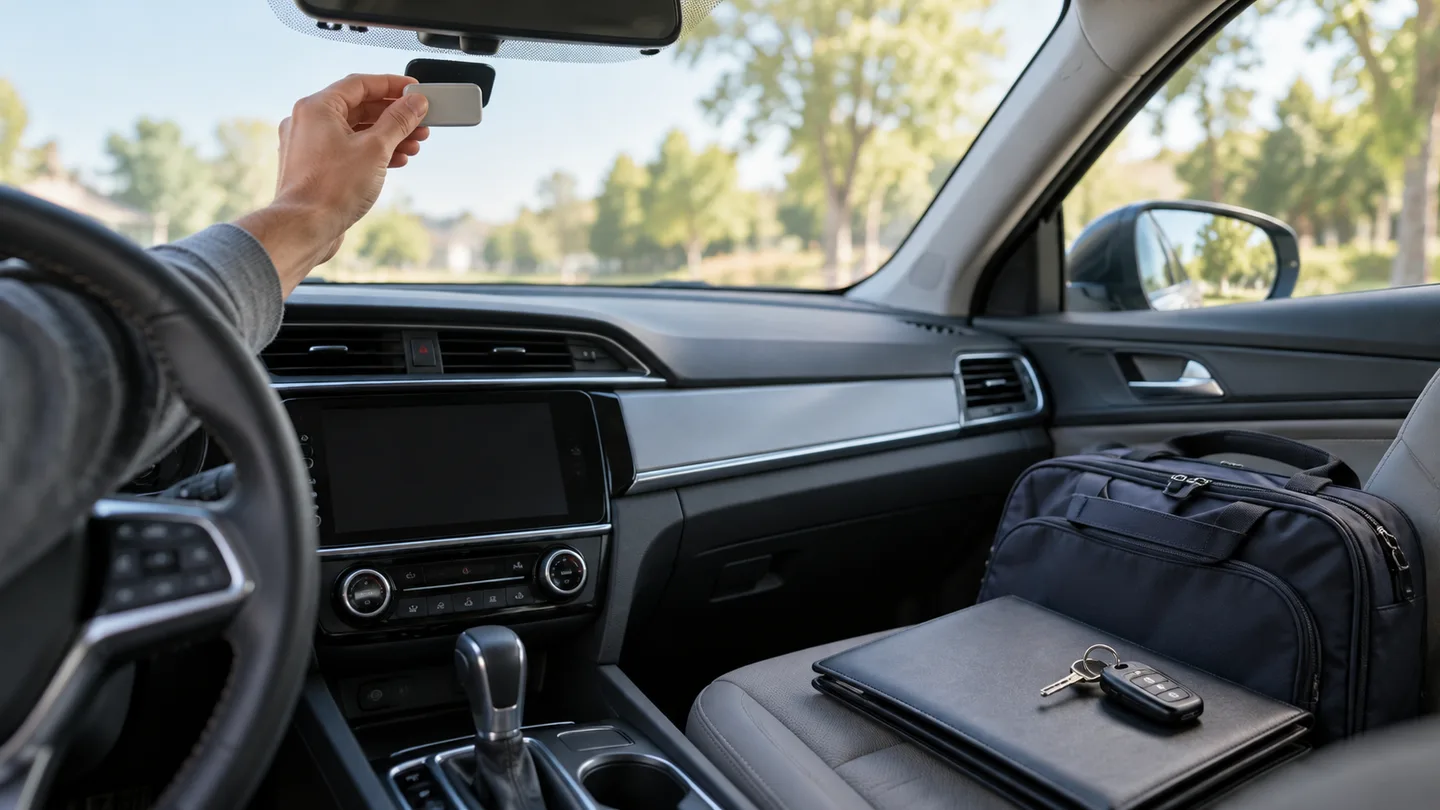
The car is the shipment an auto carrier expects to load, secure, move, inspect, and deliver. Personal property inside the cabin or trunk is a different risk. Many contracts limit responsibility for those items, even when a small amount is allowed. Sherpa's route FAQ says its carriers cannot be responsible for personal items left inside. Montway's terms similarly disclaim liability for personal property left in the vehicle and for vehicle damage caused by improper loading. Read the actual contract language rather than assuming “the car is insured” also means every item inside is insured.
A vehicle condition report normally documents the car's panels, glass, keys, and visible condition. It may not list the contents of a suitcase in the trunk. If a bag disappears, a photograph of the closed trunk does not prove what was inside it. If loose items shift and damage the interior, the vehicle claim may be contested. Your homeowner or renter policy might have separate coverage, exclusions, limits, or deductibles for property away from home; ask your insurer rather than assuming it will pay. The practical answer is to use the household-goods mover or your own luggage for property that matters.
There is also a physical reason for limits. Extra weight changes the vehicle's actual load, and an auto carrier balances several vehicles on a trailer. Items piled above the window line can block a driver's visibility while loading or driving the car a short distance. Loose items can move under braking, strike interior surfaces, or make it hard to access a battery, parking brake, or wheel-lock key. A heavy trunk can affect clearance on a ramp. A driver may reject the car at pickup or ask you to remove excess contents before loading.
Ask the right policy questions before packing
Ask whether any personal items are permitted at all on your route. If yes, ask the total weight limit, number of bags, permitted location, whether the items must be secured, and whether a hatchback cargo area counts as a trunk. Ask about a port, ferry, or ocean segment separately; Sherpa states that vehicles going to or from a port or involving ocean transit must be emptied. Do not assume a domestic ground allowance applies to a different route. A dealer purchase or leased vehicle may have its own restrictions too.
Ask who must approve the items. A broker's salesperson can explain a general policy, but the assigned carrier may have the final operational decision at pickup. Request the answer in writing in the booking record or dispatch message. If the carrier permits one bag, show it to the driver before loading and note its presence only if the carrier's procedure allows. Do not hide bags beneath blankets or tell the driver the car is empty when it is not. Undisclosed contents can cause a refusal, revised price, or dispute after loss.
Ask what happens if the driver rejects the contents at the curb. Can you remove them without delaying pickup? Will the carrier leave while you repack? Is there a rescheduling charge? A simple contingency is to have the items in one removable bag and enough space in your own travel luggage or household shipment to take them back. Do not bring an entire room's contents to the handoff hoping the driver will make an exception.
Pack the allowed area conservatively
If the contract permits belongings, use a soft-sided bag or a closed box that fits entirely within the stated area and does not interfere with vehicle operation. Secure it so it cannot slide into the rear seat, block the rear glass, or shift against trim. Keep access to the spare tire, battery, charging cable, or emergency release if the driver may need it. Do not fill the footwells with heavy objects or wedge belongings around pedals. A trunk is not safe storage for a loose toolbox whose contents can scatter.
Weigh the bag at home. People often underestimate the weight of books, cookware, shoes, and tools. A “small” box of books can be much heavier than a suitcase of clothes. If the allowance is 100 pounds, that is a maximum stated by some providers, not a target to reach. Leave margin for any scale difference and for the fact that the driver can still refuse items that appear unsafe. The car itself may be close to equipment limits if it is large, modified, or packed with factory accessories.
Avoid liquids that can leak, breakable glass, perishable food, plants, flammables, ammunition, hazardous chemicals, and items restricted by law or the carrier's terms. A container that leaks onto upholstery can create more damage than the value of what it held. Do not ship a fuel can or pressurized cylinder inside a passenger vehicle. If an item has a battery, ask whether the carrier permits it; rules may differ for a phone in a suitcase, a large spare battery, or an e-bike pack. When in doubt, move it through an appropriate service.
Remove the things you should keep with you
Carry your driver's license, passport, vehicle title if needed, registration copy, insurance details, medications, medical devices, cash, checks, jewelry, legal papers, keys to the new home, and irreplaceable photos personally. Keep a working key or fob for the carrier, but document exactly what is handed over and retain a spare. Remove garage-door remotes, toll transponders, parking passes, and any device that could incur charges or reveal access to your old or new address. Sherpa's FAQ warns that an electronic toll device left in the car may register fees during transport.
Remove loose electronics and charging accessories that you would miss on arrival. The car may arrive several days after you, be held at a terminal, or require a receiver other than you. If you need a laptop for work, do not put it in a bag inside the shipped car. If a child needs a car seat immediately, carry it, rent one with a temporary vehicle, or arrange it through the household-goods shipment with a deliberate backup. A shipped car's trunk is a poor place for first-week essentials.
Check privacy as well as value. Remove papers with Social Security numbers, medical information, spare house keys, gate codes, and written passwords. Clear the garage-door memory if a buyer or dealer will receive the car, where appropriate. Lock the glove compartment only if the driver will not need access to any required documents or controls. A terminal or carrier may move the car more than once; keep private information out of every location that could be accessed during ordinary handling.
Distinguish personal items from vehicle equipment
A spare tire, manufacturer-supplied charging cable, wheel-lock key, or removable roof component may be vehicle equipment rather than household cargo, but the carrier still needs to know where it is. Record its presence on the condition report if the driver accepts it. A second set of wheels, large aftermarket audio equipment, or detached bumper may be treated differently. Ask before pickup instead of hiding bulky equipment in the back seat. If a component is not attached, find out whether the carrier will transport it and how it should be documented.
Mounted accessories can also be vulnerable. Remove a roof rack, bicycle carrier, toll tag, loose antenna, or external cargo box if the provider instructs you to. Photograph the car after removal. If an accessory remains, ask whether it changes the vehicle's height, length, or loading requirements and whether it is covered. A modified vehicle may need a different trailer or clearance plan; the guide to non-running or modified vehicles explains what to disclose before dispatch.
For a motorcycle, the transport problem is even more sensitive to loose equipment and tie-down access. Helmets, saddlebags, and detachable windshields should be discussed with the motorcycle carrier rather than assumed to ride safely on the bike. The motorcycle handoff guide covers how to document those components and the machine itself. A car policy about trunk weight tells you nothing about a motorcycle's accessories.
Record any permitted bag without overselling the record
If the carrier expressly accepts a bag, photograph the bag outside the car, its general contents if useful, and its secured position in the allowed compartment. Do not photograph sensitive documents because they should not be in the bag at all. Note the approximate weight and show the carrier the actual bag. If the driver declines to list personal contents on the bill of lading, do not invent an “inventory” that the carrier has not accepted. Keep your own record and the written allowance, while understanding that those documents may not create coverage.
At delivery, inspect the vehicle before signing, then check whether the accepted bag is present. If it is missing or has shifted, note the observation on the delivery form and contact the carrier and broker according to their procedures. Be precise about what you saw rather than assuming a cause. A bag could have been removed for inspection, fallen open, or never loaded after a pickup change. Ask for terminal or transfer records if custody changed. Preserve the pickup and delivery documents and original photos.
If a vehicle is sold or transferred to someone else during the move, agree in writing who removes contents and who receives the keys. A buyer or dealer may not expect a personal bag in the trunk. The arrival receiver should know exactly which items are supposed to be in the car and which are not. That prevents an ordinary misunderstanding from becoming an avoidable claim dispute.
Plan a better place for the excess
If the proposed bag exceeds the carrier's allowance, use the household-goods shipment, your personal travel luggage, or a suitable parcel or freight service if its terms permit the item. Compare the added cost and delivery time rather than trying to force the car into a second role. Household movers also have prohibited-item and high-value-item rules, so ask before handing over fragile, hazardous, or irreplaceable property. A small shipping box may be simpler than delaying a car carrier at pickup.
Keep the first-week essentials kit with you. The car and household goods may reach the new home on different days. If you can function for several days without opening the car's trunk, you have probably packed the right things with you. If you cannot, move those items to your personal bag before the carrier arrives.
Reconfirm the allowance when dispatch changes
Many auto shipments are arranged by a broker and performed by an assigned carrier. Your original quote may describe a standard personal-item allowance, while the carrier's operating rules are narrower. When dispatch sends the carrier name, ask the broker to confirm the agreed allowance with that carrier in writing. Repeat the vehicle type and route, and describe the bag you actually intend to leave. If the carrier refuses, remove the bag before pickup and request an updated written booking record if fees or service terms change. A phone representative's broad statement is difficult to rely on when the driver is already at the curb.
If the car will pass through a terminal, ask the terminal whether it will accept a vehicle containing a bag and whether staff may inspect or move it. A terminal might need to move the car between rows before a carrier loads it. If a port or ocean leg is added after the booking, recheck the policy before the car leaves origin. A formerly permitted bag can become incompatible with the new route. Keep a travel bag of essentials with you rather than trying to retrieve it from a locked yard after the vehicle is checked in.
Inspect the interior condition at pickup as well as the exterior. Photograph the seats, dash, carpet, and cargo area after you remove loose property. This helps distinguish preexisting stains or trim damage from a new observation at delivery. Do not claim that the carrier inspected every hidden surface merely because you took photos. Ask the driver whether the condition form has a place for visible interior concerns and record only what both sides can reasonably examine.
Finally, plan who will unpack the car at destination. If a proxy receives it, tell that person whether one accepted bag is expected, where it was placed, and that they should report a missing or shifted bag on the delivery record. If a terminal releases the car after hours, the proxy may have little opportunity to compare contents. The best protection for valuable belongings remains carrying them yourself, not a more detailed note on an auto-transport receipt.
The final check at pickup
Open the trunk and cabin before the driver arrives. Remove valuables and restricted items, secure any allowed bag, take out the toll tag, and confirm the car can be operated safely. Show the driver what remains. Re-read the final carrier instructions, because dispatch may have changed the assigned company or route. If the driver says the bag is not allowed despite an earlier assurance, remove it and document the change with the broker. Do not make the driver carry an undisclosed household load.
The most useful rule is simple: the vehicle should be ready to transport as a vehicle. Any personal property is an exception that needs a specific written allowance, safe placement, and acceptance at the actual pickup. The car's insurance and condition report are not a substitute for a properly booked shipment of household belongings.
Sources and scope
Examples in this guide come from Montway's published terms, Sherpa's FAQ, and Sherpa's terms of service. These sources describe their own policies and do not establish one national packing allowance. Read the broker and actual carrier agreements for your route and vehicle before leaving anything inside.
Check the current rule, contract and source page for your route and service. This guide helps you prepare clear questions and records.