
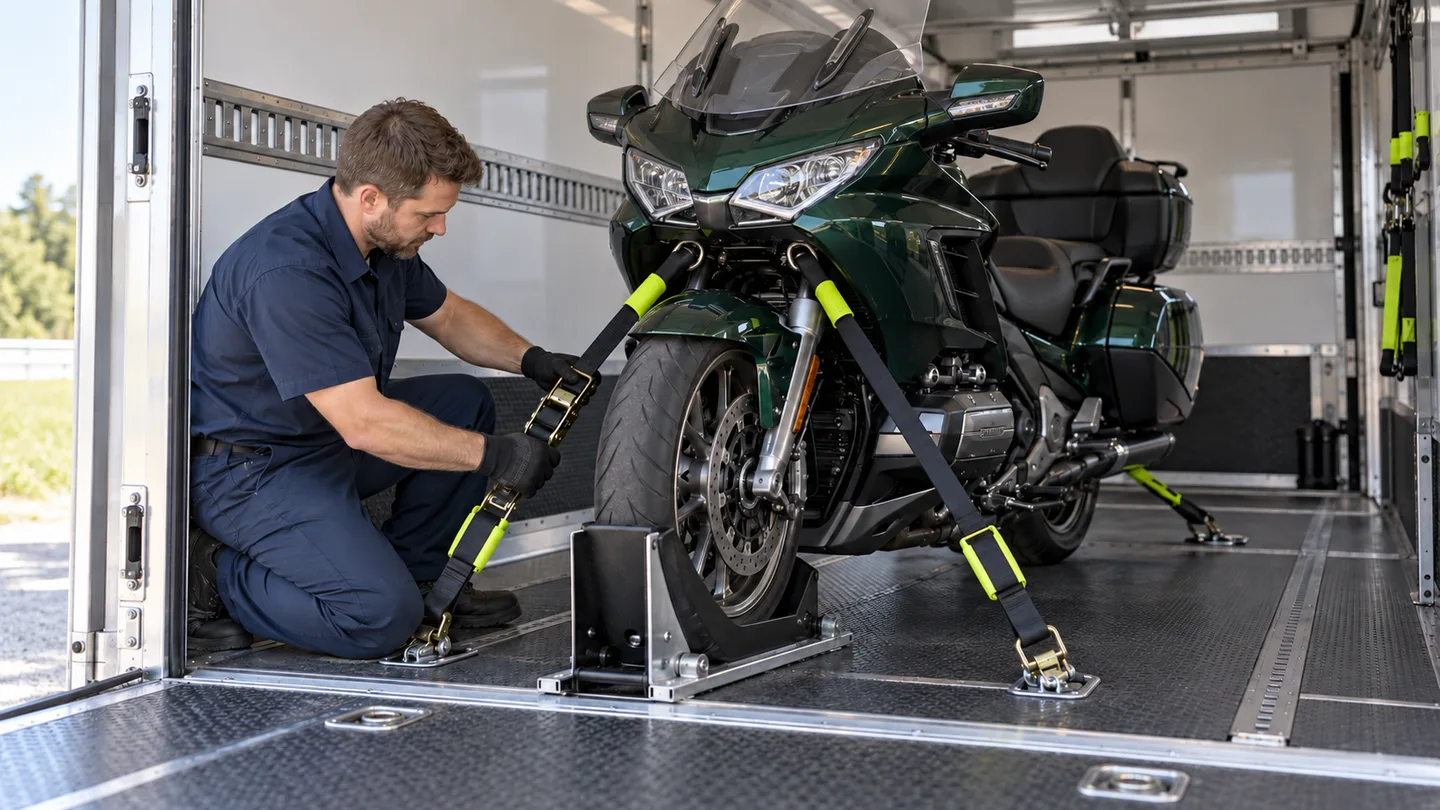
A motorcycle is not simply a smaller car on an auto carrier. It has a narrow footprint, exposed controls, vulnerable finishes, and a center of gravity that requires purpose-built support. Saddlebags, windscreens, fairings, aftermarket exhausts, and sidecars can change the loading plan. Before booking, find out what equipment the carrier will use, what condition the bike must be in, and who will document it at pickup and delivery. A low quote is less useful if it assumes a standard running motorcycle and yours needs a liftgate, crate, or specialized restraint.
The owner does not need to become the carrier's tie-down engineer. The carrier should explain its loading method and use trained staff and suitable equipment. Your job is to describe the machine accurately, prepare it according to the carrier's written instructions, preserve a clear condition record, and ensure a responsible person can inspect it at both ends. The same approach applies whether the bike is traveling across a state line during a household move, going to a buyer, or leaving a repair shop.
Begin with the make, model, year, approximate weight and dimensions, running condition, and any modification that changes height, width, clearance, or tie-down access. A touring bike with a tall windshield and hard luggage is not the same load as an unmodified commuter motorcycle. A sidecar or trike may require a different trailer and price. Montway's motorcycle service page says its advisors can arrange sidecar shipment; that is an example of why the unusual configuration must be disclosed before dispatch, not at the curb.
Choose the service around the motorcycle
Ask whether transport will be open or enclosed, whether the bike is crated or secured upright on a motorcycle pallet or trailer, and whether it will be transferred between vehicles or terminals. Ask whether the provider is a broker arranging the service or the carrier physically moving the bike. Get the transporting carrier's identity before handoff and verify applicable authority for interstate service. A platform may connect you to carriers without itself carrying the bike; the contract should make that role clear.
Enclosed transport can reduce exposure to weather and road debris, but it does not eliminate handling risk. A crate may protect a small bike during freight handling, yet crating adds preparation, size, and access requirements. Open trailer service may be suitable when the carrier has motorcycle-specific restraints and the bike's finish is not unusually sensitive. Ask what the quoted price includes: pickup, loading, terminal handling, storage, unloading, and delivery. Do not compare an enclosed door-to-door price with an open terminal price as though the services are identical.
Confirm that the pickup and delivery sites can accommodate the equipment. A large trailer may require an open lot near a narrow residential street. A shop may have a loading dock or lift; a private driveway may not. Ask whether the carrier brings a ramp or liftgate, who rolls the bike, and whether an inoperable motorcycle can be loaded without starting it. If the carrier expects you to ride the bike up a ramp, clarify that before booking and consider whether a professional should handle it instead. No delivery deadline justifies an unsafe loading maneuver.
Disclose condition and modifications precisely
State whether the engine starts, whether the motorcycle rolls freely, whether steering and brakes work, and whether tires hold air. “Needs a battery” may mean something different from “rear wheel locked.” If a collision has damaged the fork, frame, or controls, the carrier may need a dolly or winch and a different loading method. Tell dispatch about leaks, low ground clearance, and missing keys. For a bike that cannot roll or brake, ask for a written equipment plan rather than assuming standard motorcycle service will accept it.
Photograph and describe modifications that affect the bike's footprint or restraint points: extended swingarm, wide handlebars, hard cases, custom paint, crash bars, lowered suspension, windshield, fairings, sidecar, or trike conversion. Give actual overall dimensions when possible. A carrier may not be able to route straps around certain bodywork without touching the finish. Harley-Davidson's loading guidance describes using appropriate straps and safe tie-down points rather than fastening hooks to vulnerable surfaces. It is a loading reference for the carrier discussion, not a reason for an untrained owner to improvise at pickup.
If the motorcycle has nonstandard running or loading needs, compare the plan with the guide to non-running and modified vehicle transport. That guide addresses equipment and clearance decisions that also arise with unusual cars. For the motorcycle, ask for the exact trailer, ramp or lift, wheel chock, and restraint method that the assigned carrier expects to use. A broker's generic statement that it can “handle anything” is not a substitute for the actual carrier's agreement.
Prepare the bike under the carrier's instructions
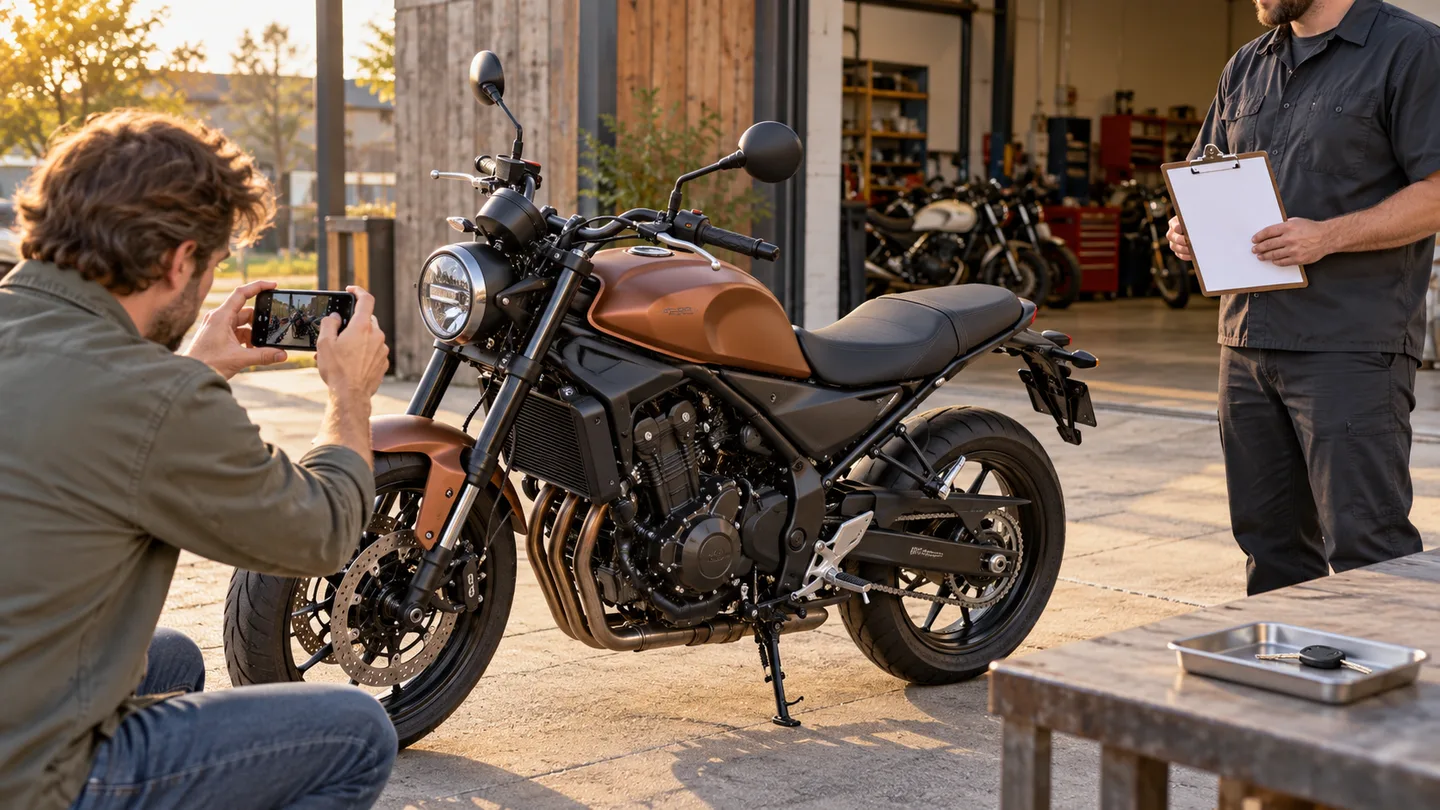
Wash enough dirt from the machine to see existing scuffs, cracked plastic, bent levers, and paint chips. Take dated wide photographs from both sides, front, rear, and high three-quarter angles. Include close images of delicate or expensive components: tank, fairings, exhaust, mirrors, windshield, saddlebags, and wheels. Note the odometer and any warning light or mechanical issue. Original photos should be kept, not edited or filtered. A clean baseline protects the carrier from false claims as well as the owner from an undocumented new mark.
Ask the carrier how much fuel it allows, whether it wants the alarm disabled, whether the battery must remain connected, and whether tires should be at normal pressure. uShip's preparation advice describes checking leaks, tire condition, battery, and fuel level, but individual carrier instructions can differ by trailer and route. Do not drain fuel or disconnect a battery based solely on a generic article. Doing so may prevent the carrier from safely loading or moving the bike. If a battery maintainer lead or aftermarket electronics are installed, disclose them.
Remove loose personal items and accessories the carrier will not secure: a helmet on a hook, phone mount, detachable luggage, GPS unit, loose tool roll, or cover that could flap in transit. If hard cases or a windshield remain attached, ask whether the carrier will accept and document them. Keep keys, spares, and alarm fobs organized. Give the carrier only what it needs to move the bike, record the number of keys handed over, and keep a spare if possible. A buyer or proxy receiver should know what is supposed to be returned.
Do not assume the motorcycle can carry a box of household items in its saddlebags. The carrier may need access to tie-down points, and unsecured contents can shift. If the bike is part of a household move that also includes a refrigerator, washer, or other heavy appliance, treat those as separate handling plans. The heavy-appliance transport guide explains how an item's dimensions, preparation, and access route affect the household shipment. The motorcycle should have its own booking and condition record rather than being added informally to the moving truck.
Make the pickup inspection specific
At pickup, confirm the bike's identity against the booking, including VIN and plate if present. Verify the carrier name and pickup location. Walk around it with the driver before loading. The condition form should mark existing scratches, dings, cracked plastics, bent levers, corrosion, leaks, and any missing or loose part. Use location-specific descriptions: “small chip on left edge of tank,” not “some wear.” If the diagram is designed for a car, ask for a text field or attached photos that can describe a motorcycle accurately.
Take photos of the bike at the actual pickup location and of the relevant condition report before signing. If the motorcycle is already on a trailer when the inspection occurs, ask to document the visible condition and note anything hidden by straps or position. Do not crawl under a trailer or step into a loading path to obtain a picture. Preserve the signed form and the driver's copy if they differ. If the carrier uses an app, open the emailed report while the driver is present to confirm that the written notes and images were saved.
Record the handoff time, odometer, fuel indication, key count, and attached accessories where the form permits. These details help compare delivery, but do not claim a full mechanical inspection if no one performed one. If the bike was inoperable at pickup, record exactly how: “engine does not start; wheels roll; steering and brakes function,” for example. A later receiver needs that baseline to avoid attributing an old defect to transit.
Ask about secure loading without taking over
The carrier should select a motorcycle-compatible chock, platform, straps, and attachment points. Ask whether it secures the front wheel, supports the machine upright, and restrains rear movement without compressing delicate bodywork. Harley-Davidson's own loading article warns against relying on a center stand during transport and describes controlling both front and rear movement. The exact method still depends on the model, carrier equipment, and manufacturer instructions. Do not direct a driver to attach a strap to a fork tube or crash bar if you cannot verify that point is suitable.
Watch from a safe location. If a strap contacts paint, a fairing flexes, or the bike appears unstable, tell the driver before departure and ask them to check it. Do not place your hand beneath a shifting motorcycle or climb onto the trailer. Photograph the secured bike only when the driver says it is safe to do so. A photo of the load can clarify what equipment was used, but it does not replace the pickup condition report.
Ask whether the bike will be transferred to another truck or stored at a terminal. If so, ask how condition is recorded at each transfer and how the receiving carrier obtains the loading instructions. A custom or fragile motorcycle should not arrive at a second yard with only a generic label. Keep the dispatch contact and expected update schedule so you know who is responsible for a delay or change in routing.
Prepare the destination receiver
The receiver should have the pickup report and photos, plus the list of keys and accessories. Ask the carrier for a delivery window and a legal place to unload. A rider who will not be present can authorize another adult, but that person should be willing and able to inspect the bike, not merely sign a receipt. Explain the preexisting marks so a routine chip is not reported as new. If the bike cannot be ridden safely from the unloading point, arrange a trailer or tow in advance.
At delivery, compare fairings, tank, frame-visible areas, controls, mirrors, windshield, exhaust, wheels, and luggage before signing. Check that the bike rolls, steers, and brakes as represented at pickup. Verify key count and odometer. Photograph any new mark in context and add a specific exception to the delivery document before signing. If low light, rain, or straps prevent a complete view, note the limitation. Ask for the final signed copy immediately and follow the carrier's claim process promptly if a difference appears.
Do not start a motorcycle with a visible fluid leak or damaged control simply to prove that it runs. If it is unsafe, document the symptom and arrange a qualified inspection. A carrier may dispute whether a mechanical issue arose during transport; preserve pickup and delivery records and any shop diagnosis. Be factual. The handoff report should describe what was observed, not promise a causal conclusion on the spot.
Handle a dealer, seller, or auction pickup
Not every motorcycle starts at the owner's home. A dealer, private seller, repair shop, or auction yard may hand it to the carrier. Identify who can release the bike, when the location is open, and whether the carrier needs an appointment, release code, or proof of purchase. Give the pickup contact the exact carrier name and dispatch number once assigned. A driver arriving at a locked gate or without a required release document may lose the loading slot and charge for a second attempt.
Ask the releasing party to photograph the motorcycle immediately before handoff and to record its condition with the driver. Listing photographs taken weeks earlier are not enough; the bike may have been test-ridden, cleaned, repaired, or stored since then. Request current mileage, key count, installed accessories, and known faults. A private seller may describe the bike as “runs fine,” but a carrier needs the operational facts that affect loading. If the seller cannot be present, arrange an authorized employee who can sign the pickup report and send you a copy before the truck leaves.
At destination, the buyer should compare the bike with that contemporaneous pickup record rather than the sale listing alone. A sales dispute and a transport-damage dispute have different evidence. If a fairing was cracked in the listing and still cracked at pickup, it is not newly damaged in transit. If a new scratch appears at delivery, note it on the carrier's report even while you separately discuss sale terms with the seller. Keep the two conversations and documents distinct.
Check coverage for a valuable or unusual bike
Ask for the carrier's cargo coverage details and any deductible, exclusions, or per-vehicle limit that matters to this motorcycle. A custom build, collectible bike, sidecar, or expensive accessories can exceed a standard assumption. Provide the stated value, modification list, and photographs before booking, then ask whether an enclosed or specialized carrier is required. A broker may verify the carrier's insurance, but ask for the actual policy or certificate information applicable to the assignment. Do not assume a quote automatically covers every detached accessory.
If a claim arises, the carrier may request proof of value, ownership, repair estimate, and pickup and delivery reports. Retain purchase documentation or a professional valuation where relevant. Do not rely on a casual estimate typed into an online form as proof of replacement value. If the bike has custom paint or rare parts, ask a qualified shop about repair feasibility and lead time. Confirm when the carrier may inspect it before authorizing cosmetic work, while making any immediate safety repair needed to prevent further harm.
Some motorcycle owners also have a separate motorcycle insurance policy. Ask that insurer whether transport-related loss is covered and whether using its claim process affects deductibles or future premiums. Do not assume the carrier's policy and your policy stack automatically. The answer depends on contract terms and the cause of loss. Knowing the contacts before loading is easier than searching for them after a disputed delivery.
Keep the transport file together
Store the quote, booking agreement, carrier identity, insurance information, pickup and delivery condition forms, original photos, dispatch messages, payment receipts, and any claim correspondence in one folder. Motorcycle transport often involves a broker, carrier, and perhaps a terminal; the file should identify which entity had the bike at each stage. Check the contract's deadlines and exclusions. A regulator complaint about an unregistered or deceptive transporter is separate from a damage claim under the carrier's process.
The best motorcycle shipment is predictable at both handoffs. The carrier knows the exact machine and its modifications; the owner knows how it will be loaded, where it will be delivered, and who can receive it; both sides share a detailed condition baseline. That is more useful than assuming a motorcycle can ride like one more car on a crowded trailer.
Sources and scope
This guide draws on Harley-Davidson's motorcycle loading guidance, uShip's motorcycle preparation guidance, and Montway's motorcycle shipping information. These sources describe common equipment and preparation questions. The assigned carrier's written requirements, the motorcycle manufacturer's instructions, and the actual transport contract control the handoff; do not treat a general loading article as a substitute for trained loading personnel.
Check the current rule, contract and source page for your route and service. This guide helps you prepare clear questions and records.