
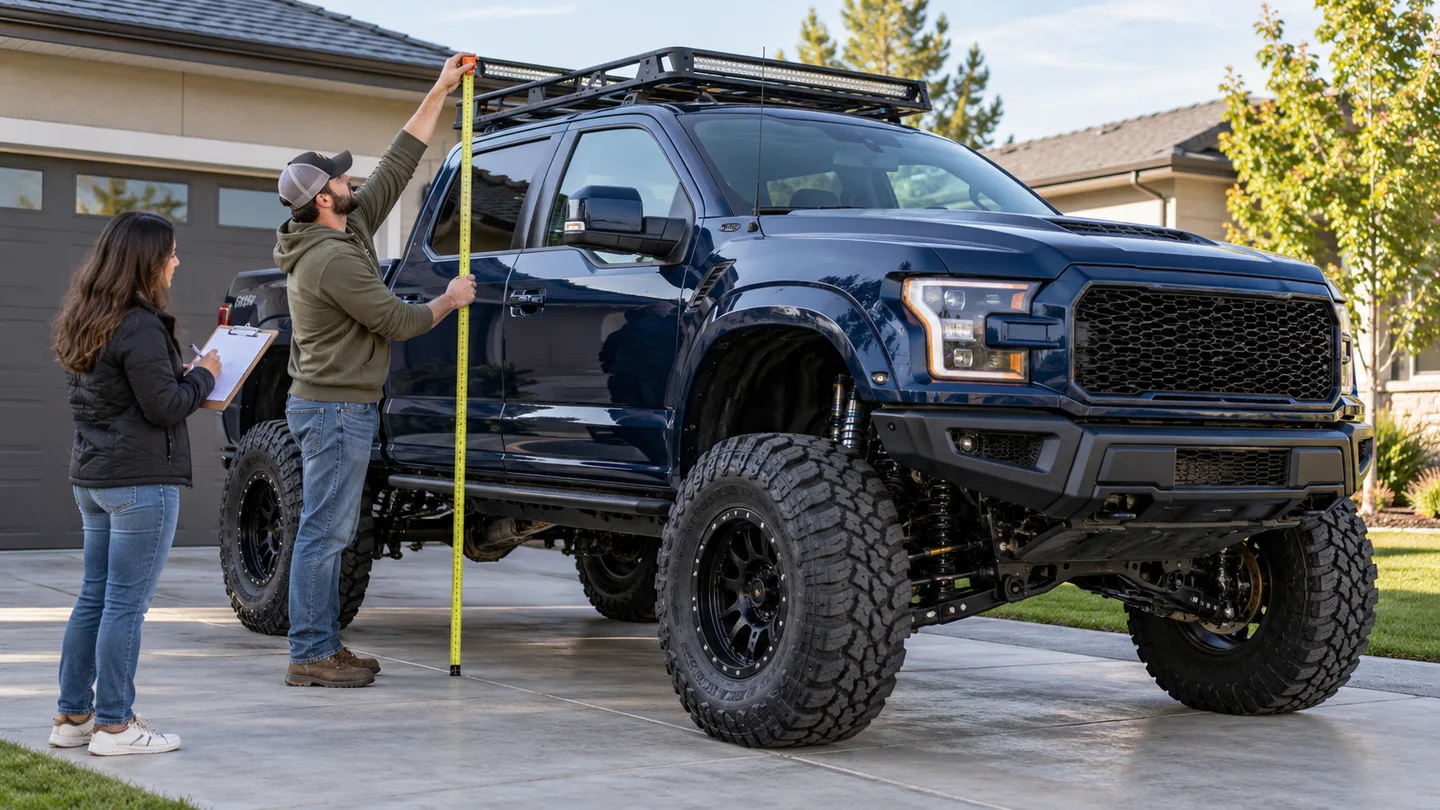
A standard car-shipping quote usually assumes the vehicle can be driven onto a conventional auto carrier and fits normal deck dimensions. A vehicle that will not start, has a locked wheel, rides unusually low, or stands unusually tall changes the work before the trip even begins. The carrier may need a winch, rollback, liftgate, lowboy, longer ramps, different restraints, or an accessible transfer point. The time to determine that is when you request a quote, not when a driver reaches the driveway.
The key is a factual specification sheet. “It does not run” is too vague. Say whether it rolls, steers, brakes, shifts into neutral, has four usable wheels, and has a working key or release control. For a modified vehicle, give its current measured length, width, height, ground clearance, weight if known, and photographs of alterations. Do not rely only on the original factory specifications. A lifted truck with oversized tires or a lowered sports car with an aftermarket front splitter may no longer fit the equipment suggested by its model name.
Montway distinguishes a non-running but movable vehicle from one that cannot roll or steer. The former may be winched onto suitable equipment; the latter can require a rollback, forklift, or other special handling. AmeriFreight says dimensional modifications must be disclosed and that a very low vehicle may require an enclosed liftgate service. These examples show why the actual condition, not the label “inoperable” or “custom,” determines the transport plan. Equipment availability and prices depend on the route and assigned carrier.
Describe what the vehicle can do
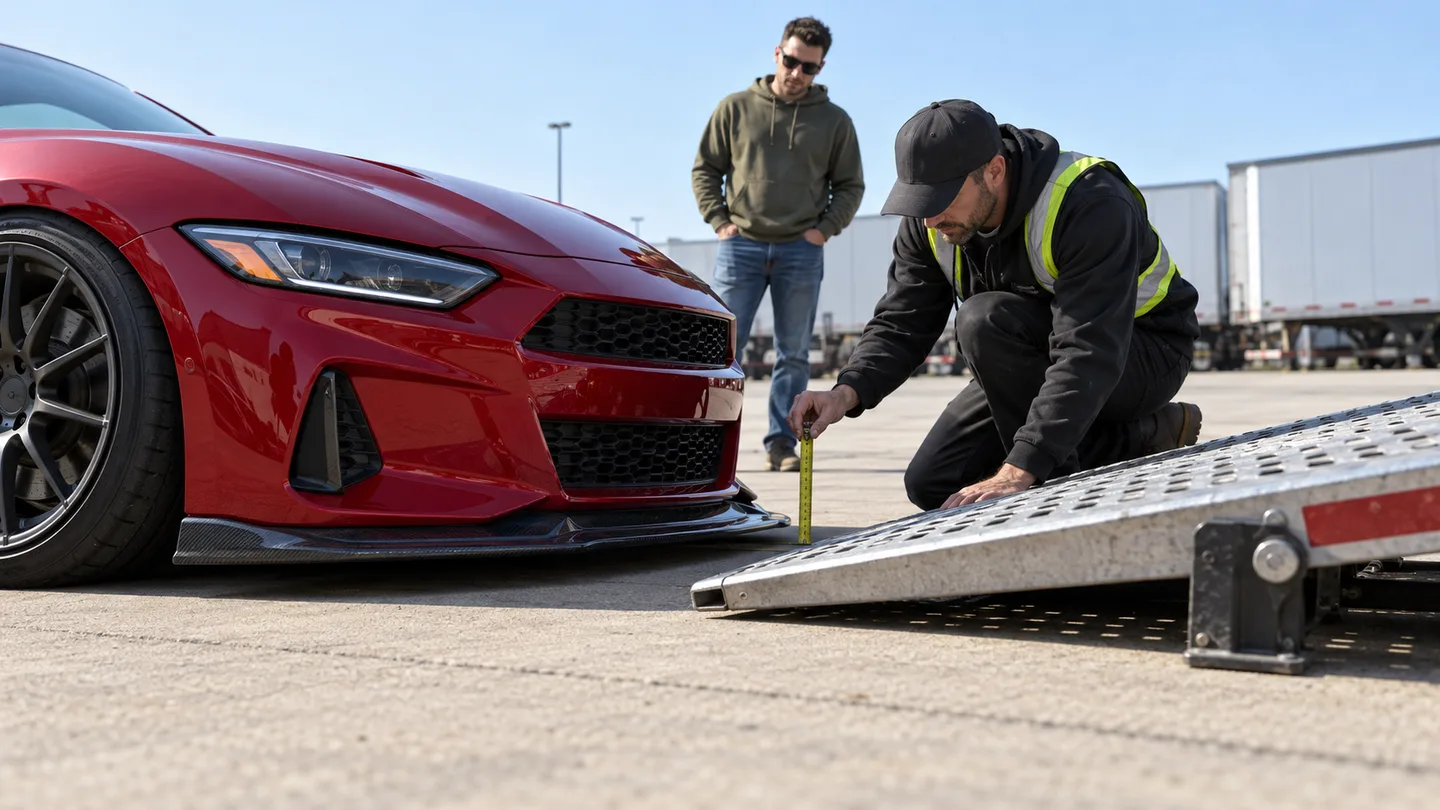
Make a short operational checklist before seeking bids. Does the engine or motor start? Can the vehicle roll freely when the brake is released? Can the front wheels steer through a normal arc? Can the parking brake and service brake stop it? Can the transmission be placed in neutral? Are all wheels, tires, and axles attached and able to bear load? Can the doors open, and is the driver's seat accessible? A vehicle with a dead battery but sound tires may be much easier to load than one with a collapsed suspension or seized brake.
Record the cause of inoperability only if you know it. “Battery discharged, started last week with a jump” is different from “engine seized” or “unknown, auction purchase.” Do not diagnose an accident-damaged car from photographs alone. If you are buying at auction or receiving a vehicle from a repair shop, ask the releasing party to confirm whether it can roll and steer and what equipment the site allows. A carrier may have to arrange a yard loader; that needs a separate appointment and may carry a fee.
Some modern cars require a specific procedure to enter neutral or release an electronic parking brake when power is unavailable. Find the manufacturer's towing and transport instructions or ask a qualified service technician. Do not force a selector or tow a locked drivetrain because the driver is waiting. Tell dispatch what procedure and tools are needed, whether an auxiliary power source is required, and who is authorized to operate the controls. A vehicle that cannot be safely rolled should be quoted as such.
Measure the modified footprint
Measure overall height from ground to the highest fixed point, including roof racks, light bars, antennas, or camper shells. Measure width including mirrors when they cannot safely fold; measure length including bumper guards, hitch racks, or extended beds. Record ground clearance at the lowest front and rear points and under a vulnerable side skirt. Note tire size, wheelbase, and approximate weight if reliable documentation is available. A manufacturer curb weight may not reflect a steel bumper, winch, larger tires, aftermarket batteries, or a conversion body.
Photograph the vehicle beside a measuring tape from the front, rear, and side. Include close images of low lips, roof equipment, widened fenders, and any protruding accessory. These photos help the carrier see what dimensions mean in practice. If the vehicle is a lifted pickup, a tall van, or an off-road rig, standard enclosed trailers may have a height limit; Montway notes that oversized vehicles sometimes need specialized open equipment such as a lowboy or removable gooseneck. A low sports car may instead need a liftgate or shallow loading angle. One specialty trailer does not solve every geometry problem.
Tell the broker whether a modification is removable. A roof cargo box might be removed and shipped separately; a welded roll cage cannot. Do not remove safety-critical equipment solely to squeeze a vehicle onto a standard trailer. Ask the carrier what configuration it will accept and preserve photographs before and after any accessory removal. If a part travels separately, document who handles it, where it is packed, and whether it is covered. A loose front splitter in the car is not automatically part of the vehicle shipment.
Match equipment to loading risk
A winch can pull a vehicle that rolls and steers onto a suitable trailer, but it does not make a locked wheel or collapsed axle disappear. A rollback tow truck can sometimes bring an immobile car to a larger carrier, creating an additional handoff and condition record. A forklift may be used at certain auction or salvage yards, but it can damage a vehicle if lifting points are wrong and may not be available at a private residence. Ask who supplies each piece of equipment, who operates it, and where the handoff happens.
For low clearance, ask the carrier for its ramp approach angle or whether it uses a hydraulic liftgate. An improvised stack of boards at the curb is not a transport plan. For a wide or heavy vehicle, ask about deck capacity, securement points, overall route clearance, and permits if applicable. The professional carrier must make the load and route decisions; the owner should provide accurate measurements and decline a setup that visibly risks damage. Do not crawl under a vehicle, handle a tensioned winch line, or stand downhill of a rolling car to help load it.
Ask whether the carrier will drive, push, winch, or lift the vehicle at pickup and again at delivery. The unloading site may lack the equipment available at origin. A car loaded by an auction forklift cannot necessarily be unloaded by a standard driveway ramp. Confirm the full sequence in writing. If the destination has a steep driveway or parking garage height limit, choose a nearby legal, level, accessible handoff point before dispatch.
Get a quote that names the exceptions
Ask for a quote based on the specification sheet, not a generic year/make/model form. It should identify the non-running or modified condition, the proposed loading method, pickup and delivery access, specialized equipment, additional labor, and any separate local tow. Ask whether storage or a missed pickup window changes the price. Montway explains that non-running vehicles can cost more because of equipment and labor; the precise amount is route-specific. A low standard-car quote may be withdrawn when the driver discovers a locked wheel.
Compare proposals on the same facts. Give each provider the same photos and measurements. A quote for “winchable car with four rolling wheels” is not comparable to one for “immobile car needing rollback transfer.” Ask whether the bidder is a broker or the carrier and who will physically load. The actual motor carrier should confirm equipment availability before you pay a nonrefundable deposit or schedule a release from an auction yard. Keep the assignment confirmation and any revised price in writing.
Consider insurance and value. A modified vehicle may have custom parts or paint not obvious in a factory valuation. Ask about cargo coverage, per-vehicle limits, exclusions for loose or aftermarket parts, and the claim process. Keep receipts, an appraisal where appropriate, and detailed photographs. The carrier's ability to move the vehicle safely and the insurer's treatment of a high-value modification are separate questions. A specialized trailer does not automatically raise the coverage limit.
Three examples that require different plans
Consider a sedan that starts only with a jump but otherwise rolls, steers, and brakes. The owner should disclose the battery problem, provide a working key, and ask whether the assigned carrier will drive it briefly after an assisted start or winch it. The pickup site must allow the carrier to approach safely. If a jump is used, record that the car started under assistance; do not label it “fully operable” on the condition report. The receiver should expect a weak battery and arrange a jump source or tow at destination. A minor starting fault changes preparation, but it may not require the same equipment as a missing wheel.
Now consider a low sports coupe with a front splitter just inches above pavement. The engine runs, yet a normal trailer ramp can damage the front lip before the car reaches the deck. Give the carrier measurements at the lowest point, photos of the splitter and driveway slope, and the wheelbase. Ask for a shallow-angle ramp or liftgate and a level loading site. If the carrier plans to use boards, ask whether that method is approved for the vehicle and trailer rather than improvising on arrival. The destination may be even steeper than origin, so confirm the unloading method too. A running vehicle can still be a specialized load.
A lifted pickup with large tires and a roof rack presents the opposite clearance problem. Measure height with the rack, width across tires and mirrors, length with any bumper or hitch hardware, and weight after modifications. A standard enclosed trailer may be too low, while an open deck may face route-height and weight constraints. Ask whether a rack can be safely removed before pickup, who stores it, and whether the final dimensions have been remeasured. If the vehicle has a winch, auxiliary battery, or fuel cans, disclose those items separately. A quote based on the factory pickup model would omit the very features that determine the trailer assignment.
Each example has a different failure point: insufficient power, approach angle, or overall envelope. Writing a single “special car” note on a booking form hides that difference. When you contact the provider, lead with the limiting factor and then supply the full checklist. If a quote agent cannot tell you how the equipment addresses that factor, request review by dispatch or an experienced carrier before committing.
Coordinate pickup access and release
A pickup from a private driveway needs room for the transport equipment and a legal place to work. A rollback may not fit under trees or power lines. An enclosed trailer may need a level area for its liftgate. If the carrier proposes a nearby lot, arrange how the inoperable vehicle reaches it; do not assume it can be driven there. Confirm who will be present to sign the condition report and supply keys. Give dispatch photos of the driveway or loading area if access is questionable.
An auction or repair-shop pickup has a different gate process. Ask about release hours, loading appointment, lot number, proof of purchase, storage charges, and who operates yard equipment. The shop may need time to make the car roll or disconnect a failed brake. Tell the carrier if a vehicle has biohazard, flood contamination, fluid leaks, or loose crash damage; such conditions may require a different provider or refusal. Do not conceal a known hazard to preserve a quoted price.
If the vehicle is part of a household move with heavy appliances, keep their handling plans separate. A refrigerator or commercial range has its own dimensions, access route, preparation, and securing needs; the heavy-appliance transport guide covers those decisions. A specialty car carrier should not be expected to carry household goods. If one unusually large household item threatens the moving-truck plan, use the oversized-item shipment guide to address it before loading day. Each shipment should be priced and documented for its own equipment.
Document condition and loading limitations
Photograph all sides of the vehicle, glass, wheels, low areas, roof modifications, and any existing collision damage before pickup. Clean enough to reveal marks where safe, but do not move an unsafe vehicle solely for photos. Mark what can be observed on the pickup condition report. If damage or dirt blocks a full inspection, note the limitation. For a non-running car, record exactly what it could do at origin, such as “rolls, steers, does not start.” That protects both parties if the same issue appears at delivery.
At delivery, compare the report and photographs before signing. Inspect the areas most exposed by the specialized handling: underbody edges, front splitter, wheel rims, suspension, roof rack, loose trim, and the points where a winch or lift contacted the vehicle. Confirm key count and basic operation if the car can be safely tested. If the vehicle remains inoperable, arrange the receiving tow or shop before the carrier arrives. A car blocking a delivery lot after unloading can trigger avoidable fees or unsafe improvisation.
If a driver arrives with equipment different from the agreed plan, stop and call dispatch before loading. Ask what changed and whether the alternative safely fits the vehicle. Document the revised method and price. Do not accept a casual promise that the car will “probably clear” a steep ramp when you can see the spoiler nearly touching it. Equally, do not direct the driver to use a piece of equipment outside their training. An informed pause is cheaper than a preventable scrape or damaged drivetrain.
A decision checklist before booking
The plan is complete when you can answer seven questions: What are the current dimensions and operating state? What equipment will load and unload at both ends? Where can the carrier safely access the vehicle? Who releases and receives it? What price includes all extra handling and storage? Which carrier and coverage apply? What condition record will be signed at every handoff? If any answer is missing, keep the quote provisional. Ask for the final carrier assignment and equipment confirmation before arranging travel, auction release, or storage cancellation. A quote that sounds complete at the sales desk may still depend on a driver accepting the vehicle after seeing it. Preserve the measurements and photographs sent with the quote so you can show exactly what information the provider had when it priced the move.
A non-running or modified vehicle is transportable in many cases, but it is not routine cargo. Accurate disclosure lets the provider assign the right truck, staff, and time. It also gives you a baseline to judge whether a later delay or price change is justified. The most effective preparation is not to solve the carrier's loading problem yourself; it is to describe the vehicle precisely enough that the carrier arrives ready to solve it safely.
Sources and scope
The operational categories and equipment examples are informed by Montway's inoperable vehicle guide, its oversized vehicle guide, AmeriFreight's modified vehicle guidance, and uShip's preparation guidance for non-running vehicles. These are provider guidance, not a universal equipment standard or guarantee of availability. Confirm the assigned carrier's plan and contract for the actual vehicle and route.
Check the current rule, contract and source page for your route and service. This guide helps you prepare clear questions and records.