
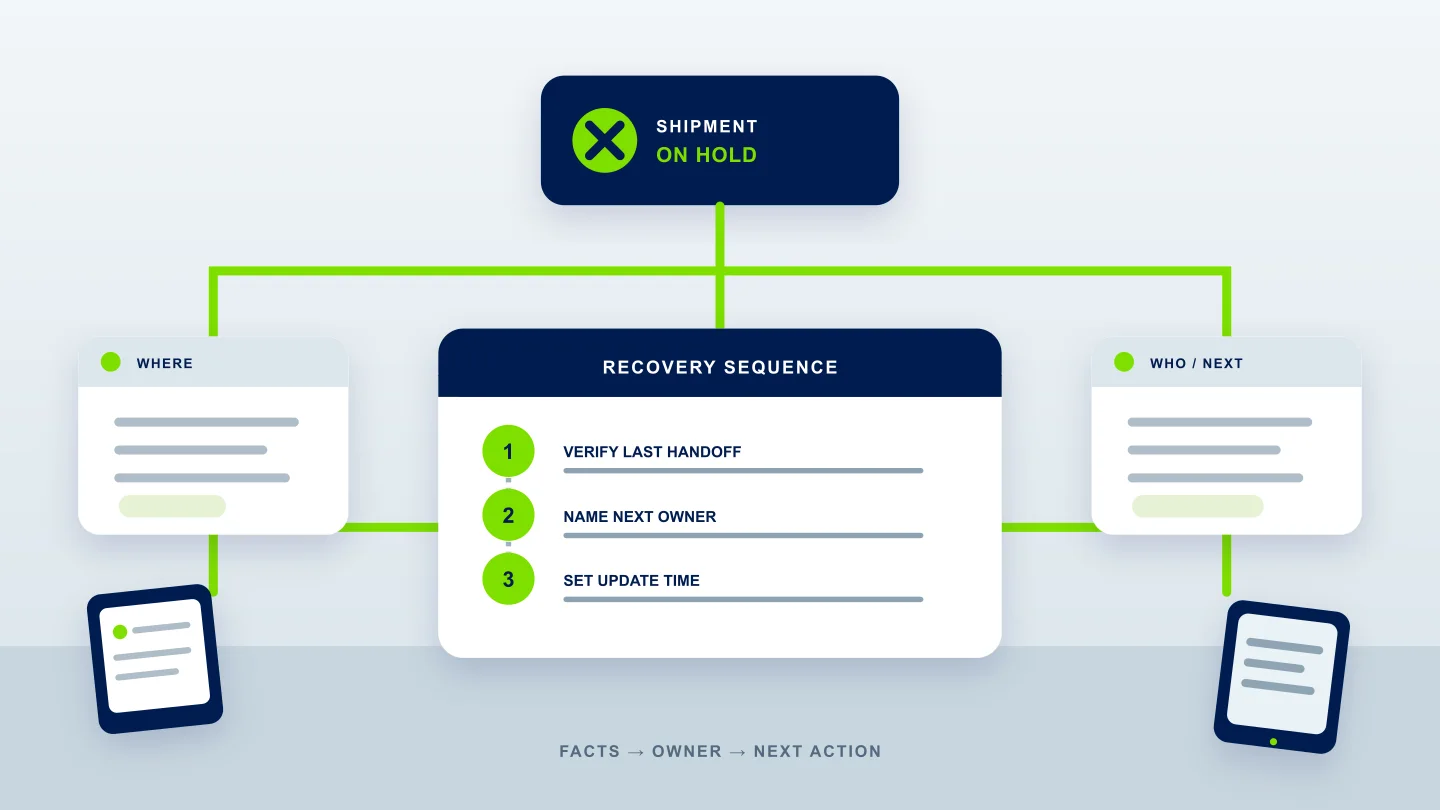
When a household shipment stops moving, a customer may hear several explanations at once: a terminal hold, a missed transfer, a vehicle problem, an address issue, or a delivery date that changed. Each explanation points to a different next action. Before rescheduling travel or paying a new charge, establish where the goods are, who has custody, what event is holding the next handoff, and when the mover will update you again.
A recovery plan is a short written sequence of decisions, owners, and dates. It is not a prediction that the shipment will arrive on a particular day. It helps you separate a confirmed delay from an unverified tracking status, keep the carrier accountable to the agreed next step, and coordinate the people at both addresses. For interstate household goods, the order for service, bill of lading, and any written date change remain important records. This guide explains how to organize a practical response without guessing at a carrier's operations or promising that a delay expense will be reimbursed.
Determine what “stopped” means
Start by asking what the latest status actually confirms. A portal may show that a vehicle departed, reached a terminal, or was assigned to a route, but a status code does not necessarily identify the present physical location of every piece. Ask the coordinator for the last confirmed event, the time and source of that confirmation, and the facility or vehicle reference if available. If the information is only an estimate, ask when it will be verified.
Identify the stage that is no longer progressing. Is pickup not completed? Is the line-haul trip underway? Did the shipment arrive at a terminal but miss a transfer? Has the destination facility received the goods but not assigned a local crew? Is the final appointment blocked by building access or a receiver who cannot attend? Each case has a different owner. Ask for the name or team that can move the next step, not only the person who can read a general status screen.
Check whether the whole shipment or one segment is affected. If pieces were split across vehicles, request the item-number ranges or container references assigned to each segment. A shipment can be partly moving while one vehicle or warehouse hold is delayed. If you are looking for a particular carton or furniture item, keep that item search as a separate workstream with its own inventory identifiers and case reference. A delayed full-shipment appointment and an unlocated piece may have different owners and next steps.
Put the agreed dates beside the new information
Find the pickup and delivery date or period on the order for service and bill of lading. Note whether a guaranteed delivery service applies and read its terms. Record every written update after the original agreement. A carrier's estimate, portal prediction, and signed date change may carry different meanings, so label each one accurately. Do not treat “expected tomorrow” as a guaranteed appointment unless the mover has confirmed that it is one.
FMCSA explains that an interstate mover must provide reasonable dispatch service except for moves handled under guaranteed-date terms. When the mover becomes unable to meet a pickup or delivery date or period in the order for service, it must notify the customer as soon as the delay becomes apparent, advise what alternative dates may be available, and keep a written record of the notice and amended date. Read the agency's transportation guidance alongside your documents. Ask the mover for its written delay notice and revised window if you have not received them.
A recovery plan should specify which date is still active, which has been replaced, and what event will firm up the next appointment. For example, “the shipment is at the destination terminal” is a location update; it does not by itself confirm that a crew is scheduled. Ask whether the next window is subject to a terminal count, equipment assignment, or building approval. Write down those conditions and when the carrier expects to clear them.
If you or the mover requests a date change, ask for the amended plan in writing. Confirm whether it replaces the prior delivery period, whether a guaranteed-date agreement still applies, and whether the change creates a storage or redelivery question. If the mover says the shipment will be held, ask where, under whose custody, and what terms apply. Do not agree to a charge based only on a brief phone explanation; request the applicable written service description and tariff or contract provision.
Find the person who owns the next handoff
A useful recovery plan names one person or dispatch team for each operational step. You may have a booking representative, an interstate carrier, an origin agent, a destination terminal, a warehouse, and a final-mile crew. Ask which party currently has the shipment and which party can authorize its release. If the contact who sold the move cannot see terminal records, request the destination dispatch contact or a supervisor who can coordinate the handoff.
For each open step, record the action, owner, due time, and proof that will close it. A terminal count may need to be reconciled before release. A new vehicle may need to be assigned. A building may need to approve an elevator reservation. A receiver may need to be authorized. If the carrier cannot complete a step by the stated time, ask what alternative it will offer and when you will hear about it. A named owner reduces the chance that each department assumes another is handling the exception.
If the shipment is at a warehouse or terminal, ask for its full name and address, the date it arrived, and whether the carrier considers it storage-in-transit, a temporary hold, or another status. Confirm whether the goods can be accessed and who may authorize release. If the shipment is nearing the end of a storage period, request the notice and dates in writing. FMCSA's storage-in-transit guidance sets specific notice requirements in some situations, but the terms and facts matter. Do not infer a deadline from an informal phrase like “a few days.”
Protect your origin and destination plan
At origin, determine whether the move is still waiting for pickup or whether the truck and crew have already departed. If pickup has not happened, ask for a definite replacement date and whether anyone must remain at the address. If you have returned keys, ended a lease, or arranged a building exit, explain the constraint and ask what alternatives exist. Avoid telling a property manager that a new date is certain until the carrier confirms it.
At destination, call the building or receiver as soon as the delivery window changes. Check elevator and loading-dock availability, service hours, street restrictions, gate access, and any required insurance certificate. Ask the property manager whether the reservation can be moved and whether fees apply. If a different person will receive the shipment, confirm whether the mover accepts that person and what authorization it requires. Share the shipment number, inventory, appointment window, and contact information with the receiver.
If the residence is not ready, discuss storage before the truck arrives. Ask whether the mover can hold the goods, what storage-in-transit terms apply, the length of the period, the warehouse address, and how redelivery will be scheduled. Ask who is responsible for storage, handling, and redelivery charges under the current agreement. Request the answer in writing before authorizing the hold. If the mover delivers earlier than you can accept, ask how it will protect the shipment and notify you of the location.
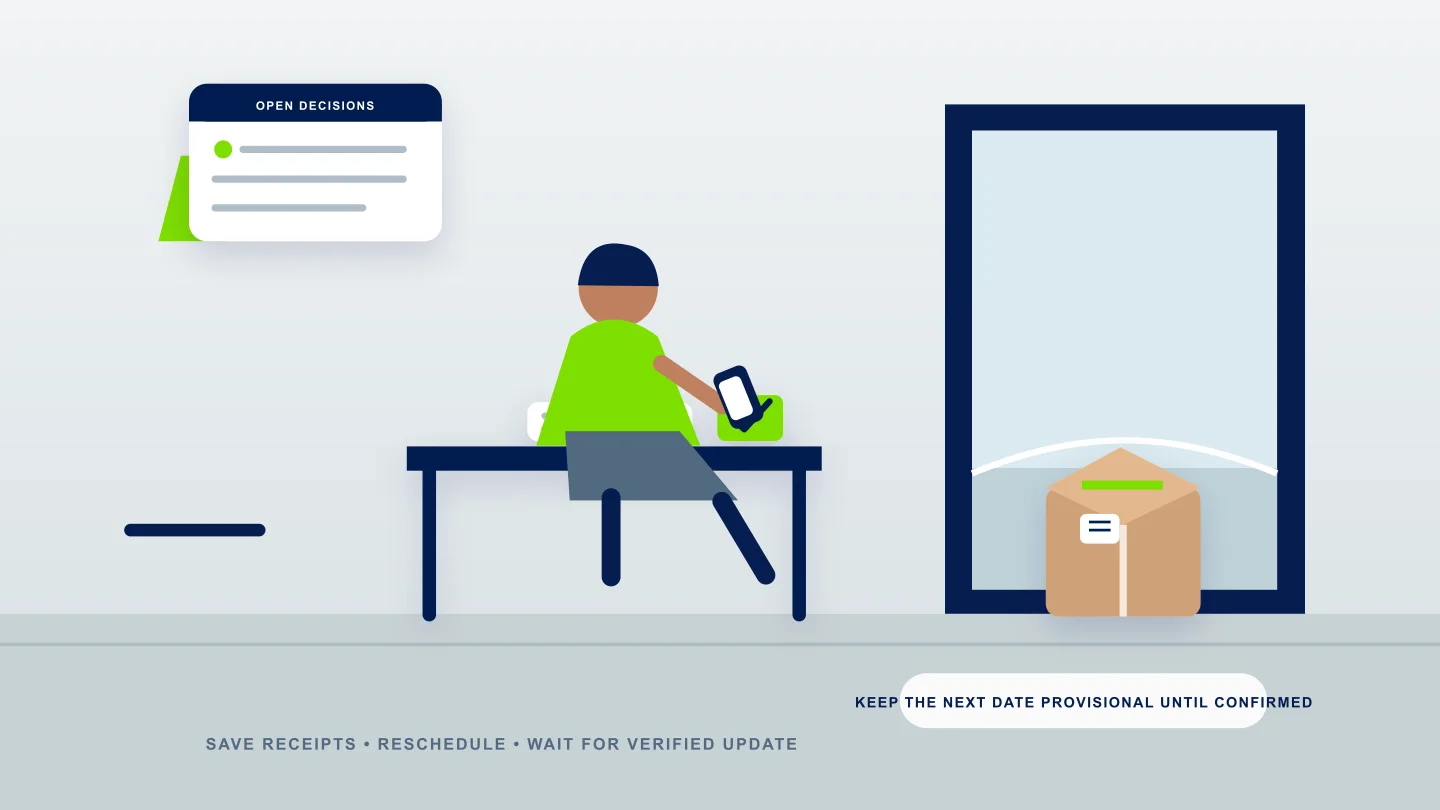
If you need temporary housing, vehicle rental, or extra labor, save receipts and write down why the expense became necessary. Ask the mover what procedure applies to a delay claim and what evidence it requires. FMCSA notes that some customers may have a delay claim when the mover misses agreed service dates and causes expenses that would not otherwise have occurred, but the agency cannot order a mover to pay one. The contract, facts, and applicable rules determine the result. Do not assume each cost will be reimbursed.
Use a recovery matrix, not a long email chain
For each issue, keep a compact row with four parts: verified fact, open question, next action, and owner with a promised time. A sample row might read: “Verified: destination terminal received the load at 4:20 p.m. Monday. Open: local truck not assigned. Next: terminal dispatch to confirm assignment. Owner: named coordinator; update by 11 a.m. Tuesday.” This is more useful than a paragraph that mixes a forecast, a concern, and a request.
Keep separate rows for separate problems. If the terminal received the shipment but one inventory piece is missing, the location question may be resolved while the item trace remains open. If a vehicle cannot reach the residence, the shipment location can be known while access remains unresolved. Separating these issues helps you close completed tasks and avoid reopening them in every conversation.
After a phone call, send a neutral recap with the shipment number, the facts confirmed, the date or window discussed, and the next promised update. Ask the mover to correct anything inaccurate. Save emails, portal screenshots, notices, receipts, and signed records in date order. Keep the original inventory and bill of lading intact. If you need to add context, use a separate dated note rather than writing over the original.
Do not send the same request to every department without identifying the current case owner. That can create duplicate tickets and conflicting answers. If you escalate, include the existing case number and explain what remains unresolved. Ask who is taking responsibility for the next action and how you will know it was completed. If the contact changes, send the brief recovery matrix so the next person can continue without reconstructing the story.
Match the next step to the type of hold
If the shipment is waiting on a terminal count, ask when the count will be finished and whether the goods can be released in parts. Request the count that was expected, the verified count received, and the open exception. Do not authorize a partial release without knowing which inventory items are going on that vehicle and which remain. If a separate piece trace is open, ask whether it could delay the rest of the shipment or can continue while the main load moves.
If the hold is a vehicle or crew assignment, ask whether the load is physically available and what equipment is needed for the next leg. A trailer problem may require a transfer; a local crew shortage may require a new delivery window. Those are different facts. Ask whether the shipment will remain at its current facility and what date the carrier expects to check the assignment again. If a second move or extra handling is proposed, request the service and charge details before agreeing.
If the destination cannot receive the shipment, distinguish your own access problem from a carrier-side delay. Tell dispatch the actual restriction, such as a closed loading dock or an elevator reservation that expired, and ask what alternate date or storage arrangement is available. Contact the building about a replacement slot while the carrier confirms equipment. If you cannot attend, ask whether an authorized receiver can accept the goods. Keep the revised arrangement in writing so a later representative does not dispatch to the same blocked window.
If the shipment is in storage, write down the facility address, date placed, stated storage period, person who authorized it, and the carrier's responsibility for the next movement. Ask the mover to identify any deadline or conversion notice and who will arrange redelivery. Do not assume that a warehouse has the same contact or payment terms as the interstate carrier. Confirm the mover's role and obtain the release process before attempting to pick up goods yourself.
A useful recovery plan also names a fallback if the promised action does not happen. Ask whether dispatch will escalate to a terminal manager, assign another vehicle, or issue a later delivery spread if the current check fails. You do not need a speculative promise, but you can ask what the next decision point will be. Put a specific time on the calendar for your follow-up and note the case number to use. If the carrier says it cannot estimate yet, ask when it expects to have enough information to do so.
Update people outside the carrier only with confirmed information. A landlord may need to know whether you will surrender keys, and a building manager may need a revised elevator window. Tell them whether the date is firm or provisional. If a friend is serving as receiver, send the latest inventory status and ask them not to sign a complete-delivery record when goods remain outstanding. This reduces the chance that one part of the move is treated as finished while another is still being recovered.
Decide when to escalate
Escalate when a promised update is missed, two carrier representatives give conflicting confirmed locations, a terminal cannot identify the receiving party, the new date falls outside the written delivery period, or the mover cannot explain who currently has the shipment. Contact the team identified in your paperwork first, then ask for its supervisor or designated customer-resolution contact. State the time of the missed update, the last verified location, and the decision you need.
If an item or segment is unaccounted for, ask the carrier to open or continue a trace and preserve the inventory identifiers. A shipment recovery plan should not replace the formal loss-and-damage claim process. If property is missing or damaged at delivery, FMCSA advises customers to notify the mover, list the items, collect supporting documentation, and file a written claim within the applicable period. Keep proof that the carrier received it. The agency can explain consumer complaint options, but it does not settle a private claim for you.
A disputed weight can also be a separate question from a shipment that stopped. A scale ticket can help reconcile a weight-based charge, but it does not tell you which carton was on a truck. If a billing discrepancy appears during recovery, the guide to reading certified weight tickets for a long-haul shipment explains how to compare scale records without confusing them with the item inventory. Keep the route exception, piece trace, and weight issue in separate sections of your file.
Close the plan when movement resumes
When dispatch confirms that the next vehicle is assigned or the terminal has released the shipment, record the date and source of confirmation. Ask which appointment is active, whether it covers all segments, and what the driver will call before arrival. Confirm that the receiver and building still have access. If only part of the shipment resumes movement, keep the remaining part open under its own case or inventory list.
After delivery, compare the items with the inventory and note missing or damaged goods before signing the delivery papers where possible. Ask for copies of every signed page. Update the recovery matrix with the final location, the person who accepted delivery, any remaining claim, and the date the carrier considers the transportation complete. Reconcile storage, handling, redelivery, and other service documents against the written agreement. The guide to closing out the transport record after final delivery walks through the paperwork to retain once the shipment is complete.
Keep receipts and notices even after the truck leaves. A delivery date, storage period, claim deadline, and bill date can be relevant at different stages. If the mover agrees to reimburse an expense or provide another adjustment, ask for the amount and terms in writing. If the issue remains unresolved, use the carrier's complaint or dispute process and retain proof of every submission.
A stopped shipment is easier to manage when you can answer four questions: where was the last verified handoff, who has custody now, what action will move the shipment next, and when will that action be confirmed? Put those answers beside the dates in your contract and the people at both addresses. When facts change, update the plan and preserve the earlier record. That gives dispatch a concrete path to work and gives you a clear basis for the next decision.
Check the current rule, contract and source page for your route and service. This guide helps you prepare clear questions and records.