
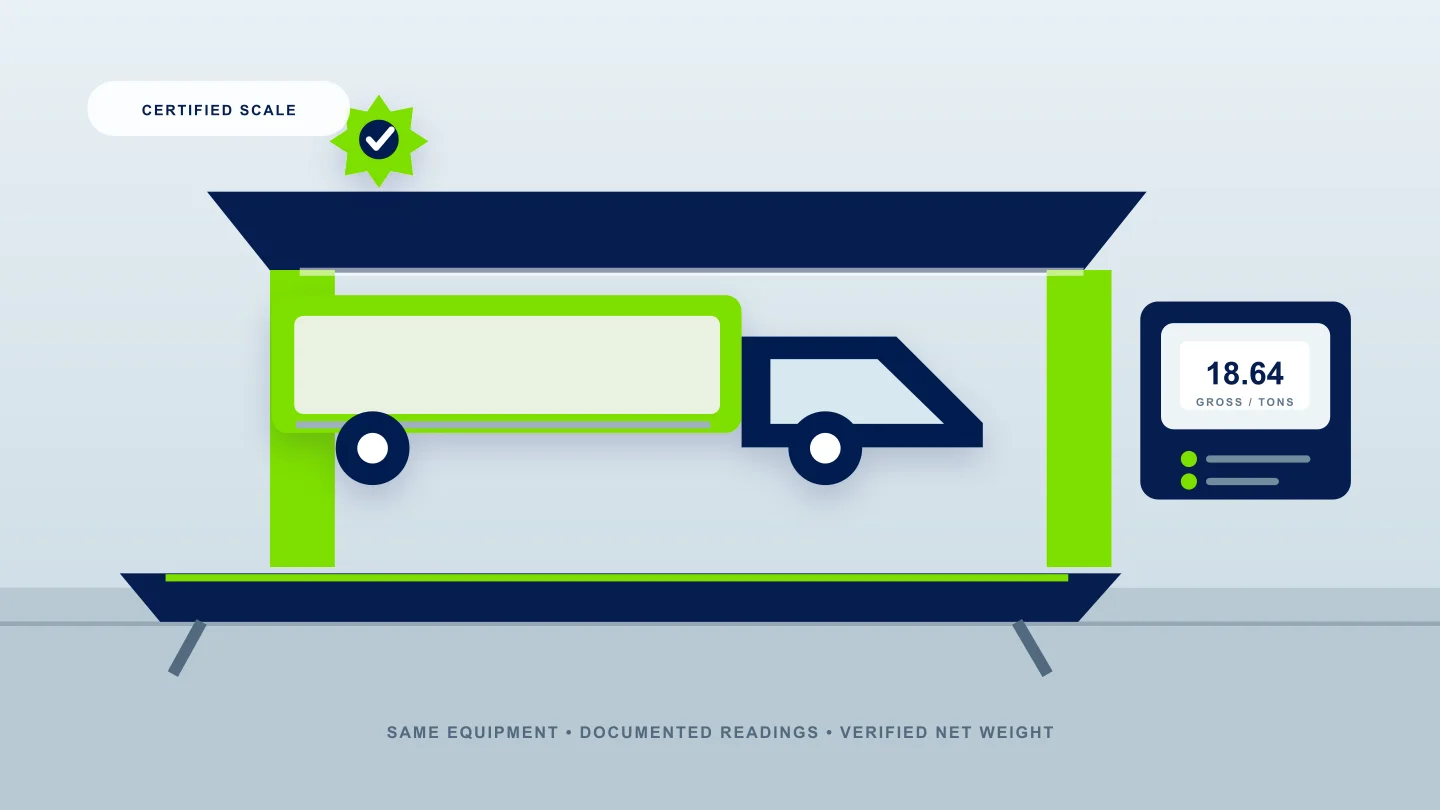
If your interstate household move is priced under a non-binding estimate, the final transportation charges may depend on the shipment's actual weight and the mover's applicable tariff. The weight ticket is the record behind that number. It shows a vehicle being weighed before or after loading and provides identifiers that connect the scale reading to your shipment. Reading those fields can help you check whether the mover used the correct weighing method and whether the paperwork belongs to your move.
Weight records do not tell you which cartons were loaded, where the truck stopped, or whether a particular item reached the destination. They answer a narrower question: what did the scale record for the vehicle at each weighing, and what net shipment weight results from the two figures? The Federal Motor Carrier Safety Administration's weight guidance explains the permitted origin and destination methods, the data each weight ticket must contain, and when a customer may ask for a reweigh. This guide walks through those records without treating a single number as a complete audit of every moving charge.
First identify how the estimate is priced
Read the estimate, order for service, bill of lading, and any revised documents. A binding estimate is a written agreement for a total cost based on the quantities and services listed; a shipment on a binding estimate is not priced by changing the actual weight. Under a non-binding estimate, the final charges can be based on actual shipment weight, services performed, and tariff provisions. Review which services are included and whether the move was changed after the estimate was prepared.
A shipment's weight is only one piece of the bill. Accessorial services, storage, shuttle work, packing, and other authorized services may have separate charges. Compare those line items to the paperwork rather than assuming every difference comes from the scale. FMCSA explains the distinction between binding and non-binding estimates in its estimating guidance. Keep a copy of the estimate in the same folder as the weight tickets and final freight bill.
Ask the mover which weighing method it selected: origin weighing or destination weighing. The permitted method changes whether the tare reading is taken before loading or after delivery. You should not compare the two tickets as though both show the same phase of the move. Note the method on your copy and use the corresponding subtraction order.
Understand tare, gross, and net
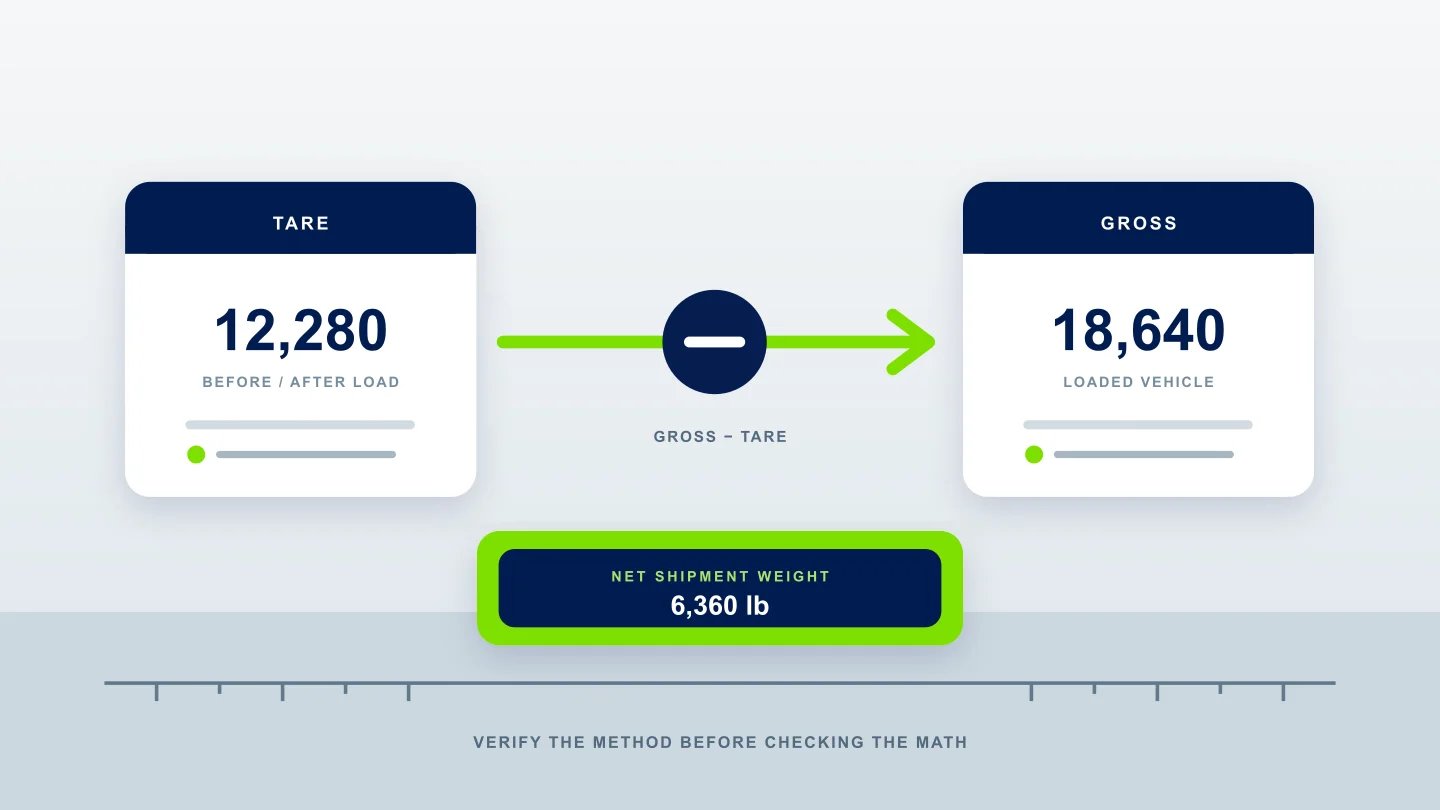
A tare weight is the vehicle weight before or after the household shipment is on board, depending on the method used. Gross weight is the loaded vehicle weight. Net shipment weight is the difference between them. A ticket may show tare and gross readings, while the net is calculated by subtraction.
For origin weighing, the truck is weighed before it arrives at the residence and again after it has been loaded. The tare reading is the truck before your shipment is loaded; the gross reading is the truck after loading. Subtract tare from gross to calculate the net weight. The truck can already contain another household shipment when it is weighed for tare. FMCSA states that this does not affect your shipment's weight calculation because the tare is the truck's weight before your goods are loaded. The truck should include the pads, dollies, hand trucks, ramps, and other equipment normally used in moving household goods at both weighings.
For destination weighing, the truck is weighed while your shipment is still on board after it reaches the destination area. That loaded reading is gross. After the mover unloads your goods, it weighs the truck again to obtain tare. Subtract the after-delivery tare from the loaded gross. FMCSA says destination weighing does not affect the accuracy of the shipment weight, but it means the mover does not determine the exact charges before unloading.
Use the formula that matches the documented method. For example, if origin gross is 18,640 pounds and tare is 12,280 pounds, the net is 6,360 pounds. For destination weighing, if gross before unloading is 18,640 and the post-delivery tare is 12,280, the net is also 6,360. The arithmetic is the same, but which ticket is tare and which is gross reverses. If the labels do not identify the readings, ask the mover to clarify before relying on your calculation.
Check the required ticket fields
FMCSA says each weighing must have its own weight ticket, signed by the weighmaster. When both weighings occur on the same scale, one ticket can record both. The ticket must identify the complete name and location of the scale, the date of each weighing, whether the weight is tare, gross, or net, the mover or company identification for the vehicle, your last name as it appears on the bill of lading, and your shipment registration or bill-of-lading number. The mover must retain the original ticket or tickets as part of the shipment file.
Compare each field with your moving documents. The name should match the shipper on the bill of lading. The shipment number should be exact, not a similar number from another move. The vehicle information should be consistent across the tickets or explained if the mover used a different vehicle for the second weighing. The scale's name and location should be readable. If the weighmaster's signature is missing or a ticket is difficult to read, ask for a clear copy or an explanation from the mover.
Check the dates in sequence. For origin weighing, the tare should occur before the vehicle is loaded with your goods, and the gross after loading. For destination weighing, the loaded gross should occur before unloading and the tare after. If the ticket order appears reversed, ask the mover which method it used and how it calculated net weight. A date discrepancy may be a clerical error, but do not correct the original yourself. Request a corrected document or a written explanation and save both the original and the response.
The weighmaster's signature confirms the ticket record from the scale. It does not by itself prove that the mover applied the right rate or included only authorized services. The scale ticket and the mover's freight bill serve related but separate purposes. Keep both, along with the estimate and bill of lading, so you can trace the calculation from the truck readings to the charges.
Compare the tickets to the shipment record
Look for matching identifiers across the estimate, order for service, bill of lading, tickets, and freight bill. The shipment number and name should connect them. If the carrier or vehicle changes during the route, ask how the weighing records apply to the shipment. A truck identifier may change when goods transfer, but the mover should be able to explain which weighing determines your net weight. Do not assume the tractor or trailer number must be identical at every point unless the paperwork says so.
If a ticket lists only a vehicle number and no shipment number, ask the mover to provide the document that ties the reading to your bill of lading. A clear connection is important when the truck carries more than one shipment. A truck's total weight is not your shipment weight. The net calculation is intended to isolate the load added or removed under the method used. If the mover cannot explain how another shipment or equipment change affects the reading, ask for a written calculation and supporting ticket copies. If you are still deciding between truck service, containerized shipping, or a portable storage option, our guide to choosing a transport method for a cross-country household shipment compares the operating arrangements. The estimate type and weight method should still be checked against the service you actually booked.
The ticket also does not replace the inventory. The inventory describes the household goods and their condition; the weight ticket records a vehicle measurement. If your question concerns missing pieces or a delivery split, compare the signed inventory and delivery records instead. Keep the inventory, delivery exceptions, scale tickets, and final invoice in one reconciled file.
Ask for the copies that support the bill
FMCSA states that a mover must present freight bills with true copies of all weight tickets. Ask for the tickets if they are missing or illegible. Keep a request date and the name of the representative who handles it. If the company provides only a summary screen, ask where the signed scale documents can be obtained. Retain the complete freight bill as well as each service charge and its rate or amount.
For a non-binding estimate, compare the net weight shown on the freight bill with the subtraction on the tickets. Check whether the mover's tariff rate and applicable minimums are reflected in the calculation. The weight ticket does not establish whether a particular rate applies or whether a service was authorized. Ask the mover to cite the estimate, order, or tariff term used for each charge. If the bill contains a separate shuttle, storage, packing, or additional service charge, request a description and the record showing when it was ordered or performed.
If the mover says the shipment was divided among vehicles, ask how it determined the weight for the shipment and what records support it. FMCSA recognizes that household shipments can be transported on more than one vehicle. A set of tickets should still connect the actual weight method to the shipment documents. If the company uses a constructive or proportional allocation, ask for the written explanation and relevant records; do not try to derive a shipment weight from a piece count alone.
When the subtraction does not match
If your calculated net weight differs from the freight bill, first check whether you used the correct tare and gross labels for the selected method. Confirm that the printed numbers were transcribed correctly and that both tickets identify the same shipment and the relevant vehicle. Then repeat the subtraction on paper and write the result beside the carrier's billing weight. Ask whether rounding, a different weighing, a revised ticket, or a separate equipment record accounts for the difference. Request the documentation, not just a verbal total.
A ticket that shows a net number but omits the gross and tare readings may not let you reproduce the calculation. Ask for the original or a corrected copy showing the weighing records. Likewise, if the scale name or location is cut off, request a legible copy so you can verify the facility. Keep your first copy and the replacement together. If the mover says it cannot change the ticket, ask for a signed statement explaining the readings used and how they connect to your bill of lading.
Do not compare one truck's entire gross weight with the contents of your residence. The truck itself, fuel, moving pads, dollies, and any other freight in the vehicle can be part of the scale reading. Under the origin method, the tare weighing accounts for the truck before your goods are loaded, and subtracting it isolates the added shipment weight. If a vehicle or shipment assignment changed, ask the mover to explain how its records still isolate your shipment rather than treating a full vehicle weight as your household's net weight.
Know when a reweigh may be requested
FMCSA says that after the mover informs you of the billing weight and total charges, and before unloading begins for a shipment weighed at origin, you have the right to demand a reweigh. If you are considering one, ask the mover how to make the request promptly and who will arrange it. Ask where the truck will be weighed, whether the scale is certified, and how the tickets will be provided. Keep your request in writing if possible.
A reweigh should not be confused with a casual estimate from a different scale. The ticket must relate to the vehicle and shipment under the applicable method, and the scale must be certified for motor vehicles. FMCSA defines a certified scale as one inspected and certified by an authorized scale inspection and licensing authority. If a mover says the first scale was unavailable or a reweigh cannot occur, ask for the reason and the supporting record. Do not assume that a difference between readings proves wrongdoing; vehicle fuel, equipment, cargo, and the timing of the weighings can matter.
The destination method has a different sequence. The mover weighs the truck while the shipment is on board in the destination area, then again after unloading. If you have questions about the billing weight, ask the mover to explain how it used the two readings and how you can review the resulting tickets. Do not reverse the gross and tare labels just because the loaded reading occurred later in the move.
Separate weight questions from other billing concerns
A weight discrepancy can coexist with a delay, storage, split delivery, or access issue. Keep separate notes for each. If a shipment stopped at a terminal, a ticket may explain a vehicle's weight but not why dispatch held the load. If a second vehicle carried a portion of the goods, the carrier's item inventory and handoff records explain what moved; the scale ticket explains weight. This separation keeps the right record attached to the right question.
If a delay has affected delivery timing or created expenses, maintain the dispatch notices and receipts apart from the weight calculation. The mover's written delivery dates, any amended period, and the documented notice may matter to a delay claim. Do not mix those details into a request to correct a scale ticket unless they show a date or shipment-identity error. A clear file makes it easier for the mover to assign a billing question and an operations question to the appropriate team.
If the mover's freight bill arrives after delivery, retain it with the signed bill of lading and all ticket copies. FMCSA's collection rules discuss timing and the details of certain freight bills, but the applicable requirements depend on the payment arrangement and shipment. Ask the mover to identify the term that governs the invoice and respond in writing if you dispute a line. The final transport record checklist can help you check which documents remain to be reconciled before closing your file.
A short weight-ticket review
Write down the weighing method, then confirm the ticket set has the correct scale name and location, date, tare/gross/net label, vehicle identification, shipper last name, shipment or bill-of-lading number, and weighmaster signature. Subtract tare from gross according to the method. Compare the net weight shown on the ticket and invoice. Ask the mover to explain any mismatch before paying or disputing an amount.
Next, verify that the estimate type supports weight-based billing and that the freight bill shows the rate basis and services performed. Request copies of missing tickets and keep the mover's explanation. If you request a reweigh, do so within the process and timing that apply to your shipment, especially for an origin-weighed load before unloading begins. Save the request, response, and resulting ticket.
A weight ticket is a supporting record, not a verdict. It lets you check that two vehicle readings are labeled, connected to your shipment, and used in the correct order. The estimate and tariff explain the charge basis; service records show what the mover performed; the inventory and delivery papers identify the goods. Reading each record for its own purpose makes a long-haul bill easier to review and gives you a specific question to send when something does not match.
Check the current rule, contract and source page for your route and service. This guide helps you prepare clear questions and records.