
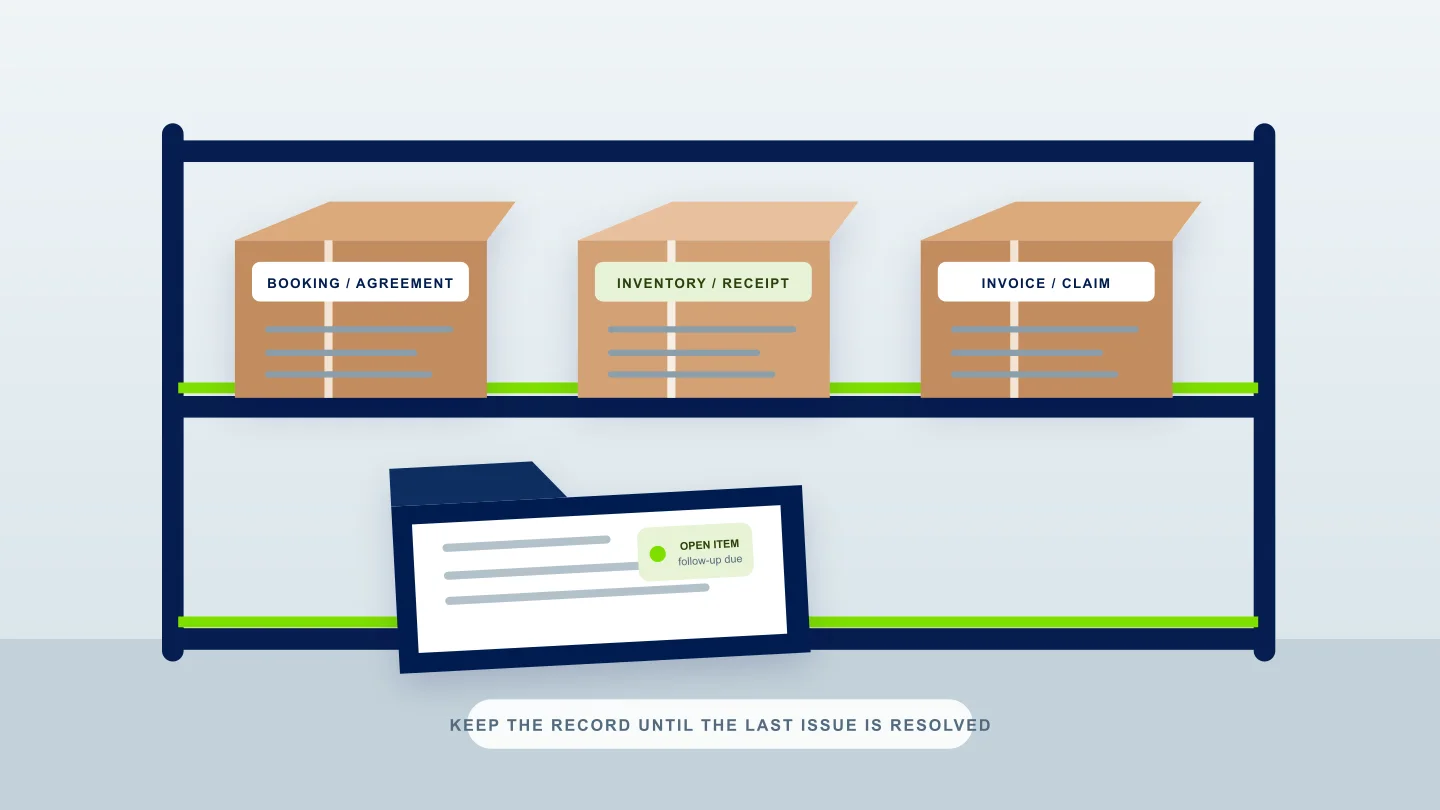
After the last moving truck leaves, it is tempting to clear every moving document from the counter. Keep the records until the shipment, charges, and any open loss or damage questions have been reconciled. The signed inventory, bill of lading, delivery receipt, storage papers, weight tickets, and freight bill answer different questions. Put them together and you can confirm what was agreed, what the carrier delivered, which services it performed, and whether a claim or invoice issue remains open.
A transport closeout is not a declaration that every part of the move went perfectly. It is a practical file that reflects the final state of the shipment. It should identify delivered pieces, note any exceptions, include the final delivery date, and preserve unresolved issues with their case numbers and next deadlines. This guide focuses on record organization for a U.S. interstate household move. Keep the versions you received from the mover, and ask the company to explain any document that does not match your shipment.
Start with the documents that define the move
Collect the estimate, order for service, bill of lading, inventory, selected valuation or liability paperwork, and any written change orders. Add the dates and contact details agreed at booking. If the mover changed a pickup or delivery window, keep the written notice and amended date with the original order. Do not replace the earlier document with a later version; the sequence can show what changed and when.
The bill of lading is the contract and receipt for the transportation. FMCSA advises customers to read the moving paperwork and retain the bill of lading until the goods are delivered, charges are paid, and claims are settled. Keep the complete document, including continuation pages and attachments. If an electronic portal provided the paperwork, download it before your access expires. If a representative sent a corrected copy, save the old copy and label both with their dates.
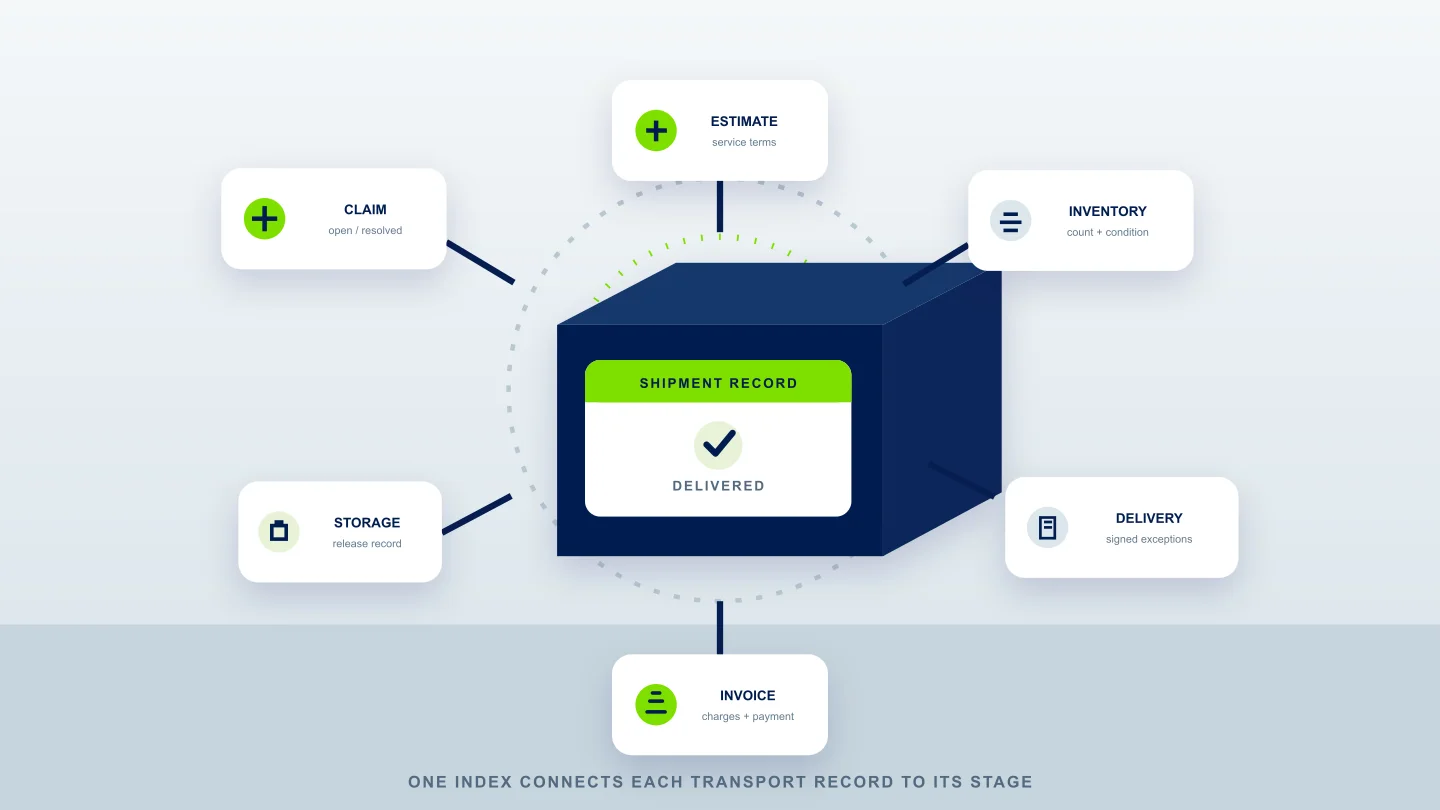
Organize the file by shipment number and then by stage: estimate and booking, origin pickup, transit updates, storage or transfer, destination delivery, billing, and claims. Use filenames that start with the date and include the document type. Keep a separate note listing the mover, broker if any, carrier or agent, terminal, and current contact. This allows you to identify which company created each record without assuming all parties perform the same role.
Reconcile delivery against the inventory
Use the signed origin inventory as the reference list. At delivery, compare each item or carton with the inventory and check condition notes. FMCSA's delivery guidance says the customer normally signs each inventory page and may note exceptions on the shipping documents. The mover's receipt should not contain language releasing it or its agents from liability. Review the document before signing, and ask the mover to correct or explain any wording that does not match the actual delivery.
If an item is missing, write the inventory number and description on the delivery paperwork where possible. If an item is damaged, describe the visible condition and location, and take photographs before unpacking further when practical. Do not write over the original inventory or discard its earlier condition notes. If there is not enough space, ask how to attach a dated exception sheet and make sure the delivery receipt refers to it. Keep a copy of every page you sign.
When a shipment arrives on two or more vehicles, maintain a separate delivery record for each segment. List which inventory numbers arrived on each truck and which remain outstanding. A “partial delivery” note should make clear what the driver carried, what the receiver accepted, and what is still expected. FMCSA recognizes that a household shipment may be split across vehicles. The paperwork should preserve that division so a later count does not confuse an undelivered segment with a lost item.
If someone else accepted delivery, keep their authorization and signed records. Ask the receiver to send you the pages the same day and confirm whether the mover considers the shipment complete. A name on a receipt may identify the person who signed, but it does not automatically answer whether every piece was present. Compare the items with the inventory after you obtain the paperwork.
Match the final freight bill to the agreement
Keep the final freight or expense bill with the estimate and any order changes. FMCSA says a freight bill should identify the services and charges, with service details and rates where applicable. Compare each line to the written terms and services requested or performed. If you see storage, redelivery, shuttle, packing, stair, long-carry, or other additional charges, ask which record supports the service and where the governing rate appears.
Do not treat every difference from the estimate as a scale issue. The estimate type matters. A binding estimate generally sets the total for the listed quantities and services, subject to applicable rules for additional services or impracticable operations. A non-binding estimate may be adjusted based on actual weight and tariff charges. Read FMCSA's collection guidance and the terms you signed. The legal effect depends on the particular agreement, shipment, and applicable regulations.
Check the invoice total, credits, payments, and balance. Confirm the payment method is consistent with the written paperwork or any documented change you accepted. If you paid at delivery, retain the receipt, transaction confirmation, or canceled check with the freight bill. If the mover invoices after delivery, record the date it arrived and any stated due date. Ask for a corrected bill if the shipment number, address, itemization, or charge does not match the records.
For a weight-based charge, compare the billed net weight with the tare and gross readings and retain all scale tickets. The scale ticket is a separate weight record. It helps check the scale and vehicle details and the subtraction method, but it does not identify which services the mover performed. A weight ticket supports the weight calculation; it does not prove that a particular service was ordered or performed. Keep those as separate questions when you ask the mover to explain a bill.
Close any storage or transfer paperwork
If the mover placed goods in storage-in-transit, add the warehouse receipt, storage start date, facility name and address, inventory references, and written release or redelivery instructions. Record when storage is scheduled to end or convert, and keep any notice the carrier sends about that date. Ask the mover to identify the responsible party and the terms that apply to storage, handling, and redelivery. Do not assume a warehouse receipt replaces the bill of lading or tells you which party will make the final delivery.
If you used a portable container, retain the container number, access or custody records, pickup and delivery confirmations, and any seal or inspection notes. If the container was transferred between a local dray carrier, terminal, rail provider, or destination crew, record the dates and names of each handoff. Our guide to mapping each custody handoff in a portable-container move explains how to make that chain readable when the container changes hands.
If the mover held goods in storage-in-transit, retain every notice about the storage period and any conversion to permanent storage. FMCSA's transportation guidance describes written notices that identify the conversion date, the claim period for loss or damage during storage-in-transit, when mover liability ends, and the warehouse rules and charges that will apply. The agency specifies advance notice in many cases and a shorter notice period when the storage period is under ten days. Keep the envelope, email, or delivery confirmation that shows when the notice arrived, along with the warehouse receipt and final release record. If any date is unclear, ask the mover to state it in writing before the hold ends.
For other shipment methods, retain the records that fit the service you purchased. If you are comparing truck transportation with a container or other arrangement for a future move, the guide to choosing a transport method for a cross-country household shipment outlines the service questions to ask before booking. Different methods create different pickup, transfer, and delivery records, so use the documents that actually apply to your move. If more than one provider participated, keep each provider’s receipt and identifier with the date it accepted or released custody. Note which company arranged the transport and which one physically handled the goods. A booking confirmation may show the service you selected, while a terminal or carrier receipt may show that a transfer happened. Preserve both instead of treating one as a substitute for the other. If a provider issued a separate damage or exception report, add it to the same stage folder and link it in your index.
When a transfer or terminal stop occurred, keep the arrival and release notices, piece counts, and revised delivery date. A terminal receipt may show that a facility received goods; it may not prove the contents were delivered to the residence. If the destination count does not match the origin inventory, keep the tracing reference and correspondence in the claims section of the file rather than marking the shipment closed.
Keep open claims visible
If goods are missing or damaged, contact the mover promptly and follow its written claim process. FMCSA recommends listing missing or damaged items, taking photographs, and submitting supporting information. For interstate household goods, the agency says a written claim generally must be filed within nine months of delivery. Read the current loss and damage guidance and the mover's instructions. Keep proof of when the claim was sent and received, and save every response.
A delivery notation and a formal claim are different records. A note on the inventory can document what you observed when the shipment arrived, while a written claim asks the mover to address the loss or damage. Keep both. Add the mover's case number, the claim submission date, photographs, receipts or replacement-cost support, and any inspection or settlement letter. Do not discard an item involved in a claim unless the mover's process permits it or you have documented its condition and obtained instructions.
If the mover issues a settlement offer or requests more information, record the response deadline and what it needs. If the shipment is in storage-in-transit, the timing and notice rules may differ for a loss occurring in storage. Ask the mover which date starts the applicable period and retain its written answer. FMCSA explains the consumer complaint process, but it does not settle a private loss-and-damage claim or compel a mover to pay a settlement.
Keep a delay or service complaint separate from a loss-and-damage claim. A late delivery may have caused temporary lodging or other expenses; preserve the original and amended delivery windows, delay notice, receipts, and the mover's response. Ask which procedure applies and whether the mover considers the claim accepted, denied, or still under review. Do not rely on a phone assurance as the only record of an adjustment.
Resolve a discrepancy with the document that addresses it
When a document conflicts with another, identify the exact fields that differ. A delivery receipt may list a date that does not match the appointment notice. An inventory may show a piece as delivered even though the receiver marked it missing. A freight bill may include storage after the written release date. Send the mover the shipment number, document names and dates, disputed line or inventory number, and the correction or explanation you need. Ask the company to confirm who will handle the review and when you should expect a written answer.
Keep the request factual and attach only the pages needed to show the mismatch. Preserve the complete documents in your file. For instance, send the relevant inventory page and delivery exception, but retain the signed inventory and full bill of lading. If the mover says the charge is supported by a tariff or change order, ask it to identify the exact provision and the record showing when the service was ordered or performed. If the company issues a corrected document, compare it with the original before replacing the status in your index.
If the company cannot resolve a loss or damage concern through its claim staff, check the dispute settlement information it provided before the move. FMCSA says interstate movers must provide information about their dispute settlement program. Keep the program notice, claim submission, response, and any settlement offer together. A complaint to a regulator is a separate process from a private claim; note which organization received each filing and what outcome it can provide.
A short closeout review can follow this order: confirm the last delivery date, compare all inventory pages, record every exception, match each invoice line to the agreed service, verify payment, then list open claims or corrections. If the check finds nothing open, write the date you finished and retain the index with the documents. If it finds an unresolved issue, keep the record active and set a follow-up date instead of marking the move complete.
Build a simple closeout index
Create a one-page index with the shipment number, customer and destination names, actual final delivery date, number of delivery segments, status of each claim, invoice balance, and location of the primary files. Mark each item as complete, disputed, or waiting for a response. Add the name and contact information for the person handling an open issue, plus the date of the next follow-up. This is more useful than a folder of unlabelled scans.
Use a status such as “delivered with exceptions,” “invoice under review,” or “claim open” when the move is not fully resolved. Do not mark every record complete just because the last truck has arrived. If the mover still owes a response about a missing item, retain the case as open. If a correction is pending, keep both the disputed bill and the promised correction until you receive and verify the replacement.
Save original electronic files and clear scans. For photographs, retain the original image rather than only a compressed message attachment. Use a second backup location if the records are important to a claim. Limit access to people who need to handle the move, since the folder may contain home addresses, signatures, phone numbers, and payment records. Avoid including account numbers or personal details in a casual message to a building or helper.
What to keep after the move
Keep the shipment records until delivery, payment, and any claims or disputes are resolved. If the mover has an unresolved billing or loss issue, retain the related documents and correspondence until you have a final written response and any applicable deadlines have passed. Keep the core contract, inventory, delivery receipt, and claim outcome together rather than deleting them immediately after payment. The exact retention period for your own records depends on your circumstances and any separate legal or tax requirements.
When the file is complete, the index should point to the final bill, payment proof, signed delivery papers, complete inventory, and any storage or transfer documents. If a claim remains open, the index should say so and identify the next action. A clear closeout record lets you answer what was agreed, what arrived, what it cost, and which issues are still pending without relying on memory.
Check the current rule, contract and source page for your route and service. This guide helps you prepare clear questions and records.