
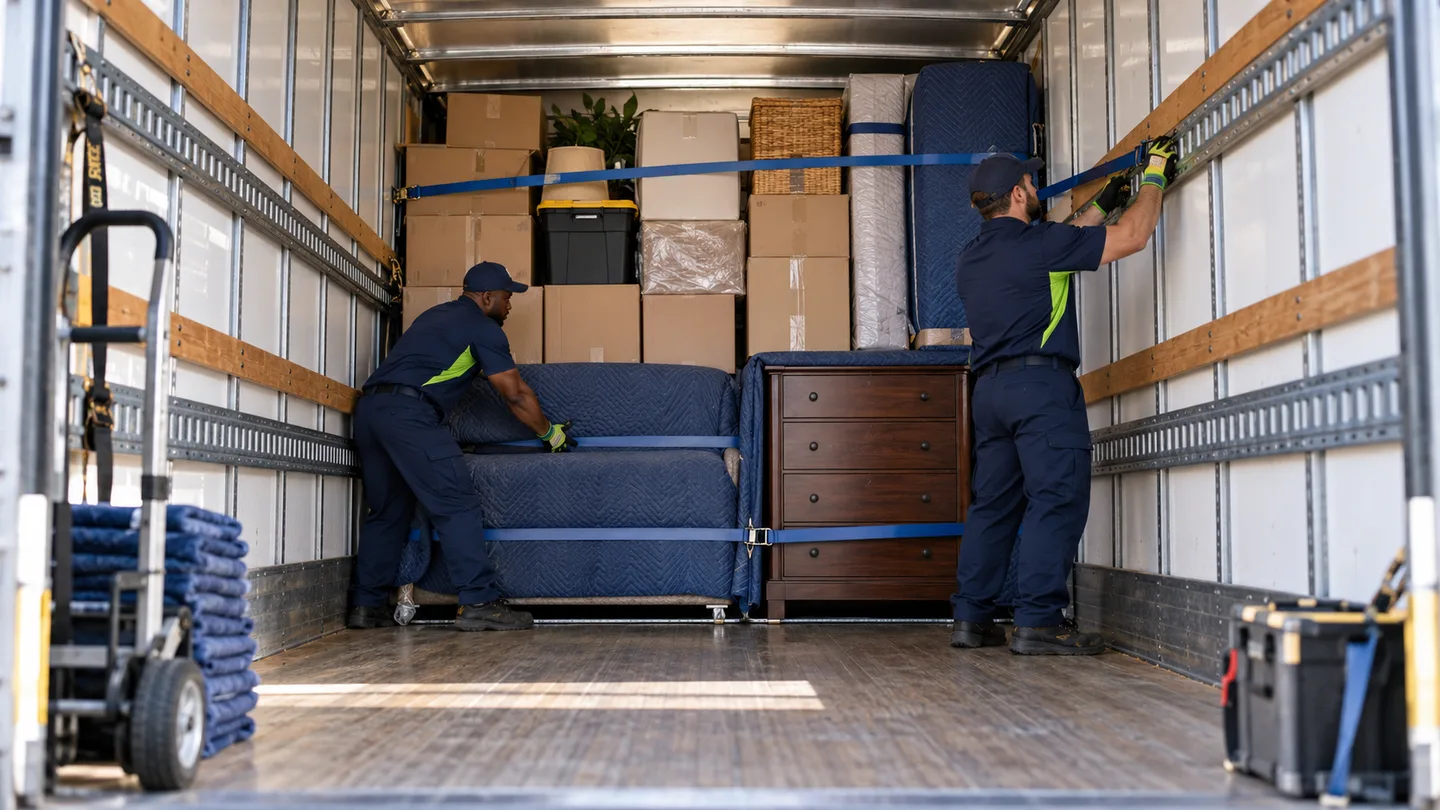
A customer-loaded trailer puts the household in charge of how its goods occupy a professional transport vehicle. The carrier supplies the trailer and moves it, but the people loading must protect, distribute, and restrain the shipment according to that carrier's instructions. A tidy stack is not enough. A truck will brake, turn, change grade, and pass through terminals. Objects that seem stationary in a driveway can shift during line haul, damage one another, or press against the divider that separates the household's shipment from other cargo.
Build the plan before the trailer arrives. Obtain the provider's current interior dimensions, floor and weight limits, tie-down arrangement, ramp instructions, prohibited-items list, and bulkhead procedure. Ask who may load, whether an inspection is offered, and what happens if the goods exceed the reserved linear feet. The details are equipment-specific. U-Pack's trailer loading guidance, for example, recommends heavy goods toward the front, balanced from side to side, lighter goods above, restraints as the load progresses, and a final check before installing its divider. Use that as an illustration, then follow the actual provider's written rules.
The goal is a load that can be built safely and stay stable. That requires an inventory, a placement sequence, appropriate materials, a clear ramp, and a record of the finished shipment. Do not use a generic diagram as proof that a particular item can be stacked or tipped. If an object is unusually heavy, fragile, or difficult to move, get advice from the provider or a qualified loading crew before attempting it.
Assign roles and prepare the equipment
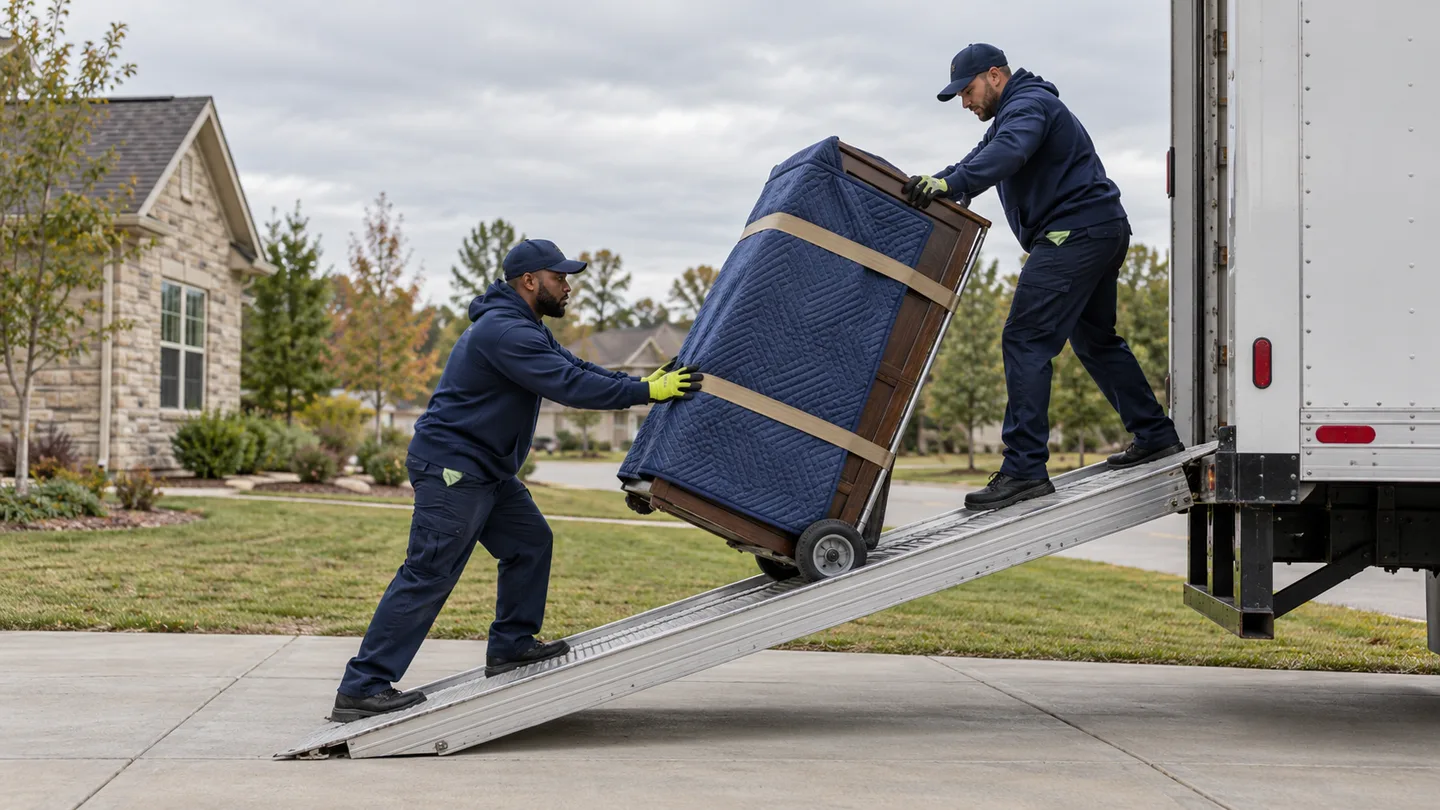
Choose one person to direct the load and keep the inventory. That person does not have to lift every item, but should know the plan and stop work if the sequence becomes unsafe. Give another person responsibility for the path between home and trailer: clear walkways, watch the ramp area, and keep children, pets, and bystanders away. If professional helpers are hired separately from transport, tell them which company owns the trailer and obtain its loading rules. A helper's routine on another vehicle may not match this carrier's tie-down points or divider.
Gather supplies before the first heavy piece moves: suitable cartons, padding, moving blankets, approved straps or rope, a marker, gloves, and tools for safe disassembly. Ask the carrier what securement devices it allows and whether they are supplied. Do not attach straps to an unapproved rail or improvise an anchor from a thin panel. Check the condition of the trailer's floor, walls, door, ramp, and tie-downs. Photograph pre-existing damage or moisture and call the provider if the equipment is unsuitable. An empty-trailer inspection can prevent a dispute after pickup.
Check the surroundings. A trailer may have a raised floor and a long ramp; U-Pack's ramp page says its own ramp should be used on a flat, firm surface and gives equipment-specific limits. Do not copy those dimensions or limits to a different carrier. Confirm the ramp is properly secured under the provider's instructions, and keep its travel path free of cords, packing debris, and loose blankets. If the grade or weather makes footing uncertain, pause and ask the provider or loading crew for a safer method.
Start with a load map, not a pile
Sort the inventory into stable heavy pieces, awkward or fragile large pieces, uniform cartons, soft fill, and items that must remain accessible. Record which furniture can be disassembled and which cannot travel on an edge. Identify prohibited items before they reach the ramp. Measure large goods and the trailer opening; a piece that fits the interior may still fail at the door or a hallway turn. The map should describe the order in which goods enter and where they are restrained, not just where they appear in a final photo.
Reserve a front zone for appropriate dense goods if the provider calls for it, while spreading weight across the width. Do not build a heavy tower on one side or put all dense cartons in one corner. Keep heavy pieces low, stable, and supported by the floor. A tall bookcase may look like an efficient vertical filler but needs protection and restraint, and its contents should generally be removed. An appliance may have manufacturer-specific transit requirements. Do not tip or stack it just to save a linear foot without checking those instructions.
Plan in short sections or walls. Put a stable foundation on the floor, then add compatible lighter goods above and secure that section before moving forward. The provider's loading tips discuss working from floor to ceiling, filling gaps, and checking that nothing can easily fall or shift. Those are principles, not permission to compress delicate items under weight. A section should be able to stand safely while people load the next one. If it relies on the final divider to hold everything upright, revise it.
Protect furniture and control the gaps
Wrap finished surfaces before they rub against another item. Protect table corners, glass, mirrors, and exposed hardware with materials suited to those objects. Keep fasteners in labeled bags attached to the furniture record, not loose on the trailer floor. A blanket prevents abrasion but is not a restraint by itself. A strap can restrain a padded piece if it is routed and tightened according to the equipment's instructions; too much force can crush a soft frame or damage a finish. Ask the loading crew for help with special pieces.
Fill irregular spaces with compatible soft goods or small sturdy cartons, but do not create hidden pressure points. A lamp in a gap between a dresser and a sofa may be crushed when the load settles. A box marked fragile should not become a structural wedge. Use the inventory to decide which boxes can bear weight and which must stay on top or in a separate protected area. Keep electronics and artwork away from doors and points where a strap or hard edge might press against them.
Check the load as you build. After each section, look from the trailer door for leaning objects, unsupported stacks, and open paths in which a box could slide. Move a piece before it is buried if the foundation is weak. Use the installed tie-down points at intervals rather than waiting until the last row. U-Pack's guidance explicitly calls for securing goods as the load progresses. The exact number and type of restraints depends on the trailer and load; the carrier's written guidance or a qualified professional should control that decision.
Treat the divider as a boundary, not a brace
Some shared freight trailers use a bulkhead or divider wall to separate the household's shipment from other cargo. Learn its assembly and locking procedure before loading reaches the end of the rented space. U-Pack's bulkhead guidance says its divider is not designed to support the weight of household goods and recommends securing items with rope or ratchet straps first, leaving a little space between goods and divider, using gloves, and having two people install or remove it. Follow the actual carrier's instructions; do not assume all dividers work alike.
Position the final wall so it is stable on its own. The last items should not bulge into the divider or prevent it from locking. If the plan requires pushing a heavy piece against the bulkhead, the load needs more space or a different arrangement. Record the divider's position and any measurement the carrier uses to determine the occupied linear feet. Ask how rounding and minimum space charges work. A quoted footage amount is a planning estimate; the final billed amount may depend on the measured load under that carrier's terms.
Understand the lock procedure. A customer lock may belong on the divider during transit while the carrier controls the exterior trailer doors. U-Pack's equipment security guidance describes its locations and lock requirements. Do not leave an exterior lock in place if the carrier instructs you to remove it before pickup. Keep the key or combination accessible to the person receiving the shipment, and photograph the lock and divider after installation. Never publish a combination in a visible label on the trailer.
Keep the ramp and work area safe
The ramp is part of the equipment, not a spare shelf. Follow the provider's instructions for attaching, using, and returning it. U-Pack states that its ramp must not be packed behind the locked bulkhead with household goods; it goes on the trailer after the divider is installed. That detail is easy to miss when the last boxes fill the doorway. Ask the carrier what to do if the shipment uses the full trailer and leaves no room for the ramp in its required location.
Carry only what the crew can control. Use appropriate dollies or lifting aids for heavy pieces and respect equipment limits. Do not let a person stand downhill of a rolling appliance on the ramp. Avoid carrying a large object while another loader backs through a doorway without a spotter. Keep hands out of pinch points at the door, divider, and ramp hinges. If the loading path becomes wet or icy, stop and reassess. The aim is a transport-ready load, not a race against the pickup window.
Build rest and check periods into a long loading day. Fatigue makes people more likely to lift badly, miss a loose strap, or skip a measurement. If the crew changes, tell the new people which sections are already restrained and which items are still outside. Keep tools and drinking water outside the trailer where they will not be accidentally sealed into the shipment. Maintain a clear exit at all times; do not trap a person behind a leaning wall of boxes.
Decide when to bring in loading help
Customer-loaded transportation does not require the household to perform every lift personally. Some people hire local loading labor for the origin and another crew for the destination while keeping the line-haul carrier's equipment. If you do, ask the labor company whether its crew has experience with this exact type of trailer, raised ramp, tie-down system, and divider. Give it the carrier's written instructions before the appointment. Clarify who supplies pads and straps, who makes the final load-stability decision, and whether the crew will install the bulkhead. A vague promise to “pack the truck” may not cover the carrier's specific closeout steps.
Reserve enough time for a careful load. A crew that is booked only for a short window may leave while the final wall is still unsecured. Ask what happens if the job runs longer, if an oversized item requires extra people, or if the carrier drops the trailer late. Keep the labor quote separate from the transport quote so the combined cost can be compared with a full-service alternative. Verify the crew's scope and insurance information directly with the company; do not assume the transport carrier covers independently hired labor.
If household members and professionals load together, appoint one coordinator to resolve disagreements. A professional may suggest a more compact layout, while the carrier's rules may require a different restraint or divider clearance. The carrier's equipment limits are controlling. The coordinator should update the inventory as items are loaded and document any change to the planned footage. This is particularly useful when a second crew will unload and needs to know why a large item was placed in an unusual orientation.
Check the end wall before closing
Before installing the divider, compare the loaded trailer with the inventory. Are all intended goods present? Are prohibited items absent? Are heavy pieces supported? Are fragile surfaces protected? Is the last section independently secured? Can the divider be installed without pressing on goods? Photograph the load from several angles, especially the last wall and the restraints. The pre-seal condition record shows how to make those photos useful if a question arises at delivery.
Have the person responsible for the load perform a hands-off inspection. Look for a high stack that leans, a box that can slide through a gap, a strap that rubs a sharp edge, or a cabinet door that can swing open. Correct those issues before the divider goes in. If a large item remains outside because the trailer is full, ask the carrier about additional space and price. Do not make an unstable load appear compliant by forcing the divider closed.
After the divider is installed, test the lock and photograph its position. Record the trailer number, pickup appointment, contact phone, and any written measurement of used space. The seal and identifier guide explains why those details help track custody when the shipment passes through terminals. Do not seal away the papers or keys required at destination. Follow the provider's final instructions for ramp placement and exterior doors, then confirm that pickup has been accepted.
Plan the destination while the origin is visible
A safe origin load should be unloadable at the other end. A household can pack a trailer so tightly that the divider opens into a leaning wall. Before pickup, decide who will meet the trailer, who holds the key, what unloading labor is booked, and where the ramp will sit. Check the destination parking and building access. If the carrier offers only a limited unload window, ask how extra days or a missed appointment are priced. The first person opening the divider should know that goods may have shifted and should follow the carrier's instructions for safe removal.
Keep the origin inventory and loading photographs accessible to the receiving crew. They can identify which piece is behind the divider and where fragile goods were placed. Do not assume the person who loaded will be present at delivery. If a seal, lock, or divider appears changed, document it before moving goods and contact the carrier. If damage is visible, record its condition under the carrier's claims procedure; avoid guessing when it occurred. A consistent record is more useful than a dramatic photo without item identification.
After unloading, check that the trailer is empty, the divider and ramp are handled as the carrier directs, and all tools and packing debris are removed. Keep the signed receipt and any discrepancy notes. The shipment is complete only when the goods have been accounted for and the carrier's equipment can be retrieved without another access problem.
Prepare for an interrupted load
Loading may stop because of rain, a damaged carton, a missing strap, a late helper, or an item that will not fit. Decide in advance how to leave the trailer secure during a pause. Ask the carrier whether exterior doors may be locked while loading and which lock must be removed before pickup. Keep an inventory of what has entered, photograph the current wall, and make sure no loose object can fall when work resumes. Never leave a partly built vertical stack unsupported just because the doors can be shut.
If the trailer must be picked up before the household can finish, contact the carrier immediately. Do not let dispatch assume it is ready while the divider is open or the ramp is in the wrong place. A changed pickup can affect the delivery window and charges, so obtain the revised arrangement in writing. If a second shipment is required, identify exactly which items belong to each load. Two separate transport records are easier to reconcile than a single inventory with an unexplained overflow pile.
Use a final stability rule
A workable customer-loaded trailer has four characteristics: dense goods are placed and balanced under the provider's rules; each section is protected and restrained as it is built; the divider closes without bearing the household load; and the receiving crew can open and unload safely. If one of those conditions fails, rearrange, reserve more space, or seek qualified loading help before pickup. A slightly less compact load may cost more, but a bargain built on unstable stacking can cost far more after a long haul.
Check the current rule, contract and source page for your route and service. This guide helps you prepare clear questions and records.