
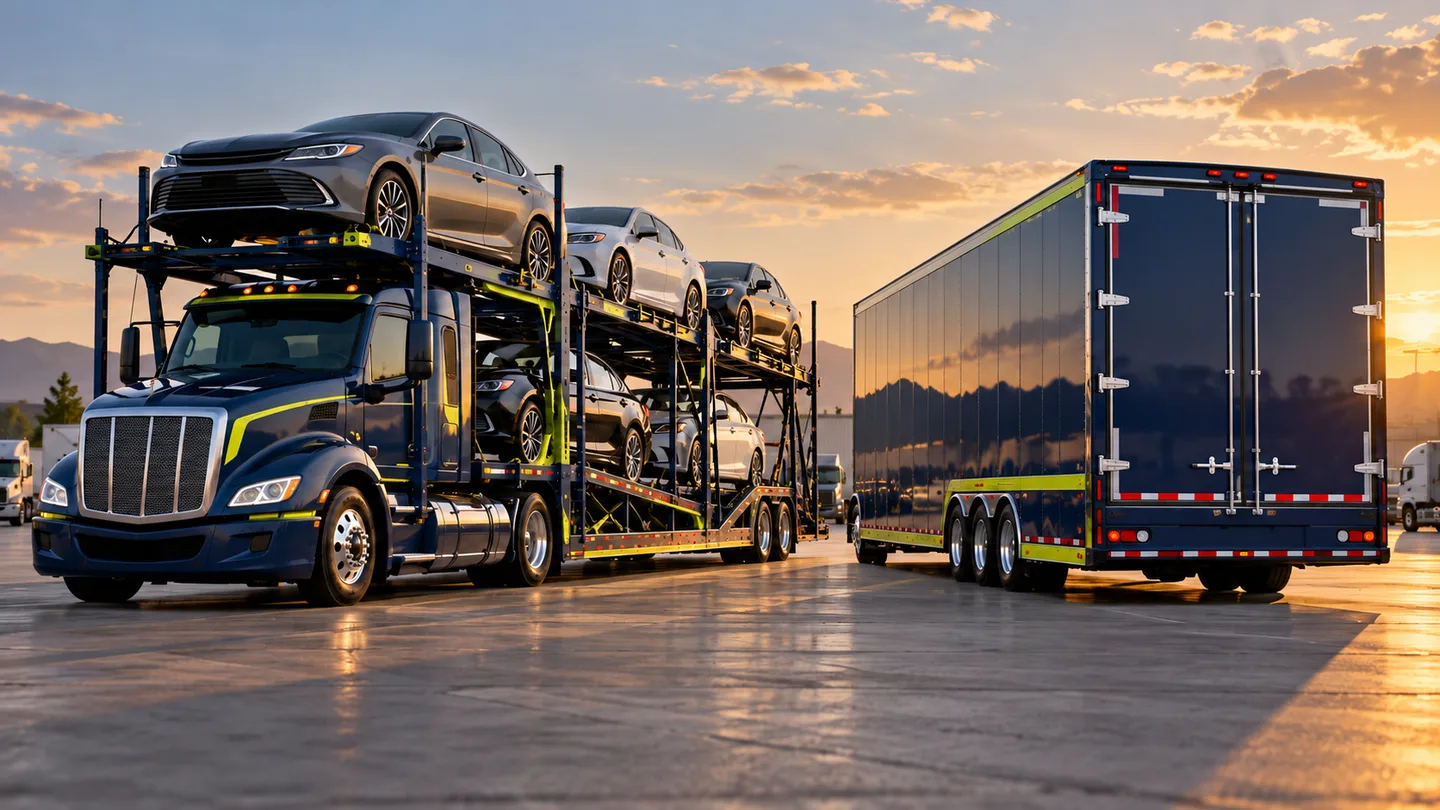
An open auto carrier leaves the car exposed to weather and road conditions during transport. An enclosed carrier places it inside a trailer. That physical difference matters, but it does not settle the choice by itself. The vehicle's ground clearance, modifications, condition, value, route, pickup access, schedule, and available carrier equipment can change which service is sensible. Compare written quotes for the specific car, not a generic “open is cheaper, enclosed is safer” slogan.
Most daily-use cars can be transported on open equipment if the carrier can load and secure them under its procedures. Enclosed service may be worth considering for a collectible car, a delicate finish, a low vehicle that needs a particular loading system, or an owner who values less weather exposure enough to pay more. Neither option removes the need for a registered carrier, a pickup condition record, and an inspection at delivery. A covered trailer is not a guarantee against every kind of damage.
The Federal Motor Carrier Safety Administration (FMCSA) advises consumers to distinguish auto brokers from transporters and verify registration. That applies regardless of trailer type. An enclosed quote from an unidentified broker is not automatically more dependable than a clear open-carrier booking. First establish who will transport the car and what service the contract promises; then compare the equipment.
Define the service you are buying
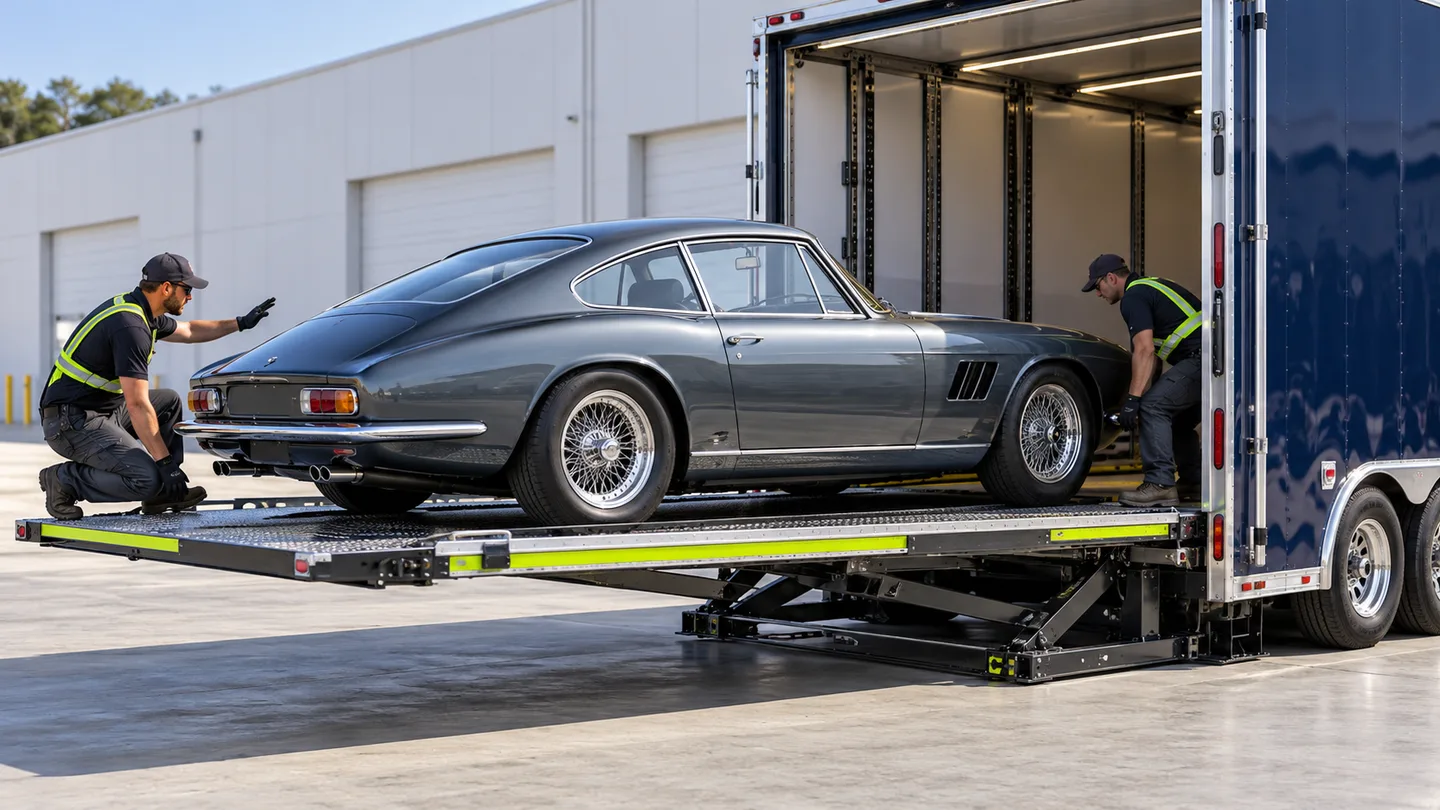
Ask whether “open” means a multi-car trailer, a smaller open carrier, or another equipment type. Ask whether “enclosed” means a fully covered hard-sided trailer, a soft-sided enclosure, or a specialized one- or two-car unit. These descriptions can affect exposure, loading angle, capacity, and scheduling. A sales representative's photo may show one model while dispatch assigns a different vehicle. Ask what features are guaranteed in the written order and what substitutions require your approval.
A fully enclosed trailer shields a car from direct rain, hail, dust, and most road debris while the doors are closed. Loading and unloading still occur outdoors or at a facility, and the vehicle remains subject to handling and securement risks. Open transport exposes the vehicle as it would be exposed while parked outdoors or driven on roads, though it is not being driven for the route's full mileage. The risks are different, not absolute. Ask the provider which exposure its terms address and which events may be excluded from a claim.
Do not confuse enclosed transport with climate-controlled storage. A covered trailer is not necessarily temperature regulated. If a vehicle has a rare paint finish, sensitive components, or a separate preservation requirement, ask specifically what environment the carrier provides. Avoid assuming the word “enclosed” includes a climate guarantee. Likewise, an open carrier's size does not tell you where on the rack the car will ride or whether a requested upper position is available.
Start with the vehicle's actual dimensions and condition
Give the carrier the exact year, make, model, trim, and any changes from stock. Record ground clearance at the lowest fixed point, overall height with a roof rack, width with mirrors, wheelbase, weight if unusual, and whether the car runs, brakes, and steers normally. The carrier should determine if its ramps, liftgate, tie-down method, and deck clearances work. A small sports car can be difficult to load despite taking little space; an oversized truck can be too tall or heavy for certain enclosed trailers.
Photographs of the side profile, front lip, underbody clearance, tires, and modifications can answer questions a model name cannot. A custom splitter, lowered suspension, or aftermarket wheels may change loading requirements. If the vehicle is inoperable, say so before dispatch. The guide to preparing running and inoperable vehicles explains the information to provide about steering, rolling, brakes, keys, and loading equipment. Quoting a non-running car as operational can produce a failed pickup or a new fee.
An enclosed trailer may use a liftgate, but not all enclosed equipment does. Ask whether that feature is actually available for your booking, and whether the driver will use it. A low-clearance car may need a shallow approach even on an open carrier with extended ramps. Choose by the loading method the carrier can demonstrate, not by the label on the service. If the provider cannot describe how it will load the car, request a more suitable equipment assignment before releasing it.
Compare protection with the car's use and value
A daily driver already spends time outdoors. That does not make road exposure irrelevant, but it can change how much the owner values an enclosure. A restored classic, show car, or freshly painted vehicle may have condition that is harder to replace or repair. The owner's tolerance for dirt, weather, or road film also matters. Ask what the enclosed premium buys on the actual route and whether the carrier's loading and inspection standards differ.
Montway's enclosed-transport explanation describes greater shelter from elements and road debris, and notes that enclosed service usually costs more. Its published pricing examples are provider- and time-specific, so do not treat a percentage on one website as a universal rate. Request two current quotes with the same pickup, destination, vehicle, dates, and payment terms. An enclosed offer with a long wait should not be compared to an open offer that can collect tomorrow as if only price differed.
Do not buy enclosed service as a substitute for reading cargo coverage. Ask for the actual motor carrier's insurance information, the claim process, deductibles or exclusions if applicable, and how the car's condition will be recorded. Coverage questions are separate from weather exposure. An enclosed carrier can still cause loading damage, and an open carrier can handle a car without damage. If the broker promises a coverage amount, ask how it applies under the carrier's policy and booking terms.
Account for pickup and delivery access
A multi-car open carrier may be too long to enter a narrow residential street or apartment complex. An enclosed unit may be smaller, but it may also be large and tall. Ask the provider for the actual carrier's access needs, including legal parking, turning space, height restrictions, and safe loading surface. A nearby permitted lot can solve an access problem for either option. Do not assume the carrier can stop at the house simply because the quote says “door to door.”
At destination, confirm where the car will be unloaded and who will inspect it. A bright, level, safe area is useful for a condition walkaround. A dark roadside shoulder is a poor handoff point regardless of transport mode. If the arrival window falls after sunset, ask whether the carrier can choose a well-lit legal location or schedule a different time under its terms. The vehicle receiver needs time to inspect before signing.
For a long-distance household move, coordinate the auto pickup and delivery with the furniture schedule. One person may not be able to meet an auto carrier across town while a moving crew is unloading at the new house. Ask for separate appointment windows and assign a responsible receiver for each. The trailer choice can affect carrier availability, so decide early enough to align travel and access. A quote that fits the car but not the household's calendar may be the wrong service.
Match the carrier to unusual vehicles
A heavy pickup, tall SUV, classic car without modern tie-down points, or heavily modified vehicle may not fit the standard equipment pictured in a quote. Tell the provider about aftermarket bumpers, lowered suspension, wide tires, roof-mounted gear, and fluid leaks. Ask the dispatcher which details affect deck position, ramp angle, securement, or acceptance. A vehicle can be legally roadworthy and still require specialized loading. The carrier should make that decision with accurate measurements before it arrives.
For an electric vehicle, ask about charge level, neutral or transport mode, parking-brake release, and the location of the emergency key. The driver may need to move the car a short distance at pickup or delivery. Do not apply one company’s battery recommendation to every make and carrier. Give the driver the manufacturer’s relevant loading instructions if the vehicle has unusual procedures. A car that will not roll or steer because of a discharged battery may be treated as inoperable even though it was running the day before.
Read the written quote for service changes
The estimate should name open or enclosed transport, vehicle details, pickup and delivery locations, estimated dates, total price, deposit, balance, payment method, cancellation terms, and any condition-based extra services. Ask when the actual motor carrier will be assigned and how you will be told its legal name. FMCSA's auto-transport advisory recommends checking registration; do that before the handoff, not after a driver arrives.
If the provider substitutes an open trailer for an enclosed booking, do not treat it as an ordinary truck-number change. The service's core exposure condition changed. Ask for a written option to wait for enclosed equipment, accept a revised open service and price, or cancel under the contract. The provider's terms control the choices, so read them before pickup day. Do not release the car on a verbal promise that the paperwork will be corrected later.
If an open-carrier booking is offered an enclosed upgrade, ask whether the vehicle will actually travel enclosed for the whole route or only one leg. A local pickup truck may transfer the car to line haul. Ask where any transfer occurs and who documents condition. A “covered final mile” should not be confused with covered interstate transport. Keep the old and revised service descriptions together so the delivery receiver knows what was agreed.
Prepare a clean condition baseline
Wash the car enough to see existing scratches, chips, dents, and glass damage. Take dated photographs of all sides, close-ups of existing marks, wheels, bumpers, and any low front or rear aero pieces. Record the odometer and vehicle ID. At pickup, walk the car with the driver and compare the report before signing. The vehicle condition report guide explains a method for making the pickup record useful at delivery.
The same inspection applies to open and enclosed transport. An enclosure may reduce exposure to weather but cannot replace evidence of preexisting condition. A clean exterior helps both parties see what is already there. If rain or darkness makes a complete inspection difficult, note the limitation on the report and take additional photographs when practical. Ask for a copy immediately; a report that the customer cannot access until after delivery is much less useful.
Follow the assigned carrier's rules on fuel, battery charge, keys, removable accessories, alarms, and personal items. Montway's preparation guide offers examples of company-specific instructions, including fuel level and removing toll tags. Do not assume another carrier uses identical thresholds. A loaded roof box changes height and may not be accepted on either trailer. Secure or remove loose parts before the truck arrives.
Ask what happens during the trip
An open multi-car transporter may load or unload other customers along the route. The driver can need to reposition vehicles to access one at a stop. An enclosed carrier may also make multiple stops or move the car within its trailer. Ask whether the booked service includes a no-transfer promise, and whether normal loading activity is described in the contract. A promise of an enclosed trailer does not automatically mean the car is untouched from pickup to delivery.
Ask how the company reports a road closure, equipment problem, or destination-access change. The carrier may need to use a different rig or meeting point while keeping the same service category. Confirm that any proposed substitute still accommodates the car’s clearance and protection requirements. If a transfer is necessary, request the date, location, receiving carrier, and condition record. A customer should not discover a second carrier only when an unfamiliar driver calls for payment at destination.
Compare availability and route design
An open multi-car carrier may serve a lane more frequently, while enclosed equipment may be less available for a particular route or date. That is a market and dispatch question, not a fixed rule for every origin and destination. Ask for the next realistic pickup window and the likely delivery range under each option. A broker may quote quickly before a carrier accepts the job. Find out when the quote becomes a confirmed assignment and what happens if no carrier takes it at the stated price.
A car can be transferred between carriers or facilities depending on the service. Ask whether the booked mode remains consistent across the route. If the car moves from an enclosed local unit to an open line-haul trailer, that is a different exposure profile. Ask who takes condition photos at each handoff and whether you will receive them. A direct shipment may cost more or have fewer available dates; compare the actual process rather than assuming either trailer type guarantees no transfers.
If a carrier offers a premium pickup date, read what is guaranteed and what compensation applies if it is missed. An expensive enclosed quote may still have an estimated, not guaranteed, arrival. Do not promise a buyer, mechanic, or event organizer a firm delivery time based on a marketing label. Keep alternative transportation or storage options in mind when the date matters more than the enclosure.
Compare the total cost of the alternatives
Request quotes that use the same vehicle details, ZIP codes, pickup flexibility, delivery method, and payment schedule. Separate the base transport charge from broker fees, equipment upgrades, terminal fees, and any special loading charge. Ask when a deposit becomes nonrefundable and who collects the balance. If one quote includes insurance language, check whether it describes the actual motor carrier or only a broker’s general statement.
Include the household’s own costs. If an enclosed carrier can collect a week later, the owner may need longer parking, a rental car, or a changed flight. If an open carrier requires a pickup lot far away, include the time and transport needed to reach it. A slightly higher carrier price can be reasonable when it avoids a larger scheduling cost, but the comparison should be explicit rather than emotional.
Inspect at delivery and resolve discrepancies
Have a receiver available who knows the pickup condition report and can inspect the car in adequate light. Compare panels, glass, wheels, roof, underbody where visible, and interior. Check that removable accessories and keys return with the vehicle. Record any new damage on the delivery document before signing, photograph it, and request a copy. Do not rely on a text saying the vehicle was delivered if the receiver has not examined it.
If a difference appears, ask the driver to note it and contact the carrier using its stated claim procedure. Preserve pickup and delivery reports, photographs, booking terms, and repair estimates as requested. An open carrier's weather exposure does not automatically explain every mark, and an enclosed carrier's walls do not automatically rule out transport damage. The before-and-after record is more useful than an assumption about the trailer type.
The right choice is specific to one vehicle and one move. Define the promised equipment, verify the carrier, disclose dimensions and condition, compare current written prices and dates, and keep a condition record. Open transport can be a reasonable fit for an ordinary car; enclosed transport can address a specific exposure or loading concern. The deciding evidence is the actual service the carrier can perform for your car on your route.
Check the current rule, contract and source page for your route and service. This guide helps you prepare clear questions and records.