
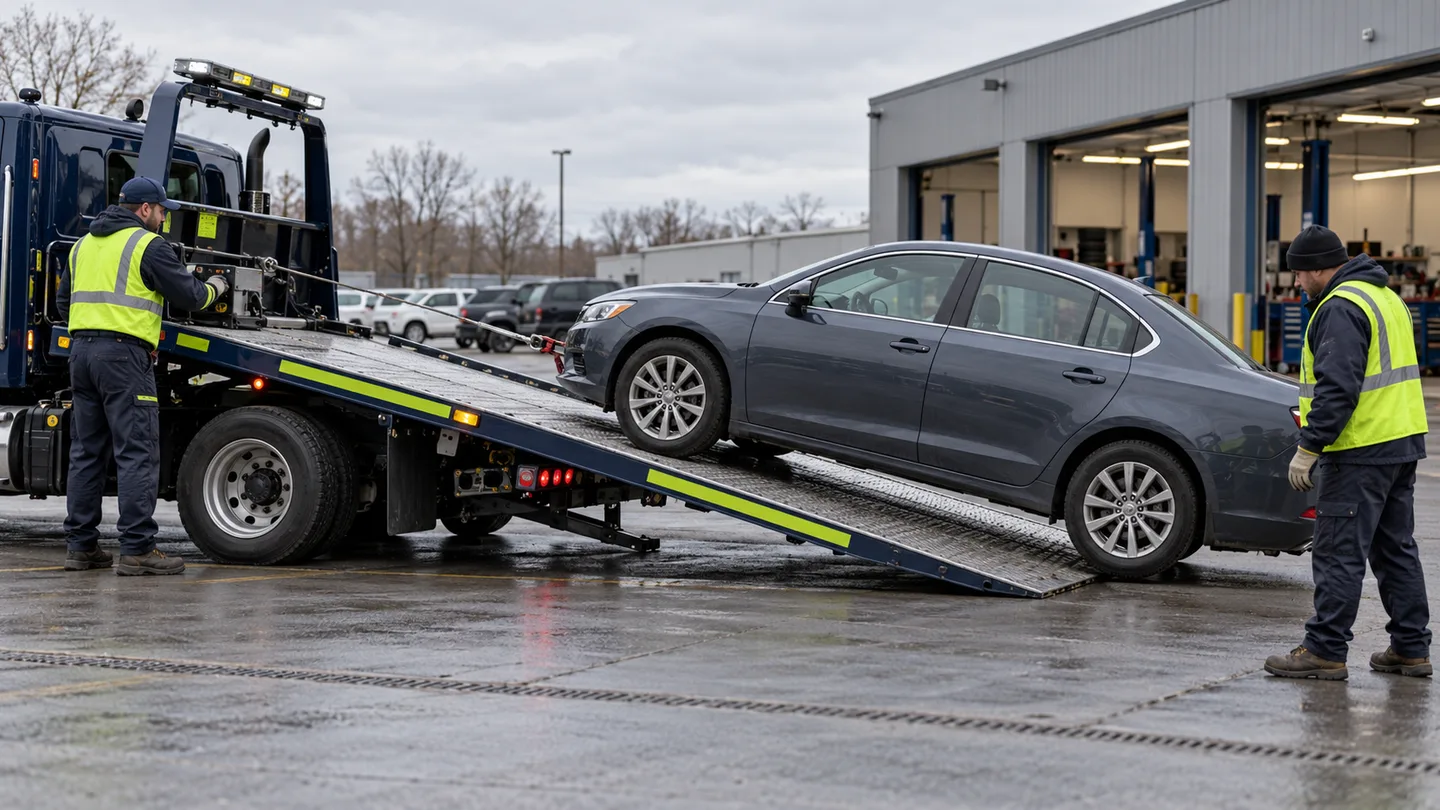
An auto carrier needs to know whether a vehicle can move under its own power before it assigns a truck. “It runs” can hide a weak battery, locked steering, flat tire, or brake problem. “It does not run” can mean anything from a dead battery in an otherwise movable car to a vehicle with missing wheels. Those differences determine whether the driver can load it normally, needs a winch, or needs specialized recovery equipment. Describe the vehicle's actual behavior, not a category chosen to make the quote cheaper.
Before pickup, confirm how the car starts, rolls, steers, brakes, shifts, and maintains power. Check the tires, ground clearance, keys, and any modified or loose exterior parts. Give the carrier recent photographs and a clear description of the pickup surface. A winch-equipped truck is not useful if it cannot legally reach the car or if a locked transmission prevents movement. The destination must also have a workable unloading plan.
Montway's inoperable-vehicle guidance distinguishes an operable car, a movable car that cannot start, and a car that cannot roll or steer. It describes how equipment needs change across those cases. That is one provider's operational framework, not a universal definition in every contract. Ask your carrier what it considers operable and what is included in its written quote. The Federal Motor Carrier Safety Administration (FMCSA) advises checking auto transporter and broker registration regardless of vehicle condition.
Describe function, not only a label
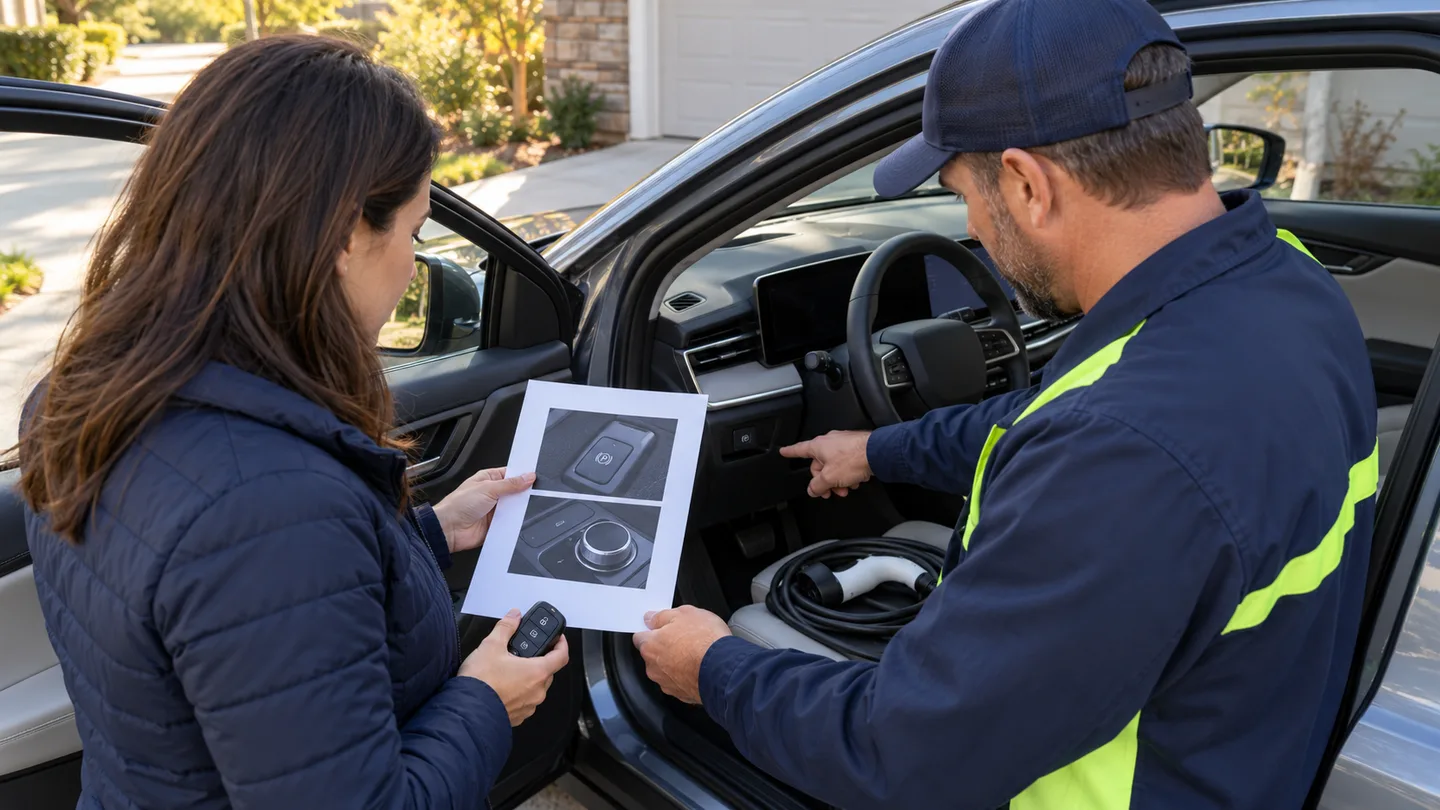
Can the engine or motor start reliably? Can the car drive forward and reverse a short distance? Does it shift into neutral? Do all wheels roll freely? Can the steering turn without power assistance? Do the brakes hold and release? Is the parking brake stuck? These questions are more useful than “running” or “non-running” on a form. Tell the provider if the answer is uncertain and when the car was last tested. A vehicle that sat through winter may have new problems on pickup day.
If the battery is dead, explain whether a jump start worked and whether the car can still shift or release an electronic parking brake without power. Some modern vehicles require a specific tow or transport mode. Follow the manufacturer's instructions and tell the carrier what controls are accessible. Do not ask a driver to force a drivetrain into neutral or pull against locked brakes. A damaged transmission or wheel can make an apparently small electrical problem into a specialized recovery job.
If the car rolls but does not run, ask whether the assigned carrier has a winch and the correct attachment points. If it cannot roll, steer, or brake, disclose exactly why. A flat tire may be repairable before pickup; a seized brake or missing wheel may require a different truck or loading apparatus. Montway's published inoperable guidance notes that cars unable to roll or steer need specialized equipment. Do not treat a winch as a cure for every immobile condition.
Tell the carrier where the car actually sits
A pickup location can make a straightforward mechanical problem difficult. Is the car in a narrow garage, behind another vehicle, on gravel, on a steep driveway, or in an underground structure with height limits? Is there room for a transporter or tow vehicle to approach in a straight line? Give photos from the street to the car, including gate dimensions and any overhead restrictions. Ask the provider where its driver intends to load, not only what ZIP code it serves.
A car in a private lot may require permission from the property manager or auction facility. Ask who will release the keys and whether the carrier must show an authorization document. A residential street may allow brief parking but not an extended winch operation. A shopping-center lot is not automatically public loading space. Choose a legal, level meeting point when possible. Do not move a disabled car unsafely just to avoid an access fee.
Check the destination too. A winch is needed to unload a non-running vehicle as well as to load it. The receiver must have a safe place to accept and park a car that cannot move independently. If the destination garage is downhill with a sharp turn, tell the carrier before dispatch. Ask whether the car will be left on its wheels at the curb, placed on a tow truck, or delivered to a facility. The service is incomplete as a plan if it only explains the origin pickup.
Prepare a running vehicle for ordinary loading
For a car quoted as operable, test it near the pickup date. Check that the battery starts it, tires hold pressure, brakes work, steering turns, and the transmission shifts as expected. Bring a full set of keys or electronic fob, including any separate key needed to release the steering lock or open the trunk. Tell the driver about an unusual starting sequence or security system. Do not leave the keys hidden in the car or send them to an unverified person.
Wash the exterior enough to reveal existing damage. Photograph all sides and record the odometer. The pickup condition-report guide explains how to compare the driver’s report with your photographs before signing. The vehicle may be loaded safely on a standard carrier, but a clean baseline is still needed. A running status says nothing about preexisting scratches, leaks, or loose parts.
Follow the specific carrier's instructions for fuel or electric-vehicle battery level. Montway's customer guidance recommends about a quarter tank for a gasoline car and gives its own electric-vehicle charge range. Other providers can differ. Keep enough energy for loading and unloading, and do not fill a tank against the carrier's weight instructions. If an electric car has a transport or tow mode, know how to activate it without relying on an app that may lose connectivity.
Disclose size and modifications
Measure or photograph changes from the factory vehicle: roof rack, large tires, lowered suspension, front splitter, tow hitch, lift kit, or aftermarket body panels. Even a running car can be unsuitable for a standard ramp because its clearance is low. An oversized SUV or pickup can exceed a deck's height or weight allocation. Ask the carrier how the vehicle will be loaded and secured. Do not assume an enclosed trailer has a liftgate or that an open truck has shallow ramps.
Remove detachable exterior items when the carrier requires it. A bike rack, roof cargo box, magnetic sign, temporary antenna, or loose spoiler can increase height or separate in transit. Photograph the car before and after removing accessories, and keep removed parts with you unless the provider explicitly accepts them inside the vehicle. The carrier's insurance and personal-property rules may not cover an accessory carried loosely in the cabin.
If the vehicle has collision damage, tell the carrier which panels are loose, whether fluid leaks, and whether a wheel or suspension component is compromised. The driver needs to know how to attach loading equipment without worsening damage. A salvage or flood-damaged car may need different handling and may be refused by a carrier that does not serve such loads. Get acceptance in writing based on current condition; an old listing photograph may no longer describe the car.
Give special instructions for electric and hybrid vehicles
An electric vehicle may be able to drive onto the carrier but still require a particular procedure to place it in neutral or release the parking brake. Consult the manufacturer’s transport instructions for that model and share the relevant steps with dispatch and the driver. Do not assume the tow mode used by one brand works for another. If the battery is too depleted to open doors, shift, or steer, describe the car as needing special handling even if its motor is not mechanically broken.
Tell the carrier about unusual ground clearance, battery-pack location, and approved lifting points. The crew should use equipment suitable for the vehicle rather than attach a winch to an arbitrary underside part. If the car has been in a collision or flood, disclose possible battery damage and ask whether the carrier accepts it. A high-voltage safety concern belongs with qualified professionals; the household should not try to make a damaged EV movable by improvising at the curb.
At destination, plan enough charge or a charging option for the car to leave the unloading area. If it will be rolled into a garage without power, tell the receiver how the parking brake and steering lock operate. The goal is a complete unloading plan, not merely a successful pickup.
Keep the interior safe and within the contract
Remove valuables, documents, garage remotes, toll tags, parking passes, and loose electronics. Check the trunk and under seats. Some carriers prohibit personal belongings; some allow a limited amount in a specified area. Read the actual contract rather than assuming you can use the car as a moving box. Extra weight affects loading and can violate the quoted service. Loose items can shift and cause damage or complicate a claim.
Secure factory items that must remain, such as a removable cargo cover, spare wheel, or charging cable, according to the carrier's instructions. Do not pack hazardous materials in the vehicle. If a child seat remains installed, ask whether it is allowed and whether the carrier wants it removed. A car key and inspection report should be accessible to the receiver, but private identification documents should travel with the household, not inside a shipped car.
Disable an alarm that could sound on the carrier if the provider instructs you to, while preserving necessary security features. Know how to prevent automatic wipers, powered doors, or air suspension from reacting during loading. If the car has a tracking device, ask whether it may remain active; do not rely on it as a substitute for the carrier's custody records. A location ping from a car can be inaccurate in a covered trailer or terminal.
Make the price reflect the true condition
An inoperable vehicle generally needs more labor and equipment than a car that can drive onto a trailer. Ask for a written quote that states the condition given, the loading method, and what happens if the car is less movable when the driver arrives. Avoid generic online prices that assume a standard running sedan. If the provider says it will assess a fee at pickup, ask how the fee is determined and who can approve it before dispatching a truck.
Do not try to save a fee by saying the vehicle can roll when the brakes are seized. A carrier may arrive without the needed equipment and decline the load, leaving you with a missed appointment. Conversely, do not pay for a complex recovery service if a simple battery replacement restores normal operation. Have a qualified mechanic make repairs when appropriate, then update the carrier with the new condition and ask for a revised quote. The carrier still decides what equipment to assign.
If the booking is through a broker, ask when the actual carrier is assigned and confirm it received the correct condition description. FMCSA's auto-transport advisory explains the broker-carrier distinction. The driver's arrival should not be the first time anyone learns that the car cannot start. Request the carrier's legal name and registration details before the handoff, and keep the booking and payment terms.
Arrange access at auctions, repair shops, and storage lots
A car held by another business may require more than a driver’s arrival. Ask the facility what release document, identification, payment, appointment, and pickup hours it requires. Confirm whether the car is on a paved surface, whether staff can move it, and whether the carrier is permitted to bring a winch truck inside. A vehicle listed as “runs and drives” by a seller may have changed condition by the pickup date. Ask for a recent operational check instead of relying on the listing.
At a repair shop, identify which parts are installed and whether the vehicle is safe to roll or steer. Loose body panels, disconnected driveline components, or missing fluids may make normal loading inappropriate. Ask the shop who will hand over keys and sign the condition record. If the car is in paid storage, learn when fees stop and whether a failed pickup creates another day of charges. Share those details with the carrier before it assigns equipment.
Prepare the person who will hand over the car
If you cannot attend pickup, designate someone who can identify the vehicle, release keys, explain its controls, inspect condition, and sign the carrier's form. Give them the current quote and carrier name. A neighbor who can point to the car but does not know that the parking brake is locked may not be an adequate handoff person for an inoperable pickup. Arrange a reachable phone contact for questions while the crew works.
Before the driver begins loading, compare the car's condition with the inspection form. Note existing damage and any mechanical limitation, take photographs, and request a copy. Record the odometer and number of keys given. Do not sign an electronic screen without reading the condition entries. The report should distinguish a dent that already existed from a scrape that appears later. If inspection is limited by darkness or weather, state that on the form.
At the delivery end, tell the receiver whether the car is expected to start and how it will be unloaded. A vehicle may need a tow from the carrier's drop-off point. Give the receiver a copy of the pickup condition report and photographs. The delivery inspection guide explains how to compare condition before signing. The receiver should not accept a car marked “running” if it now cannot move without asking the carrier to document the issue.
Handle a change on pickup day
If the car fails to start, a tire goes flat, or the pickup location becomes inaccessible, tell dispatch immediately. Ask whether the assigned truck can still perform the service safely and whether the price or appointment changes. Do not let a driver improvise with unapproved equipment because everyone is under time pressure. A delayed pickup with the right winch can be better than a rushed attempt that damages the vehicle or property.
If the driver says the vehicle is too low, wide, or heavy, ask what measurement or equipment limit prevents loading. Request a written reassignment to suitable equipment, not a verbal promise that a different driver will “figure it out.” If the car is at an auction or storage facility, alert that facility to the changed appointment and any release requirements. Keep a record of the cause and new date so a later storage fee can be understood.
At final delivery, reconcile keys, odometer, condition, and operability against the pickup record. A non-running car should be in the documented condition, with any new damage noted before signing. A running car should be checked for normal start and basic movement when safe. Keep the carrier's report and communication until the bill and any claim are resolved. Accurate preparation makes the quote, equipment assignment, and handoff describe the same vehicle.
Check the current rule, contract and source page for your route and service. This guide helps you prepare clear questions and records.