
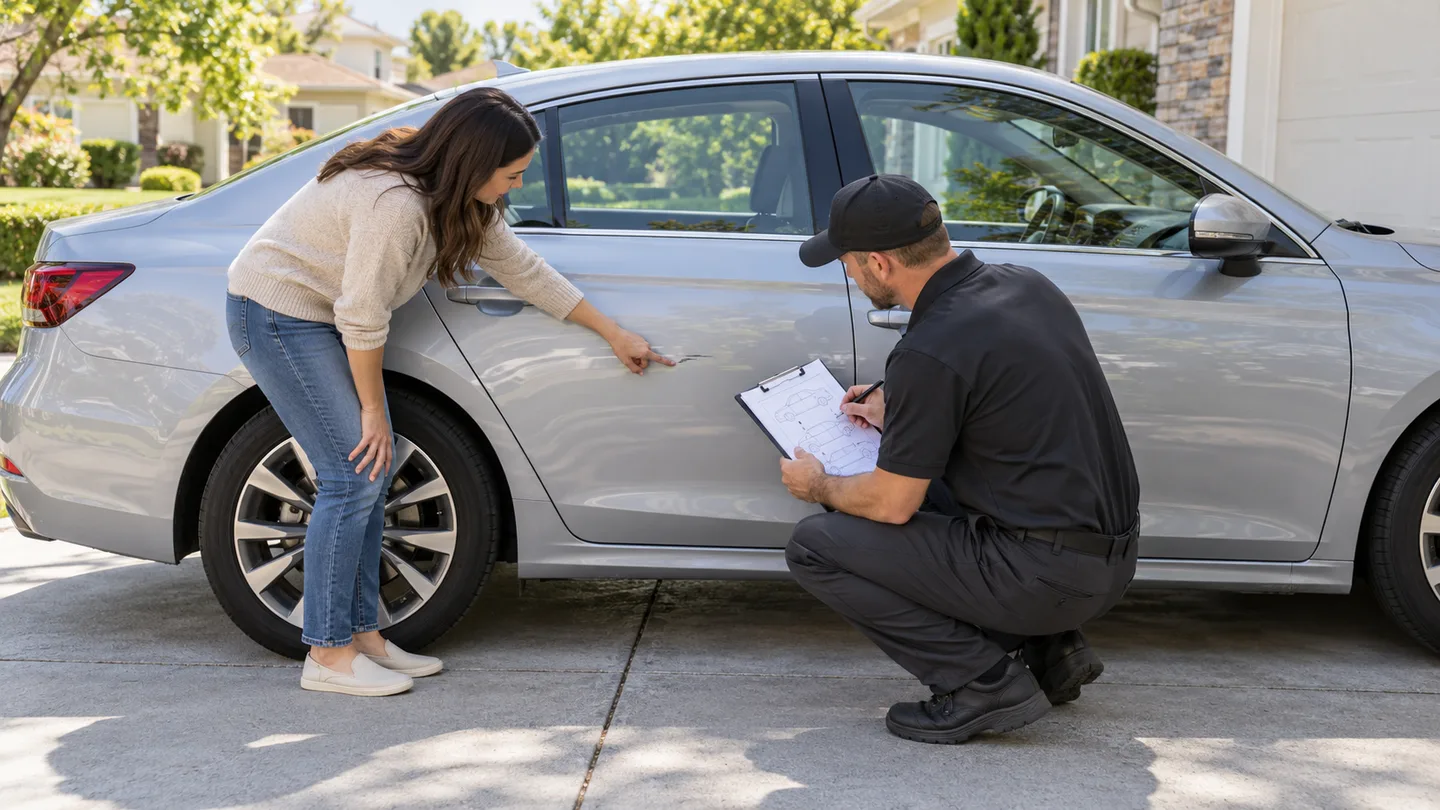
The pickup inspection is the baseline for judging a car's condition when it arrives. A few broad words such as “normal wear” can hide the exact location of a scratch, cracked trim, or dent that later becomes disputed. Walk the vehicle with the actual driver, compare what both of you see, and make sure the carrier's form records it before the car is loaded. Take your own photographs as support. The form and photographs should identify the same vehicle, date, and handoff.
The car does not have to be flawless to make a useful record. A vehicle with old paint chips, hail marks, or a repaired bumper can be documented clearly. The purpose is to distinguish those existing conditions from a change that appears after transportation. If a mark is hard to see in rain or low light, note the inspection limitation rather than signing an unconditional statement that the whole car was perfect.
Montway's auto-transport guidance describes using a bill of lading to record vehicle condition at pickup and delivery. Its published terms ask the customer or agent to inspect for preexisting damage, note it on the carrier form, sign, and obtain a copy. Other carriers' paperwork and claim terms can differ. Read the actual document presented at your pickup and use its condition diagram or comment field accurately. The household-goods inventory from a separate furniture move is not a substitute.
Confirm vehicle identity and handoff details
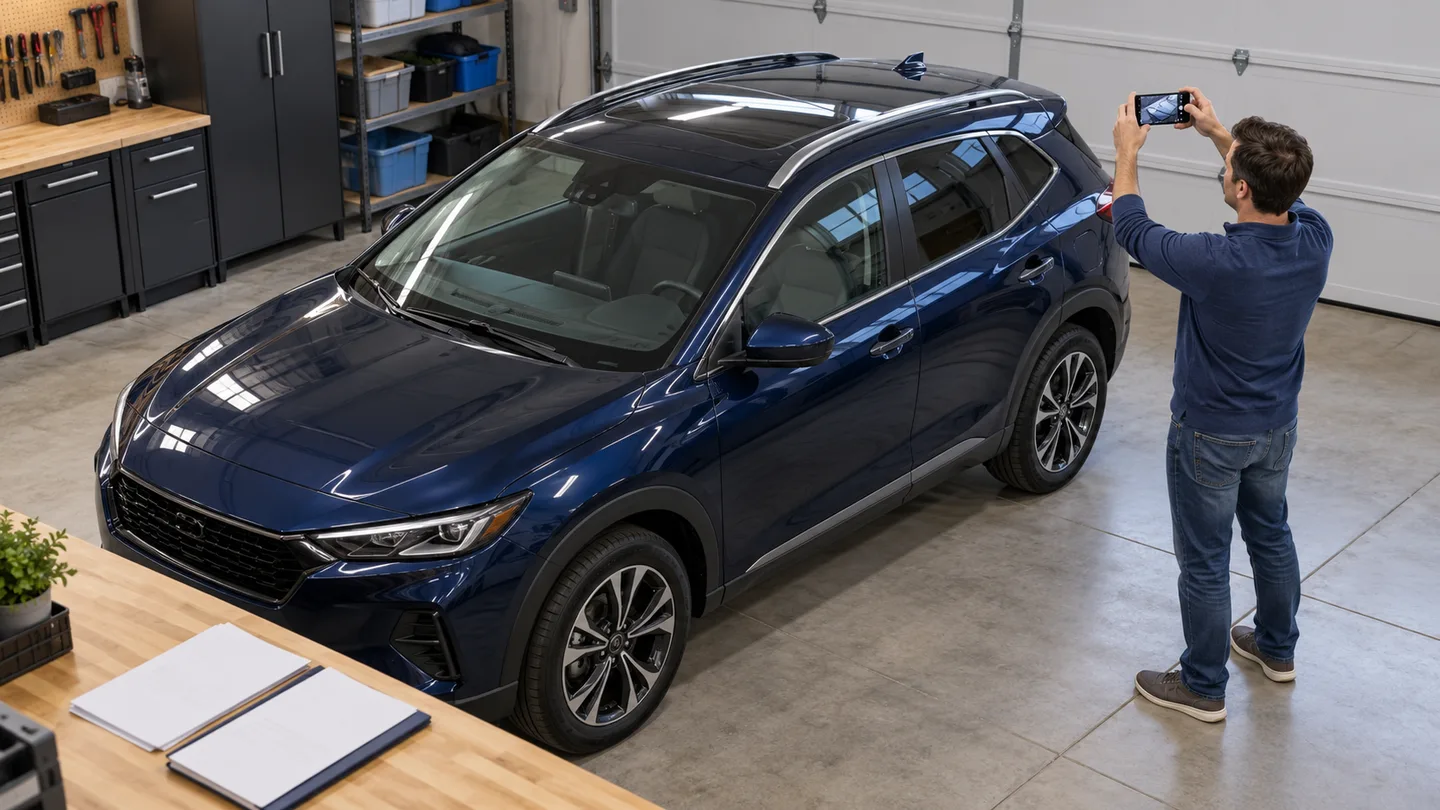
Before looking at the paint, check the vehicle identifier on the form. Confirm the year, make, model, color, license plate if used, and at least the relevant VIN characters against the car. A full VIN may appear on paperwork; store that copy securely rather than posting it with public photos. Confirm pickup address, date and time, carrier name, driver or truck reference, destination, and the person releasing the vehicle. A condition report attached to the wrong booking is hard to use later.
Ask whether the driver is operating for the broker that sold the service or a separate motor carrier. The Federal Motor Carrier Safety Administration (FMCSA) distinguishes auto brokers and transporters and recommends checking registration. The person receiving the keys should know the actual carrier's legal name and official contact. Record the carrier's document number; do not rely only on a sales confirmation email that may use a different reference.
If a designated agent hands over the car, give that person the booking details and a photo guide to existing marks. They need authority to sign accurately and time to inspect with the driver. An agent who merely passes over keys can miss a condition entry that later appears as a preexisting mark. Ask the carrier whether it accepts the agent and what identification it requires. Arrange this before the driver arrives.
Clean enough to see the surface
A quick wash removes dirt that can disguise small damage. Dry the car enough to avoid confusing water streaks with scratches. Do not polish or repair the vehicle immediately before pickup merely to make photographs look good; the record should show its actual condition at transfer. If the car is at an auction or repair shop, ask whether it can be cleaned or moved into adequate light. If it cannot, document the limitation and the visible condition carefully.
Remove removable covers or decorations that block body panels if doing so is safe and consistent with the carrier's rules. A roof box or bike rack can conceal damage and may be prohibited on the carrier. Take photos before and after removing such accessories, then keep them with you. Do not open or dismantle fixed panels to conduct an inspection. The driver and customer are documenting externally observable condition, not certifying every mechanical component inside the vehicle.
Inspect in daylight when possible. If pickup occurs in a parking garage or after dark, use even lighting and photograph each panel from more than one angle. Harsh flashlight glare can erase a shallow dent. A wet car may hide fine scratches. Note “vehicle wet during inspection” or a similar accurate observation on the form if the condition is materially limited. Ask for time to complete the walkaround instead of signing while the driver is already moving up the ramp.
Photograph the car systematically
Take wide photos of the front, rear, both sides, and all four corners. Then photograph the roof, hood, trunk, bumpers, glass, wheels, and any low front or rear bodywork. Use close-ups for preexisting chips, dents, cracked trim, and repaired areas, paired with a wider shot showing where the mark sits. A close-up of a scratch without context can be difficult to match to the car. Keep the original files with timestamps and metadata when possible.
Avoid creative filters, heavy edits, or collage apps for evidence. A clear ordinary photo is more useful than a dramatic one. If a phone auto-enhances images, preserve the original files if available. Keep a short naming scheme such as pickup-front-left, pickup-rear-right, and pickup-existing-door-scratch. Do not rely solely on a private chat thread that compresses images or disappears when a phone is replaced. Back up the photos in a folder the destination receiver can access.
AmeriFreight's photo-documentation guide recommends pairing time-stamped photos or video with the bill of lading. A slow, continuous walkaround video can help show overall condition, but it should not replace still images of specific marks. Video often moves too quickly to see a small chip. Take a few clear frames of every disputed area before the driver takes custody.
Record mechanical and accessory condition
Note the odometer reading and whether the car starts, rolls, steers, brakes, and shifts as represented in the booking. Do not make a sweeping statement that the vehicle is “mechanically perfect.” Record observable facts: it started at pickup, no warning light was visible, tires appeared inflated, or a battery warning was already on. The driver may not perform a diagnostic inspection. If a vehicle is inoperable, describe what it does and does not do. This affects loading and the later delivery check.
Count keys or fobs handed over and note any separate key for trunk or wheel lock. Record removable accessories that are accepted by the carrier, such as a charging cable, spare tire, or dealer-installed item. If the carrier does not accept an item, remove it before pickup. Note existing broken glass, loose trim, fluid leak, low ground clearance, or unusual loading instruction on the report. Those facts can affect both equipment assignment and later condition comparison.
Do not leave household valuables or personal documents in the car. The car's condition report is not an inventory of luggage. Ask the carrier whether any permitted personal item should be listed; many contracts limit responsibility for contents. A toll pass can register fees during transport, so remove it. Keep the vehicle's registration and insurance information available as required for the handoff, but do not leave unnecessary private records in the glove compartment.
Use the diagram and comments together
Many carrier forms include a vehicle outline with symbols for dents, scratches, chips, or other marks. Put each mark at the correct panel and side, then add plain-language detail in the comment field if needed. “Three-inch scratch on right rear door below handle” is more useful than a mark floating somewhere between two panels. If the form has no space, ask for an attached note or photo reference. Both customer and driver should understand what the notation means before signing.
If the driver calls an area “prior damage” that you dispute, discuss it at the car. Compare photographs taken before pickup and ask the driver to correct or qualify the entry. Do not sign a form that attributes a large preexisting damage area to the car if you believe it is inaccurate, hoping to argue later. If the disagreement cannot be resolved, write your disagreement on the form where both copies capture it and contact the carrier's office. The aim is an honest joint record, not a perfect-looking one.
A general “subject to inspection” note can be appropriate when the surface is genuinely obscured, but ask how the company uses it. Does it reserve an inspection at the next safe location? Will the customer see the later findings? Do not accept a blank form that lets someone add entries after you sign without a clear procedure. Keep a photo or copy of the completed form at the moment of handoff, including all pages and attachments.
Check the electronic signature workflow
A driver may use a phone or tablet instead of paper. Read the whole screen, including prefilled condition entries and any delivery or claims language. Ask to zoom into the vehicle diagram. If the device displays only a signature box, request to see the complete document before signing. Confirm that corrections are saved and visible on the final copy. An emailed receipt should reach an address you control; check it before the vehicle leaves when practical.
Take a photograph of the final signed screen if the carrier permits it, or save the emailed PDF immediately. Ensure the copy includes vehicle identity, condition notes, date, driver or carrier, and your signature. If a photo set is uploaded into a separate app, ask whether it is attached to the booking and how the destination receiver can access it. A link that expires before delivery is not a durable record. Keep your own original photos separately.
Never share account passwords or one-time codes with a driver to let them access the customer's portal. The carrier should have its own workflow. If a family member signed for pickup but you will receive at destination, ask the carrier to send the completed report to both authorized people. The receiver needs the baseline before the car arrives, not after an issue is noticed.
Match the report to the physical handoff
The carrier should inspect while the car is still at the pickup location and before it is loaded. Record the time and location where the driver takes custody. If a local tow operator takes the car to a terminal for a later auto carrier, ask which party creates the initial condition report and whether a new one is made at transfer. One photograph at the final line-haul truck does not establish condition when the car first left you. Keep each handoff document in sequence.
If the vehicle is moved to a nearby loading lot because the transporter cannot enter the street, inspect it at the point where the carrier actually accepts it. Do not sign in the driveway and then drive the car several miles without noting what happened in between. If you remain the driver for that segment, the formal pickup condition should reflect the handoff at the lot. Ask the provider to identify when its responsibility begins under the contract.
At an auction or repair shop, the facility may supply its own release photos. Compare them with the carrier's pickup form. A vehicle can acquire a mark while stored before the carrier arrives, or while being towed to a loading area. The owner should not assume one set of photos proves the timing without the associated custody dates. Ask for the release timestamp and the pickup inspection timestamp when they differ.
Prepare the delivery comparison now
Put the signed pickup report and original photos in a folder the destination receiver can open offline. Give them the booking ID, carrier contact, expected car description, and instructions to inspect in good light before signing. The delivery inspection guide covers the receiving walkaround and how to note a difference. A receiver who has never seen the pickup scratch may mistakenly report it as new; the baseline prevents that.
Ask how delivery works if no one is available or if the car arrives after dark. A terminal pickup may give more time but may start storage charges; the terminal-to-terminal transport guide explains those terms. Do not plan to sign a clean delivery receipt sight unseen merely because the provider says the car is “on the way.” The receiving person should know when and where a meaningful comparison can take place.
If the car has a preexisting problem that affects operation, tell the receiver. A weak battery recorded at pickup may still need a jump after transport. That does not erase the need to note any new damage. Separate cosmetic and mechanical observations in the record. The receiver can then determine whether the vehicle is in the expected condition and whether it can leave the unloading area safely.
Handle hard-to-see areas and imperfect conditions
A pickup inspection is sometimes scheduled at a curb, in rain, or near dusk. Those conditions limit what either person can see. Say so on the form rather than describing the inspection as comprehensive. If the windshield is wet, the roof is out of reach, or one side sits against a wall, identify the uninspected area. Photograph the lighting and position of the car as well as the visible panels. An image that shows why the right side could not be examined is more useful than a later argument about what the inspector should have noticed.
Do not crawl beneath a car, stand in traffic, or climb on a carrier to obtain a photograph. Ask whether the car can be moved to a safe, well-lit location before the handoff. If the driver cannot wait, record the limitation in the condition report and preserve the photos you can safely take. A flashlight can help reveal a chip, but glare may conceal paint damage. Take both a broad image of the panel and a close image from a second angle when a mark matters. Avoid filters that sharpen or smooth the surface, and retain the original files with their capture dates.
Modifications deserve a separate note. Photograph a low front splitter, roof rack, aftermarket wheels, custom wrap, or loose exterior accessory before loading. Ask the dispatcher about clearance and attachment requirements before pickup, then confirm the driver received the information. The condition report should describe the item as it appears, including an existing crack or loose fastener, rather than simply ticking a box for “modified.” If an item must be removed, photograph it off the vehicle and keep it with you. Do not leave the driver to infer whether it traveled with the car.
Sometimes the pickup driver is a subcontracted carrier and the booking broker uses a different app. Confirm the carrier name and truck identification against the dispatch information, but do not place personal identification or payment details in a public photo album. Ask which copy of the signed report controls when two apps or paper forms exist. Save both if both were used, and note any difference before the vehicle leaves. This preserves a coherent record across the actual handoff instead of a collection of images whose relationship is unclear.
Store the record for a claim or billing question
Keep the quote, booking terms, carrier registration information, pickup condition report, original photographs, any transfer reports, delivery form, and payment receipts together. If a new mark appears, those documents show what the parties observed at each handoff. They do not by themselves prove causation, but they provide a factual starting point. Follow the actual carrier's claim procedure and deadlines rather than assuming household-goods rules govern the auto shipment.
A careful pickup report takes time, yet it is a small part of the transport. Make the vehicle clean and visible, confirm identity, record specific existing marks and operating condition, sign only the completed form, and give the receiver a copy. The strongest record is one the driver and customer can both understand when the car is delivered weeks later.
Check the current rule, contract and source page for your route and service. This guide helps you prepare clear questions and records.