
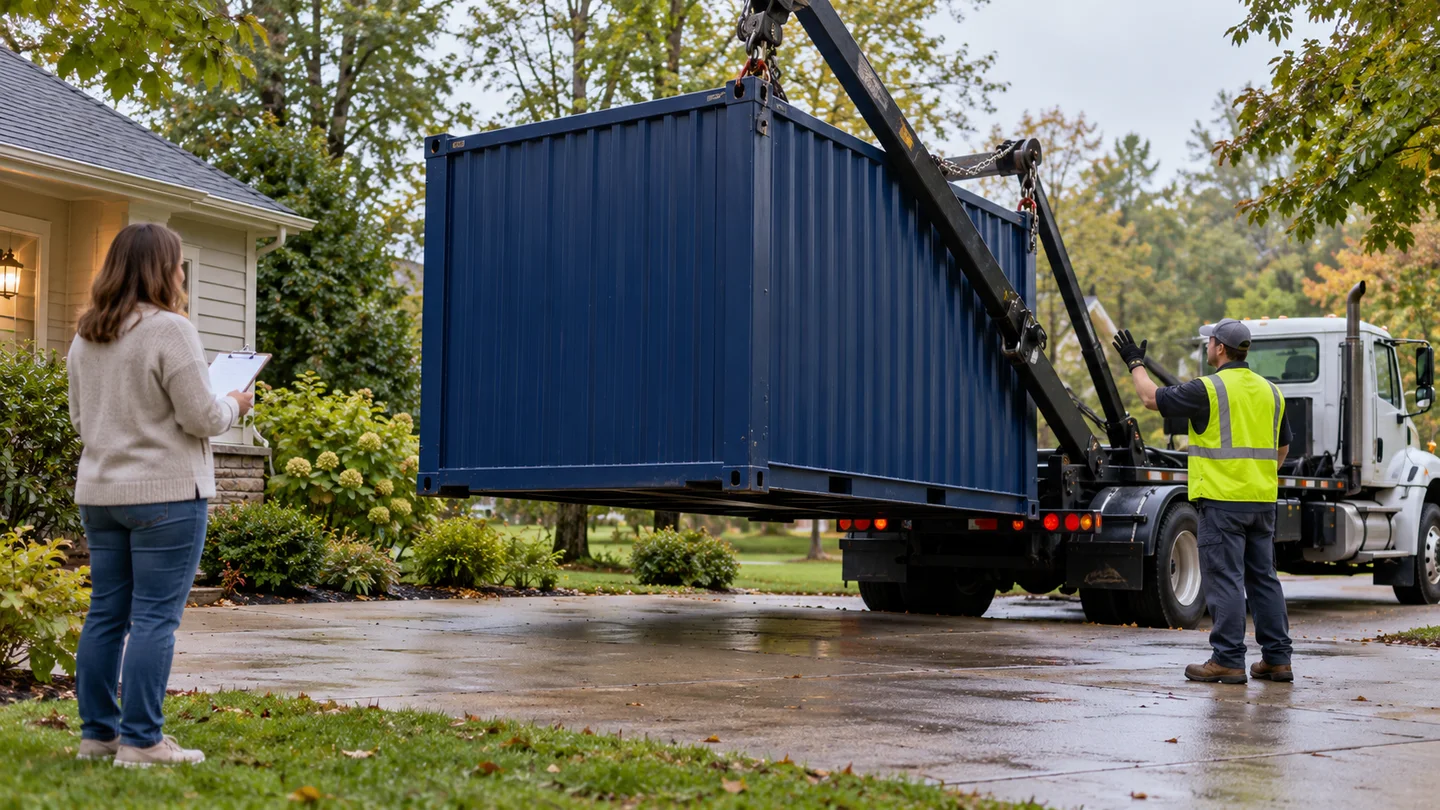
A portable moving container can look reassuringly simple: one box arrives, a household loads it, a truck takes it away, and the same box appears at the new address. The physical journey may contain several more steps. A local driver can take the unit to a yard, a different carrier can move it across states, a destination terminal can hold it, and a final truck can deliver it. The container may remain closed through these changes, or a service may transfer its contents under circumstances described in its contract. The only reliable way to know is to map the handoffs for the service you are buying.
A custody map is a short record of who controls the container and its contents at each stage, where it is expected to be, and what evidence marks the transfer. It does not need to reveal a carrier's private routing system. It should let you answer ordinary questions: Was the unit picked up? Which number identifies it? Was it received at the yard? Is it still sealed? Who will release it for final delivery? What happens if a different unit arrives? Those questions become urgent when a delivery window changes or damage is noticed. Answer them before the container is loaded.
This guide concerns the practical transport chain of a customer-loaded container. Federal consumer rules for a full-service interstate household-goods mover should not automatically be applied to every container arrangement. FMCSA's general requirements and definitions say a carrier that transports goods in a container or trailer entirely loaded and unloaded by someone other than the carrier or its agent is outside the defined household-goods motor-carrier category used there. A company may offer additional services that change the arrangement. Read the specific contract and ask the provider which entity takes responsibility at each stage.
Start the map before delivery of the empty unit

Ask the provider to describe the intended journey in plain terms. Will it deliver an empty container to the origin home? Will the household load it there or at a terminal? Is the unit picked up by the same organization that booked the move? Does it travel directly to a destination yard or pass through another hub? Is final delivery included, optional, or unavailable at the destination address? Write each answer in order. If a representative says the routing is not fixed, ask which parts can change and how those changes will be recorded.
List the parties separately. The brand on the booking website may coordinate service while a local contractor performs placement and pickup. A line-haul carrier may move the closed unit between yards. A storage operator may hold it. The final-mile driver may work for another contractor. This is not inherently a problem. It is a reason to ask which company has the container at a given moment and which customer-service team can reach that custodian. A single phone number may remain the customer contact, but it should have a way to trace the actual unit.
Create a table with six columns: stage, date or window, physical location, custodian, identifying number, and receipt or message received. Leave unknown entries blank until confirmed. Avoid filling them with guesses from a route map. A planned path and a completed handoff are different records. The map is useful because it shows exactly where a promised event has not yet been confirmed.
Inspect the empty container as a custody baseline
Before loading, photograph all sides, the roof if safely visible, the doors, latch, floor, and any existing dents or openings. Use the provider's equipment inspection form if one exists. Note the container or unit number from its physical marking and compare it with the booking document. If the number differs, get a corrected record before loading. A delivery driver may know the replacement was routine; your later documents still need to identify the unit that actually carried the goods.
Open the doors and check for standing water, unusual odor, visible holes, or damaged flooring. Ask for a replacement if the condition makes the unit unsuitable. Do not climb onto the roof or under the unit to inspect it. Check the door opening and floor transition against the furniture you intend to load. A container that is sound but difficult to access can create a rushed loading day and a poor load. If the provider supplies a lock or seal, learn who applies it and whether the household keeps the key.
The placement location affects the first handoff. Record the exact spot and the driver's name or equipment number if the provider supplies it. Ask what condition the area must be in when the unit is collected. A car parked too close to the doors can prevent loading; a vehicle parked in the pickup path can prevent removal. The container placement and pickup-access guide turns those questions into an address-specific check. The custody map should include the actual pickup point, not merely the street address.
Create a load record the provider can connect to the unit
A customer-loaded container may not receive a carrier-prepared item-by-item household inventory. Do not assume one will appear later. Make your own list by room, box number, or large-item identifier. Photograph the load in stages: first furniture layer, middle load, final door-side view. These images are not a substitute for safe loading or a valuation agreement, but they can show what was placed in the unit and how it was arranged. Keep a separate list of prohibited or excluded items and remove them before the doors close.
Record the date and approximate time loading finished. Note who loaded it: household members, an independent labor crew, or workers hired through the container provider. This distinction matters when a problem might have occurred before transport. If a separate loading company was used, keep its work order and any condition notes with the container booking. Ask both companies how responsibility is allocated for packing, load shift, and damage. A container provider's transport coverage may not include mistakes made by independent labor, while a labor company's policy may end when its crew leaves.
Before closing, take one clear image that includes the final load near the doors and another of the closed unit number. Apply a lock or seal according to the provider's instructions. Record the seal number if one is used. Do not rely on a photograph of a generic seal packet; photograph the seal as actually applied. Keep the original files with timestamps. If the unit will be opened by the provider during normal processing, ask when, why, by whom, and how a replacement seal will be documented.
Treat pickup as a transfer, not a disappearance
When the driver collects the loaded container, confirm the unit number and visible seal condition together. Ask for a pickup receipt, scan, electronic confirmation, or written work order that includes the date, location, unit ID, and name of the receiving company. If the driver cannot issue a receipt at the curb, ask when the provider's system will record the pickup and how to obtain a copy. Screenshot a status page only after it shows the actual event; a planned appointment is not proof that the loaded unit was collected.
Have a reachable contact available during pickup. The driver may identify a blocked approach, unsafe placement, or equipment issue. Agree on a correction in writing if the pickup cannot occur as planned. A container left at the origin longer than expected may affect parking permission, rent, storage charges, and the line-haul timetable. Record any revised pickup date and who approved it. Do not assume that a new appointment automatically preserves the original delivery estimate.
After the truck leaves, check for a provider message showing arrival at the local yard. The truck trip and the yard receipt are two separate events. If the provider's system offers only a broad “picked up” status, ask the service team what it means. Does it mean the local driver has the unit, the yard accepted it, or the line-haul carrier has taken it? A useful custody record names the physical stage, not only a marketing-friendly word.
Separate movement of the closed unit from handling its contents
At a local yard, a container can be lifted from one chassis, staged, placed on another trailer, or loaded for a rail or road leg, depending on the provider's network. Those activities move the unit without necessarily opening it. A status change from “at facility” to “in transit” does not reveal every equipment transfer. Ask which routine events the provider records and whether the unit can be opened or unloaded during normal service. Avoid assuming that no tracking update means the unit has stopped; some systems post only milestone scans.
The critical distinction is between a sealed-unit handoff and a contents transfer. A sealed-unit handoff should retain the same container ID and, if used, seal number. A contents transfer requires a new unit or equipment identifier and a record of what was moved. Ask the provider what it does when a container is damaged or must be unloaded. Who records the reason, counts the pieces, photographs the condition, and notifies the customer? The guide to usable container space helps prevent overfilling that can complicate safe closure and later handling.
For a full-service interstate household-goods shipment, FMCSA says a bill of lading copy must accompany the shipment while it is in the mover's or its agents' possession, and the driver responsible for the load must have it. See the agency's pickup and bill-of-lading guidance. A customer-loaded container may have different documents. Ask what booking ID, freight receipt, or unit manifest follows it. The practical question is the same: how does the next custodian know that this specific unit belongs to this specific order and destination?
Account for storage without losing the transport chain
A container may wait at origin because the line-haul schedule has not begun, at destination because the residence is not ready, or in a purchased storage period. These are different reasons with different charges and responsibilities. Mark the date it entered storage, the facility location, the expected release date, and who may authorize release. If the container remains closed, ask whether the seal is inspected on arrival and departure. If access to the contents is allowed, ask how the provider records opening and resealing.
Do not confuse a provider's container-storage product with the regulatory term “storage-in-transit” under a household-goods mover's tariff. FMCSA's transportation guidance describes notice and liability rules for the regulated mover scenario. A customer-loaded container contract may use different storage terms. Read the agreement for rent start date, daily or monthly billing, access fees, insurance or valuation during storage, late payment, and the procedure for final delivery. Ask what happens if the destination date moves again.
A storage facility address may be confidential for security reasons, but the provider should be able to identify where it has accepted the unit and how to retrieve it. Keep each storage entry tied to the container ID. A customer-service message saying “your items are safe” is less useful than a dated confirmation that unit 123 was received at a named facility with its seal intact. If the provider cannot supply that detail through its usual system, ask for the closest equivalent it can provide.
Confirm the destination handoff before arranging people
When the unit reaches the destination region, confirm whether it is at a terminal, on a final-mile vehicle, or scheduled for delivery. These are not the same event. Ask who books the final appointment, how much notice you will receive, what access the vehicle needs, and whether unloading time is limited. A building may require a certificate of insurance from a delivery company, a dock reservation, or an elevator booking. Resolve those requirements before dispatch rather than asking a driver to wait while a manager searches for a form.
At delivery, compare the physical unit number with your origin record before unloading. Inspect the doors and seal first. If the seal is missing or different, photograph the condition and ask for the written transfer or reseal record. Do not break a seal you need to document until the provider has acknowledged the discrepancy and told you its procedure. A different number can have an innocent explanation, such as an authorized transfer after equipment damage; it still needs a traceable account.
Sign the delivery receipt only after reading what it says. A receipt may acknowledge delivery of equipment, condition of the container, completion of transportation, or condition of the contents. Those are different statements. If contents cannot be inspected immediately, note the limit of what you observed according to the provider's procedure. Preserve your right to report later-discovered issues under the contract; do not add a phrase that falsely says every item was inspected. Ask for a copy of the completed receipt before the driver leaves.
Use the map when a status update stops making sense
If the container is late, start with the last confirmed handoff. Was the origin pickup completed? Did the yard receive the unit? Was a line-haul departure recorded? Has the destination terminal accepted it? Ask the provider for the next event it expects and a time for the next update. Avoid calling every hour with the same general question; a specific missing milestone is easier for dispatch to investigate. Record the person's name, date, answer, and reference number.
If a container ID changes, request a written cross-reference between old and new numbers and the reason for the transfer. If a seal changes, ask who broke it, when, why, what was observed, and how the new seal was applied. If a different company now holds the unit, ask which customer-service team remains accountable for the booking. These questions are practical tracing tools, not accusations. A clean record helps a provider resolve a normal exception quickly and preserves evidence if the explanation changes.
Before you pay a deposit, test the map with one ordinary exception. Ask: “If the final truck cannot reach my building, where will my sealed container go, and what number will identify it after a smaller vehicle takes over?” Then ask a second question: “If the container reaches the destination yard two days before I can receive it, who authorizes storage and who schedules release?” A provider does not need to predict every road closure to answer these process questions. It should be able to show the written terms or a service procedure, explain who will contact you, and identify any charge that depends on the event. If the answers come only from a salesperson by phone, send a concise follow-up email and keep the reply with the booking. The point is not to demand a bespoke tracking system. It is to make sure the advertised service has a usable path when the routine sequence changes.
If you hired independent loaders, include their start and finish times on the same map. Their work is a separate custody and responsibility stage even if they never transport the container. Record who closed the doors and whether anyone else had access before pickup. At the destination, do the same for independent unloaders. This helps separate a question about a missing box from a question about a broken seal or a delayed line-haul leg. Do not make a claim about fault from the map alone; use it to direct the question to the right party and find the supporting records.
Keep the custody map until the final invoice is reconciled and any problem is closed. After delivery, fill in the actual dates and custodians rather than leaving the original plan untouched. The completed map can be compact: one page, a few receipts, and a photo folder. Its value is that the container never becomes an anonymous object somewhere between two ZIP codes. At every stage, you can name the unit, the last known custodian, the next expected transfer, and the document that connects them.
Check the current rule, contract and source page for your route and service. This guide helps you prepare clear questions and records.