
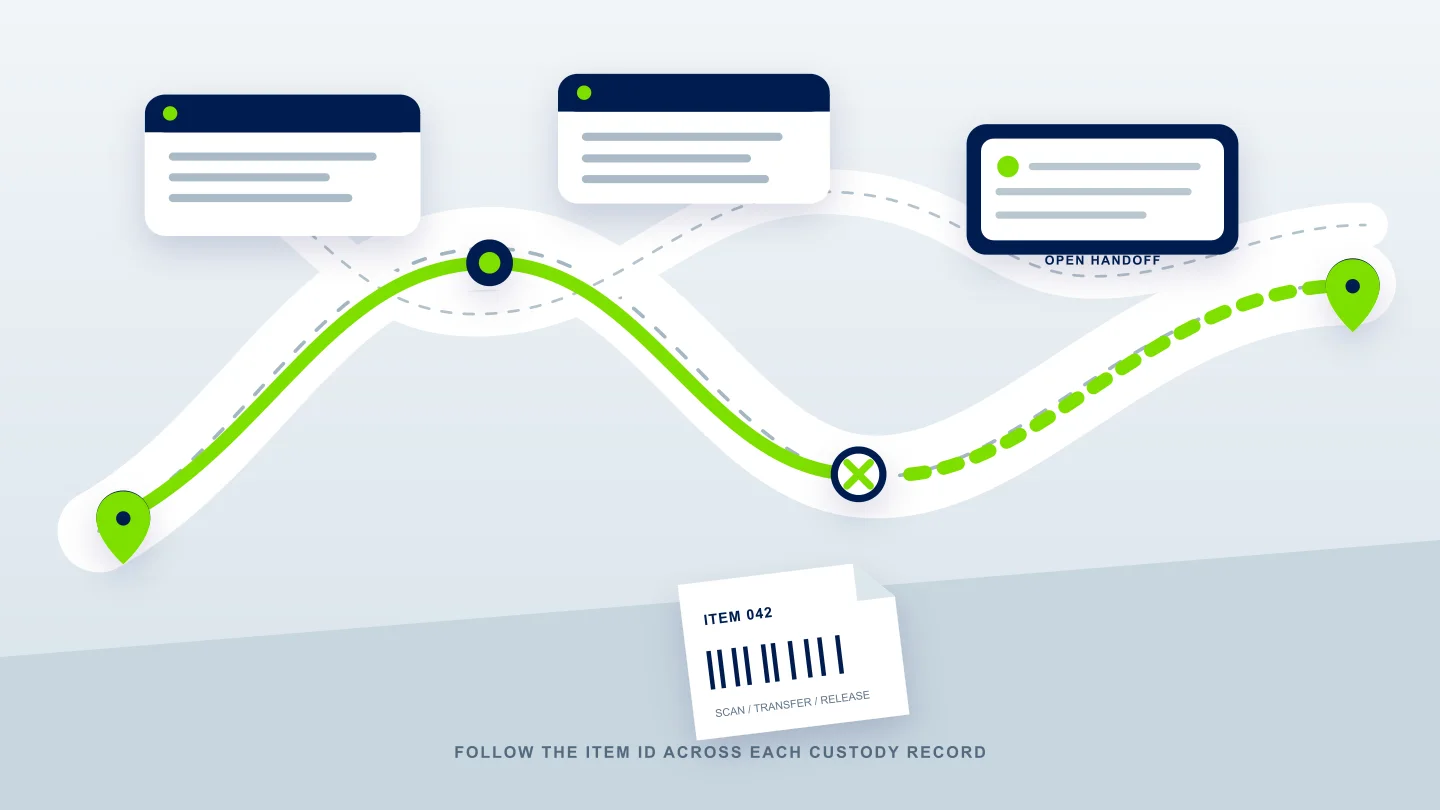
A household shipment can move through several hands before the final truck reaches the residence. It may be consolidated with other freight, transferred at a terminal, divided across vehicles, placed in storage-in-transit, or assigned to a local delivery agent. When one carton, furniture item, or group of pieces is missing from the expected load, the fastest path to an answer is usually a record trail: what the carrier accepted, where each handoff occurred, which pieces were assigned to each segment, and who has custody now.
A tracking screen is only one part of that trail. A status update may show a terminal scan but not an exact location or a completed inventory reconciliation. Your goal is to ask questions that narrow the search without assuming that a scan gap means the shipment is lost. Keep the origin inventory, shipment number, route notices, terminal references, and delivery exceptions together. This guide focuses on what a customer can request and record when part of an interstate household move is unaccounted for.
Define the missing segment precisely
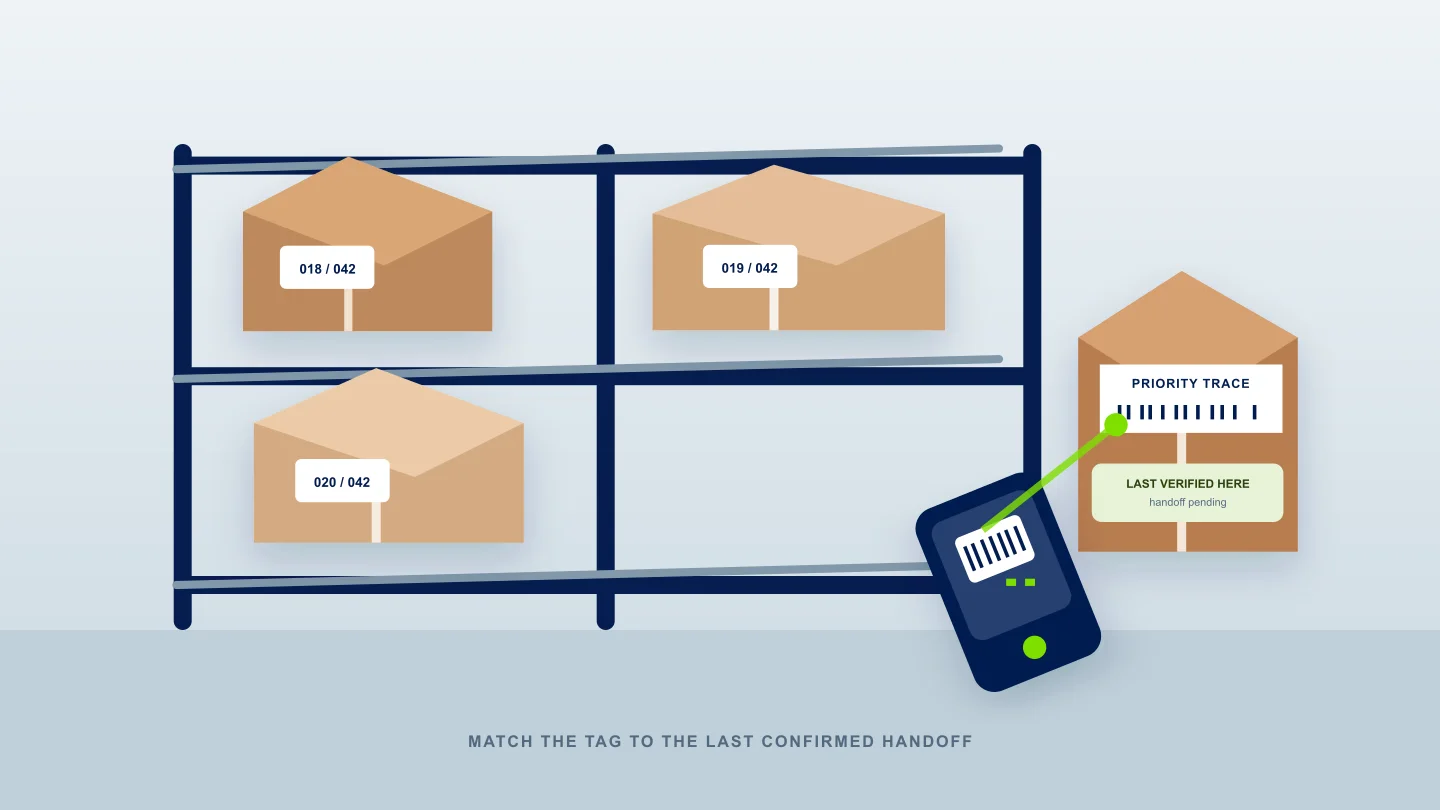
Start with the signed origin inventory, order for service, and bill of lading. Federal Motor Carrier Safety Administration guidance says an interstate mover must prepare an inventory before or at loading. The inventory identifies the items and condition, and you should check it, note any disagreement, and keep a copy. Write down the inventory number, description, room, and any unusual tag or container reference for each item that did not arrive. Avoid relying on a memory such as “the blue box from the bedroom” if the inventory has a number you can cite.
Separate items that were never loaded from items that were loaded but have not been delivered. Review photos from pickup if you have them, but treat them as supporting evidence rather than a replacement for the signed inventory. If the mover did not prepare a full list, assemble your own descriptions and explain which facts come from your records. Do not silently change the original document. Add a dated note that says what you believe is missing and why, then keep both versions.
Ask whether the expected shipment moved on one vehicle or was split. If it was divided, request the item-number range, container number, vault number, or other identifiers assigned to each portion. A total piece count can match while one particular item is assigned to a separate truck. If the crew delivered a partial load, identify which items arrived and which remain open. Ask for a separate record for every vehicle or segment rather than accepting a general statement that “most of it is there.”
Build a handoff timeline
List every confirmed event in order: origin loading, first departure, terminal arrival, transfer or consolidation, outbound assignment, destination arrival, storage placement, and delivery. For each event, record the date and time, facility or city, carrier contact, equipment or container identifier, scan or case reference, and the person or system that confirmed it. Use “unknown” when the carrier has not verified a fact. Do not use a guessed location just to fill a blank.
Ask the mover which records it can check for the disputed piece. Depending on its process, useful records may include the origin inventory, bar-code or tag scans, terminal receipts, warehouse locations, container or trailer assignments, transfer sheets, manifests, dispatch notes, delivery inventories, and signed exceptions. The company may not share every internal document, and different carriers use different systems. Ask for the specific record or confirmation available to reconcile your item rather than demanding a database export you may not be entitled to receive.
When a shipment changes vehicles, ask for both sides of the handoff: what the receiving location expected, what it recorded as received, and what the next vehicle was assigned to carry. A tag scan can establish that a code was read, but ask whether the physical count was reconciled. If the records show 48 pieces arriving and 47 leaving, the missing piece may be in a hold area or may have been recorded under another shipment. If the counts match but one numbered carton is absent, the question becomes whether that carton was included in the right count. The guide to building a recovery plan when a shipment stops in transit helps organize the next custodian, location, and escalation step once the timeline shows where the gap begins.
Give dispatch a focused tracing request
Contact the mover or carrier using the process in your paperwork. Provide the order number, origin and destination, delivery date, inventory number and description, last confirmed location, and the date when the item was first noticed missing. If the shipment has a terminal, container, trailer, or seal number, include it. Ask for a tracing case number and the name or team responsible for the search. A specific request is easier to route than a series of calls asking whether anyone has “found the box.”
Ask the representative to check the records in sequence. Was the item listed on the origin inventory? Was its tag or container recorded at pickup? Which equipment or shipment segment was it assigned to? What was the last confirmed facility or handoff? Did the receiving terminal reconcile its count? Was the item placed in storage, moved to a hold location, or assigned to a different delivery vehicle? Is there a signed delivery record that includes the item number? If the carrier cannot answer yet, ask which record is pending and when it expects to reply.
Keep the request narrow but complete. You can say: “Please trace inventory item __, described as __, on shipment __. It was listed at origin and was not present at delivery on __. The last confirmed scan or handoff I have is __ at __. Please provide a case number, identify the record being checked, and tell me when I will receive the next update.” If the carrier asks you to submit a claim form immediately, ask how to do that while the trace continues. A search and a formal claim can be separate tasks, and you may need to preserve deadlines for both.
After the call, send a written recap with the case reference and open questions. Keep the tone factual. If a coordinator gives you a location, record when it was confirmed and by whom. A previous portal status may change as the carrier reconciles records; save the dated screenshot or email instead of overwriting earlier notes. If two representatives give conflicting locations, list both with times and ask which one is verified by the terminal or equipment record.
Use identifiers that survive a terminal transfer
An inventory number is often more useful than a generic item name. Include the exact number and description, label color or barcode if present, and the count if the item is a bundle. For a disassembled table, specify whether the missing part is the top, legs, hardware box, or protective crate. For a mirror, glass top, or sculpture, identify the crate number and whether it was listed separately. This helps the carrier search a staging area without confusing a wrapped component with a complete piece.
A trailer number may change when freight is transferred, so ask for the equipment reference at each stage. Do not assume the same tractor or trailer traveled the entire route. If the carrier used a container, vault, sealed unit, or numbered pallet, request the identifier and whether the seal was intact at the next handoff. A seal number does not prove the location of each item inside, but a mismatch or a documented opening can help determine which facility should review its records.
Ask whether the carrier can identify the terminal, warehouse, or agent that last handled the goods. Record the facility's name, city, address if provided, and the internal case number. If you are told an item is in a warehouse, ask whether it has been placed into storage-in-transit or is only in a temporary hold area while the carrier completes its count. Those are not necessarily the same status. Ask which company has custody and what written notice or charge information applies before authorizing a storage or redelivery change.
A scale ticket has a different job from a piece inventory. It documents a vehicle weight event and may contain vehicle, date, scale, or shipment identifiers, but it cannot show that a particular lamp or carton was loaded. If the carrier is also reconciling a billed weight, the guide to reading certified weight tickets for a long-haul shipment explains which fields relate to weight and which records identify household items. Keep those questions separate so a weight record does not substitute for an inventory trace.
Reconcile the delivery record before signing off
At delivery, compare the items present with the inventory and note what is missing or damaged on the delivery paperwork before signing where possible. If the carrier says the truck contains only part of the shipment, request a written partial-delivery record identifying the items or item numbers carried on that vehicle and the open segment. Take photographs of visible damage and keep the signed pages. Do not sign a statement saying all pieces were delivered if that is not accurate. If the delivery form uses a standard acknowledgment, write a clear exception next to the relevant entry or ask the carrier how to attach a separate page.
If another person receives the load, give that person the inventory pages and a short list of unresolved item numbers. Ask the receiver to call you before signing a complete-delivery statement if an item is not present. The carrier may require a named consignee or authorization, so confirm in advance who may accept and note exceptions. Request a copy of every page the receiver signs and the name of the driver or agent who delivered the segment.
When the last segment arrives, check whether the carrier reconciles the open case or leaves it active. Ask for written confirmation that the specific item was located and delivered, or a written explanation of the result if it was not. Store the final delivery record with the origin inventory and trace timeline. If the item was found in storage or on another vehicle, note which facility or segment resolved the issue. A closed portal status without an explanation may not answer what happened.
Keep tracing and claims on separate tracks
If an item cannot be found, notify the mover promptly and request its loss-and-damage claim process. The FMCSA advises customers to make a list of missing items, gather supporting information, and file a written claim within nine months of delivery for interstate household goods. Read the agency's loss and damage guidance for the current instructions. Keep a copy of the claim and proof of when it was received. The agency explains that it cannot force a mover to pay a settlement; a claim response or dispute may require the mover's process or other remedies.
Do not wait for a portal search to finish if the paperwork gives you a claim deadline. Ask the carrier whether the trace reference can be included with a claim and whether it needs photographs, receipts, replacement-cost information, or a specific form. Submit truthful information and label estimates as estimates. If the carrier finds the item after you submit the claim, notify it in writing and keep both records. The claim is about the loss or damage; the trace is about locating and accounting for the item.
If the mover believes the item was delivered, ask for the delivery record, signature, date, address, and inventory number associated with that assertion. Compare the signature and record with your own documents. If the signature belongs to a receiver, ask that person what was accepted and whether the carton or component was left in another room or at the building's service area. Do not accuse a driver or neighbor without evidence. A delivery record can narrow the search even when it does not resolve responsibility by itself.
When a scan says delivered but you do not have the item
A “delivered” status can refer to a terminal, warehouse, agent, or residence, so ask the carrier what destination the scan records. Request the date, local time, facility or address, inventory reference, and receiving signature if there is one. If the scan was made at a terminal, it may be a transfer event rather than a customer delivery. If the scan names the residence, check the building's loading area, package room, service desk, and any authorized receiver before asking dispatch to investigate the address.
If the carrier confirms a delivery signature that you do not recognize, request the complete delivery record and explain what does not match. A first name alone may not identify whether a building employee, neighbor, or agent signed. Ask the carrier to contact the delivery crew or terminal that created the record. Keep your own notes about who checked the property and when. Do not let a status code replace a physical inventory comparison, especially if other pieces arrived on the same day.
For a shared building or storage facility, ask whether the item may have been placed in a common room, another unit, or a hold area. Get permission before entering a restricted space or moving another customer's goods. If the mover confirms a misdelivery, request its recovery plan and written handling instructions. Record whether the item is being returned to the terminal, forwarded to your address, or retained for inspection so the next update has a defined destination.
A compact trace log
Use one row for each event or communication. Useful columns include date and time, event or contact, facility, inventory item or equipment number, source of confirmation, case reference, next owner, and next promised update. For the missing piece, make a separate list of the identifiers the carrier has checked. Mark a fact “confirmed” only if the mover or its record supports it. Mark a portal estimate or customer recollection separately. If a representative changes an earlier answer, keep both entries and ask what new record produced the revision.
Save the original inventory, signed bill of lading, delivery sheets, photos, notices, email recaps, receipts, and claims in the same folder. Use descriptive filenames with dates and shipment numbers, but do not alter the original images or forms. If the carrier has a web portal, download available documents before access changes. A clean document set helps a new representative understand the search without repeating earlier steps.
A trace becomes more productive when every contact ends with a next action and a time. Ask who will make that action, what record they will check, and how you will receive the result. If there is no update by the promised time, follow up with the case number and last confirmed handoff. This creates continuity even if the coordinator changes or the shipment moves to another facility.
What a useful answer should contain
A useful tracing response identifies the last verified location or handoff, the record used to verify it, the current custodian or team, and the next step. If the carrier does not yet know the location, it should say which records are being checked and when you can expect another update. An answer such as “we are looking into it” gives no way to distinguish a terminal count, equipment search, delivery-record review, or claim review.
You can ask the carrier to confirm whether the search covers the individual inventory item, any protective crate or bundle that contains it, and any separate vehicle or warehouse segment. If the missing piece was delivered to another address or assigned to a different shipment, ask the mover to explain the correction and how it will arrange recovery. If it was damaged or remains missing, request written claim instructions and keep the original case reference.
The purpose of a trace is not to reconstruct every movement from memory. It is to connect your item identifier to the carrier's custody and handoff records, find the last verified point, and make the next action explicit. A precise inventory number, a dated timeline, and a written case reference give the mover a clearer search path and give you a reliable record while the shipment is being reconciled.
Check the current rule, contract and source page for your route and service. This guide helps you prepare clear questions and records.